
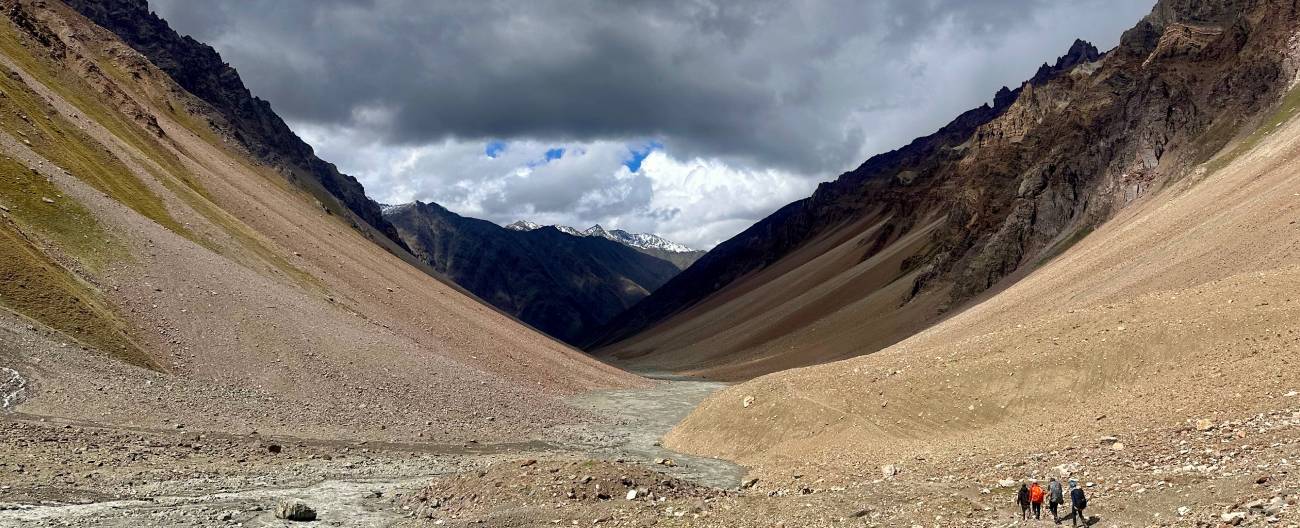
Pin Bhaba Pass Trek
Day 1 – Ahmedabad to Shimla, and onward to Pin Bhaba Basecamp
The Pin Bhaba Pass Trek had been calling me for a long time. This was going to be my first-ever trek in Himachal Pradesh—a mix of excitement and nervousness ran through me as the date approached. For weeks, the Himalayas had been lashed by heavy rains, and I couldn’t stop checking weather updates. This trek is special—it runs for only a couple of months each year, and despite the monsoons, the trail in this region was reported to be in good condition. That gave me some peace of mind, but my heart was still racing.
I boarded my flight from Ahmedabad to Chandigarh on 23rd August 2025, an early morning one, hoping the butterflies in my stomach would settle mid-air. But instead, my mind kept wandering to the journey ahead—the valleys, the orchards, the unknown faces who’d soon become my trek family.

Chandigarh to Shimla – A Ride into the Hills
By 11 AM, I landed at Chandigarh Airport. The mountains still felt far away, but destiny had its little ways of making things easier. As I walked out of the airport gate, a bus to Sector 43 ISBT was just about to leave. I jumped in without a second thought. From there, it barely took 45 minutes, and as if the mountains themselves were calling me, the Shimla bus was already boarding. Everything was falling into place.
The ride to Shimla was nothing short of soothing. The weather was perfect—not too sunny, not too gloomy, just the right balance. The road curved gracefully, taking me through Solan, Kasauli, and charming hill towns along the way. The air felt cooler, crisper, almost like an invitation.
We stopped at a roadside dhaba for lunch. It wasn’t anything fancy, just simple food, but eating with the valley spread out in front of me, I felt gratitude for every bite. By the time we rolled into Shimla around 5 PM, the skies opened up—it was pouring heavily.

Tired but happy, I booked a cab from the union stand outside New Shimla Bus Stand. My hostel, Zu Zu Hostel Shimla, was only 1.5 km away. By the time I checked in, the rain hadn’t stopped, but a warm cup of tea was waiting for me. The hosts—two siblings—welcomed me like family, and that instantly lifted my spirit.
Hostels in Shimla for Backpackers & Slow Travelers

When the rain slowed, I walked up to Mall Road. Shimla’s evenings are always alive, and even in the drizzle, it was buzzing. I ate steaming hot momos, tried chaat, and couldn’t resist a pastry from the famous Trishul Bakery. Later, I walked up to the Christ Church. The taste of food may not have blown me away that evening, but the vibe of Mall Road was enough to fill my heart.

A Nervous Heart in Shimla
The next morning, I walked again to Mall Road for breakfast. At Indian Coffee House, I sipped filter coffee, ate breakfast, and let my thoughts wander. I also visited the Indian Institute of Advanced Study, admiring its colonial architecture and walking through its green lawns.
But honestly, my mind was elsewhere. I was anxious. This trek was unlike anything I had done before. Higher altitudes, unpredictable weather, and tougher terrain. I kept asking myself: Am I ready? Will I manage?
And yet, that nervousness was mixed with something stronger—an eagerness to push beyond my comfort zone.

The Road to Yangpa – Basecamp for Pin Bhaba Pass
The following morning, it was time to leave for Yangpa, the trek basecamp. Our group of trekkers assembled at the designated spot in Shimla. As we greeted each other, I noticed something unusual—in most treks, the first day feels awkward, with everyone hesitant to speak. But here, conversations flowed easily. It was as if we already knew each other. That warmth calmed my nerves a little.
We boarded our vehicle and began the long drive to Kinnaur. The route took us along the legendary Hindustan–Tibet Highway, often called the most dangerous road in the world. And yet, what I saw was pure poetry—misty clouds hugging the cliffs, waterfalls tumbling down from nowhere, and valleys glowing in shades of green.

Along the way, we stopped for breakfast near Theog. It was apple season, and everywhere I looked, orchards were bursting with fruit. I couldn’t resist the temptation—I kept telling myself, one day on this trek, I’ll pluck a fresh apple straight from the tree. Over aloo paratha and hot chai, I soaked in the view.
We chatted with a sweet aunty at the stall. She looked at us with concern and asked, “Why have you come now, in so much rain?” Her voice carried both care and curiosity. She also introduced us to Bhangjeera (Perilla seeds)—something completely new to me. I tasted Bhangjeera chutney for the first time in Uttarakhand, earthy and unique, a flavor I’ll never forget.

Further down the road, at Fagu Valley, we stopped at Zetho’s Panthang Café. This is where I had what I still call the best Sweet Siddu of my life. Soft, warm, slightly sweet, melting in the mouth. Their ragi momos and pancakes were equally heavenly. Food always has a way of adding to journeys, and this one was unforgettable.


Finally, by late evening, we entered Kinnaur district and reached Yangpa village, the basecamp. We had to trek a short distance to the base. Our trek leader, Charan, came walking towards us with a warm smile. Ripe apples hung heavy in the orchards around us—it felt like a picture out of a dream.
At the basecamp, our co-leader Nilang welcomed us with a traditional tikka ceremony. That moment touched me deeply—it wasn’t just a welcome, it felt like a blessing.
The basecamp itself was cozy, with rooms named after the campsites we would soon trek to. After a quick welcome drink and snacks, we went through medical checks and document verification—a reminder of why I admire Indiahikes so much. For them, safety and health always come first. It makes me feel secure, knowing I’m in the right hands.
In the evening, we gathered for our briefing session—introductions, trek rules, safety protocols, and the challenges that lay ahead. It was detailed, but also reassuring. Their motto of People, Process, and Equipment (PPE) always reminds me why Indiahikes is different—it’s not just a trek, it’s an experience built on care.
That night, after a warm dinner, I packed my bag for the next day and slipped under a cozy blanket. I knew the coming week would be tough, but lying there, I felt a quiet happiness. This was the last night of such comfort—tomorrow, the real adventure would begin.
Day 2: Yangpa to Mulling Campsite – A Day of Rivers, Rain & Resilience
The night at Yangpa was warm, almost comforting, the kind that wraps you in a blanket of tiredness after a long day. When the morning came, our routine started with the familiar ritual—checking BP and oxygen, followed by a steaming cup of black tea in the crisp mountain air. Breakfast felt like fuel for what we were told would be a 15–16 km long walk to our next home, Mulling campsite.
We gathered together, lined up for a headcount, and stretched our bodies awake. Charan, our trek leader, patiently showed us the small yet vital things: how to tie shoes properly so they wouldn’t betray us on tricky terrain, use of eco bag, how to use the trekking pole wisely (and when not to), and how to wear our backpacks so they felt like a part of us rather than a burden.
And then came something I will never forget—the TEA: Trek Expectation Agreement. On a whiteboard, divided into groups, we each wrote down what we expected from this trek, signed it together, and promised to revisit it on the last day. It wasn’t about rules—it was about reflection, about what each of us was truly seeking in these mountains. I loved the idea instantly.

Walking Through Orchards & Clouds
Our journey began with a drizzle. We walked through the charming village lanes of Yangpa, past a beautiful temple and apple orchards that added freshness to the morning. The trail quickly turned muddy, but that’s the beauty of trekking in the rain—clouds walking alongside you, mountains veiled in mist, and villages visible far below.
On the way, we met a grandmother, her eyes wrinkled with kindness. I paused to chat with her briefly—she didn’t know us, but her warmth felt like a blessing for the journey ahead. Moments like these are why I love trekking—meeting locals, exchanging smiles, feeling the humanity that binds us all.


Waiting on Nature’s Call
Soon after a hydration break, we received worrying news—teams ahead of us at Mulling campsite couldn’t move further due to bad weather. The possibility of turning back after hours of walking was frightening. But the skies began to clear, and with hope restored, we resumed our journey.
The trail kept surprising us. Charan introduced us to the story of the Cicada, a fascinating creature of the forest. As if on cue, we stumbled upon a dead cicada lying by the trail. I held it in my hand for a while, marveling at its delicate body.

We also discovered fascinating mushrooms scattered across the forest floor. Each pause in the trek became a chance to learn something about nature.
Trek Buddy Activity – Walking With Strangers, Becoming Friends
Charan introduced a beautiful activity called “Trek Buddy”. We were paired in twos and threes, with the task of knowing something new about each other during the walk. My trek buddies were Vitthal and Akshay—strangers at first, but soon conversations flowed as easily as the rivers we were about to cross.

First River Crossings – The Real Adventure Begins
Soon, we came across our first river crossing. The sound of rushing water was both exciting and intimidating. Our guide Honey Ji stepped ahead, carving a safe path for us. One by one, holding hands and supporting each other, we crossed. It was thrilling—the kind of moment that reminds you why you signed up for an adventure trek.
The rivers kept coming. Some we crossed on shaky wooden logs, others by balancing on rocks. The drizzle added to the drama—water droplets dripping from tree branches, the smell of earth rising, and flowers scattered along the trail. It felt like walking in a dream.
At one point, one of our guides Happy Ji plucked a fresh apple straight from his orchard and shared it with us. Eating that apple on the trail, crisp and juicy, was pure magic. Nothing compares to fruit fresh off a tree, especially when your legs are tired and your rain jacket is dripping wet.

The Cloudburst & The Scariest River Crossing
But the mountains always remind you—they are beautiful, but they are also unpredictable.
We were descending a slippery stone path toward another river when the unthinkable happened. Suddenly, we heard a thunderous noise. A cloudburst had triggered a furious flow of mud and rocks rushing down.
“Go back! Go back!” our guide shouted urgently.
My heart raced as we scrambled uphill, climbing back the path that had taken us so long to descend. Within minutes we were out of danger, but watching the violent flow below shook me deeply. It was a reminder—out here, nature is the real master. Plans can change anytime, and all you can do is accept and adapt.
We waited for over an hour while our leaders figured out a safe way to cross. Finally, they found one—using steel rods as support to cross the river.
Crossing that river was one of the craziest moments of my life. One at a time, we stepped carefully onto the rod. When my turn came, the rod shifted under my foot, and I froze. My heart was pounding, but I trust my team. I stepped back, let them adjust it, and then tried again. This time, Vinay extended his hands to pull me across. In that moment, I understood something clearly—trekking is never a solo sport; it’s a team journey.


Pushing Beyond – Forests & Final Stretch
As if the river crossings weren’t enough, a fallen tree blocked the trail. Crawling under, climbing over, balancing on slippery rocks—we finally made it past. Our ground support team joined with ropes to ensure our safety.
Past this section, we entered a dense ancient forest of towering trees, reminding me of the Shyalmi forest on my first trek to Deoriatal-Chandrashila. Walking here felt like stepping into a living cathedral where nature itself was the architect.
But exhaustion crept in. It was getting dark, and we pushed hard with one last burst of energy. The thought of the campsite kept us moving through ascents and streams until, finally, at 6:30 pm, after trekking since 8 in the morning, we saw it—the first glimpse of Mulling campsite.


Mulling Campsite – A Dreamy Reward
The sight was magical. Tents pitched beside the Bhaba River, its waters flowing musically through the valley. A towering mountain stood beside us, crowned with clouds, while ancient trees guarded the riverbanks.

I knew instantly—this would be my favorite campsite of the trek.
After welcome drinks and snacks, we had dinner and quickly drifted to sleep. I shared my tent with Monika, one of the warmest and most cheerful tentmates I’ve ever had. She instantly made me feel lighter and at home.
Day 2 was not just about covering 16 km—it was about resilience, teamwork, fear, acceptance, and the beauty of nature in its rawest form.
Day 3 – Mulling to Karah (6 km Trek)
I woke up early at Mulling campsite, unzipped the tent, and froze for a moment in pure awe. Camping by a riverside had always been a dream, and that morning it felt like life whispered: dreams do come true. The soft gurgle of the Bhaba River, the chill in the air, and the first golden rays of the sun touching the valley—it was surreal. With a warm cup of black tea in my favorite trek mug.

I sat quietly, soaking in the moment. This little ritual of tea in the mountains is something I truly cherish—it slows me down, helps me breathe, and makes me feel connected. That morning, it was nothing short of magical.
After breakfast, it was time to say goodbye to Mulling, my favorite campsite of the trek. But before leaving, our trek leader gathered us for a quick warm-up and a fun game. One of the things I love about trekking with Indiahikes is these little games that bring laughter and connection. That morning, we played a version of volleyball—without a ball! Instead, we had to call out someone’s name and pass the “imaginary ball.” Sounds silly, but trust me, it was pure fun and set the tone for the day.
Before we started walking, our trek leader introduced the theme for the day—“close to nature.” The idea was simple yet profound: as we trekked, each of us had to observe and find one element from the trail that felt closest to our heart. It could be anything—a leaf, a stone, a flower, even a feeling that nature gifted us on the way.
I loved this thought. Trekking isn’t only about reaching campsites, it’s about listening to what nature is trying to say to us in its own quiet ways. This theme made me walk slower, more mindfully, noticing little things I would’ve otherwise missed—the rustling leaves, the patterns on rocks, the warmth of the sun. It felt like nature was holding conversations with me, one step at a time.

First River Crossing & Shifting Landscapes
The trail ahead was short—only about 6 km—so we walked slowly, soaking in every moment. Soon came our first river crossing of the day. By now, what once made us nervous had turned into something exciting. We had grown confident, and the cold rush of water no longer scared us, it energized us.
The landscapes too had changed. Yesterday’s green forests gave way to vast grasslands, open skies, and rocky trails. It felt like walking into a new world. At one point, we paused under a grand maple tree for hydration. I had never seen a maple tree in real life before—only in movies—and there it stood, tall and majestic before me. Without thinking, I hugged it, feeling its raw strength.

Climbing Rocks
Along the way, we stopped at a huge boulder where we snacked on apples and clicked photos with Honey Ji, our lead guide who kept us motivated like no one else. Then Charan challenged us to climb the rock. It looked small from a distance, but once I tried, it was impossible to find a grip.
I struggled for a while, determined to do it on my own, but eventually, Charan gave me a hand. With his help, I managed to climb up, and the happiness was unmatched. I realized something simple but powerful—it’s okay to ask for help. Coming down was another story; the only option was to jump! And that leap was as thrilling as the climb.


Narrow Trails & The First Glimpse of Karah
After a short break, we prepared for the next section—a narrow trail with a steady ascent where we couldn’t stop midway. The climb was tiring, but when we reached the top and looked out, the view was worth every step. From there, far in the distance, we could spot our next campsite—Karah. Just the sight of it felt relieving.
The walk to Karah was slow and relaxing. I spent time collecting little treasures from the trail—stones, leaves, and flowers. These may seem small, but they are my way of carrying pieces of the mountains back home.

Photo Credit: Sayan Seth
Reaching Karah – Valley of Joy
By afternoon, we finally reached Karah campsite, a bowl-shaped valley surrounded by mountains. While Mulling was about the Bhaba River, Karah had its own unique charm—wide, open, and inviting.
After cooling down, we were served a welcome drink and a delicious lunch. The rest of the afternoon was free, and I wandered around the valley with my trek mates. In the evening, after tea, we learned the hypothermia dance from Charan—something we’d need for the upcoming barefoot river crossings. It was a mix of fun and preparation, reminding us that the next few days would test us even more.

Games, Laughter & A Sky Full of Stars
Evenings on this trek were never dull. First came cricket—with a jugadu bat and ball. It turned hilarious when Vinay accidentally hit Chinmoy on the chest with the bat instead of the ball! What followed was both laughter and concern, but thankfully it wasn’t serious.
Later, we played chain and connect—games that had us running, laughing, and competing like kids. Honestly, these games made me fall in love with the group even more.

Dinner was followed by one of the most magical nights of my life. Someone shouted, “Look at the sky!” and we all rushed out. The sky was flooded with stars, and then, slowly, the Milky Way appeared. I had always dreamed of seeing it on this trek, and here it was, brighter than I could imagine.
I spent almost two hours experimenting with my phone camera, with the help of Akshay V., Monika, and our trek photographer Sayan. Finally, we captured it—my first photograph of the Milky Way.

In that moment, I felt like the trek had already given me everything I came for—views, friendships, realizations, and dreams fulfilled. And yet, I knew there was so much more ahead.
Day 4 – Karah to Phutsirang: Walking Into High Altitude Dreams
I woke up early, as usual, unzipping my tent to the magic of the mountains. The sky was slowly painting itself in shades of orange as the sun rose behind the peaks. It was just 5:50 a.m., crisp and quiet, with that surreal silence only the Himalayas can offer. I stepped out with my toothbrush in hand, and while brushing, a shepherd dog came running toward me. He sat beside me, wagging his tail, as if we had known each other forever. I played with him for a while and felt an instant warmth in the cold morning breeze.

Soon, I held my favorite ritual in hand—a steaming cup of black tea—and sat facing the towering mountains. The sun was now shining brighter, and with every sip, I felt I could make this my life forever. Just tea, mountains, and sunrises.

Multiple River Crossings & Adventures on the Trail
After breakfast, it was time to leave Karah behind and head to Phutsirang. Today’s journey was going to be a steep one—from 11,590 ft to 13,485 ft, a significant ascent. And unlike previous days, we didn’t start in our trekking shoes. Instead, we slipped into crocs and sandals, because the trail ahead was filled with multiple river crossings, some of them knee-deep.
Just 100 meters from the campsite, the Bhaba River welcomed us with its icy flow. Linking our hands in a human chain, we stepped into the freezing water. Within seconds, my legs went numb—it was so cold that I couldn’t feel them anymore. That’s when I finally understood why Charan taught us the “hypothermia dance.” As soon as we crossed, we all jumped, shook, and laughed, trying to bring life back to our frozen feet.
We continued walking along the trail, taking a short hydration break under the clear skies. I ate an apple, the perfect trail snack, and gathered energy for the climb ahead. Not long after, Charan spotted yet another huge rock and challenged us to climb it. I couldn’t resist—I had to try. Compared to the one on Day 3, this rock was much easier, but still, the thrill of reaching the top and looking around at the endless Himalayan valley was priceless.

Photo Credit: Akshay
I had carried some Gujarati snacks—Khakhara—from home, and I shared it with everyone on the trail. To my surprise, they all loved it so much! Seeing them enjoy a taste from my home state made me feel connected—like even here, in the middle of the mountains, I could share a piece of where I come from. I love this feeling always!!
As the trail steepened, shepherds appeared with hundreds of sheep, their bells ringing in unison. We paused, giving them way, watching the massive herd flow past like a living river of wool. These small pauses always remind me how alive and diverse the mountains are—not just landscapes but homes to so many lives.
At one point, I came across dry stone walls, carefully stacked without cement or mortar. They looked ancient, yet purposeful. I later learned that such stone walls are often used by local shepherds and villagers to mark boundaries, protect fields, or even create temporary animal shelters. It fascinated me how simple stones could hold together so much meaning and utility.

The trail kept surprising us. Another wide river came our way, but this time there were no stones to step on, no wooden logs to balance. That’s when I realized the true dedication of our trek leader and guides—Charan, Honey Ji, and Happy Ji. They stepped into the freezing water themselves, moving huge rocks one by one, creating a path across for us. Watching them work so hard just so we could pass safely filled me with gratitude. Every trekker was able to cross, thanks to their patience and care.
Reaching Phutsirang (13,485 ft)
Finally, after hours of walking through grassy valleys, rocky paths, and alongside cascading waterfalls, we reached Phutsirang campsite. It sat quietly at 13,485 ft, surrounded by mountains that seemed to rise endlessly into the clouds. The moment I arrived, I felt a deep sense of achievement. Another day complete, another memory etched forever.

Photo Credit: Praveen
After the welcome drink, we finally cooled ourselves down and had lunch. Once we washed our utensils, we wandered around the campsite, soaking in the view of the mighty mountains that surrounded Phutsirang. That’s when our eyes caught something unexpected—our campsite staff were playing cricket at 13,485 ft! Without thinking twice, we rushed to join them, excited like kids.
We quickly divided ourselves into two teams, and the match began. Let me tell you, it’s a whole different game when you’re running between wickets at this altitude. Just one quick sprint and you’re gasping for breath, yet you have to pick up the bat again immediately. The staff were pros at this—they made it look effortless, while we were struggling just to catch our breath. Still, the energy was infectious.

Photo Credit: Vinay
I somehow managed to hit a four, and for a moment it felt glorious. But destiny had other plans—I was out on the very next ball! 😅 To everyone’s amusement, despite my little “heroic shot,” our team ended up losing the game. But honestly, winning didn’t matter. We laughed endlessly while batting, fielding, and even while counting runs. The absence of a proper umpire made it even more fun, with playful arguments and jokes flying around.
After the match, we gathered for evening tea and snacks, our bodies tired but our spirits so alive. That’s when we sat with Charan, one of the most inspiring souls I’ve met. He was brave, full of stories from his own mountain journeys, yet carried this lighthearted, fun-loving nature with a sharp sense of humor. Listening to him while sipping tea in the cold winds felt like the perfect way to close the day.
Later, we had dinner under the stars and wrapped up the day, hearts full from both the adventure and the unexpected joy of a cricket match at one of the highest campsites.
Reflection: Today taught me resilience. Every icy crossing, every steep climb, and every obstacle showed me how much we depend on each other in the mountains. Trekking isn’t just about walking; it’s about trusting the team, respecting nature, and embracing discomfort to experience something extraordinary.
Day 5 – Acclimatization Day at Phutsirang (13,485 ft)
Acclimatization days are often underrated, but on a high-altitude trek like the Pin Bhaba Pass Trek, they are absolutely essential. At 13,485 ft, the air is thin, oxygen levels are lower, and your body needs time to adapt. Without giving your body this chance, you risk altitude sickness that can make the summit unsafe. So this wasn’t a day of rushing through trails—it was a day of slowing down, breathing, bonding, and letting the mountains sink into us.
The plan was clear: no heavy trekking, just acclimatization and enjoying the Phutsirang campsite. Usually, our trek leaders shared the next day’s schedule the night before, so we always woke up knowing what awaited us. This time, though, the schedule promised relaxation and fun.

A Slow Morning in the Mountains
Unlike other days, our morning started late. I stepped out of my tent to the crisp air and cloudy skies. As usual, I had my cup of black tea and later a hearty breakfast.
It was drizzling, so our plan to explore Pin Valley got paused. But that didn’t stop us from enjoying—we simply shifted indoors to our cozy community tent. This tent quickly became the heart of our day, filled with laughter, stories, and games.
Yoga, Games & Laughter
The day started with something calming—seated yoga and meditation, guided by Monika, our yoga teacher. Inside the tent, surrounded by mountain silence and the sound of rain outside, her session felt deeply refreshing. It was the perfect way to align ourselves with the spirit of the mountains.
Then the games began.
Charan, with his ever-energetic spirit, made sure we sat in his “aesthetic circle” before we started. First came UNO—the card game that can either unite or divide friendships! 😅 We laughed, argued, and enjoyed every round. Then Charan surprised us with a twist—UNO without cards, using only our hands. It was hilarious and surprisingly fun, proving that when you have the right people, you don’t need much to keep spirits high.

Music, Stories & Inspiring People
One of the things I cherished most about this trek was the diverse people in our group—each with something unique to share.
- Sumukha, with his soulful voice, sang songs in different languages. Even though I didn’t always understand the words, the beauty of his voice pulled me in, and we all found ourselves singing along.
- Akshay, another gem, sang “Sa Re Ga Ma” with such raw, pure talent—it gave us goosebumps. He also played the flute and later amazed us with his headstand by the riverside. So much talent in one person, yet so humble.
- Vinay became our knowledge bank. His passion for ecology and snakes was unmatched. He spoke about myths people carry, the reality of snakes, and how every creature plays a role in maintaining balance in nature. Listening to him completely shifted my perspective. I could sit for hours and never get bored.
- Vijay Sir, the most inspiring of us all, was in his 50s but trekked with the energy of someone half his age. Carrying his own backpack, walking with steady determination, and finishing each day strong—he redefined what age means on the mountains. His laughter was infectious; you couldn’t resist smiling when he was around.
- Chinmoy was our funniest companion. Carefree, lighthearted, and always ready with a witty line—he kept the group laughing, especially when Vitthal pulled his leg.
- Praveen – A really sweet, calm, and brave soul. His presence felt grounding throughout the trek.
Together, these people made this trek feel like family.

Afternoon Reflections & Fun
After lunch, I took my diary and sat facing the snowcapped peaks, scribbling down thoughts and feelings. Writing in the mountains has a way of grounding me—like each word carries the weight of the silence and the wind around.
Later, we clicked group pictures. The three of us girls—Monika, Samhita, and me—posed first. Samhita, with her calm, patient energy and strong willpower, added so much grace to our group. Then the whole group joined in for fun pictures, laughter echoing across the valley.

Riverside Walk & Surprises
By late afternoon, the rain stopped, and we headed for a short valley walk near the riverside. The sound of rushing water, the calm flow of the river, and the sight of green meadows against snowy peaks—it felt like therapy.
Monika, being a yoga trainer, couldn’t resist doing Chakrasana (wheel pose) by the river. Inspired, I tried a few asanas myself, though nowhere near her flexibility. And then came the surprise—Akshay casually did a perfect headstand on the grass. My jaw dropped at his balance and strength!

Team-Bonding Game
Charan wasn’t done with his ideas yet. He organized a fun team-bonding activity to prepare us for summit day. We divided into three teams, hid objects around the campsite, drew maps, and then exchanged them. Using walkie-talkies, each team had to guide the others to find the objects.
At first, it was pure chaos—nobody knew how to use the walkie properly. But soon, laughter turned into strategy, and one by one, each team found their hidden object. It was silly, messy, and absolutely fun—but it also taught us about communication, teamwork, and trust.
But before we wrapped up the day, Charan gave us something very special—customized cards for each one of us. On them were two simple but profound questions: “What will you bring back to home from the mountain?” and “What did you leave behind on this trail?” Along with these cards, he gave us a postcard to write on summit day. He told us we’d revisit these on our final day during debriefing. Holding that card, I felt a rush of emotions—this trek wasn’t just about physical endurance, it was about self-discovery.
Technical Briefing for Summit Day
As the sun dipped, our technical guide, Vijay Ji, gathered us for the all-important summit day briefing. His tone was serious—summit day meant facing steep 60° ascents, loose rocks, and unpredictable terrain.
We would leave by 3:30 am, which meant waking up at 1:30 am, eating breakfast, and gearing up in helmets for safety. He explained every detail—what to do, what not to do, and how to respond in case of emergencies. His knowledge, discipline, and clarity made us feel safe, even as we knew the challenge ahead was tough.
I realized then why acclimatization and safety briefings were so important. Out here, the mountains are beautiful but unpredictable. Respecting them is the only way to reach safely.

Early Dinner & Rest
Dinner was served early that night. We gathered in the dining tent, chatting softly, nervous and excitement mixing in the air. Tomorrow was the big day—the summit push to Pin Bhaba Pass.
After dinner, we packed our things, zipped into our tents, and forced ourselves to rest. With alarms set for 1:30 am, we drifted into sleep under the watch of the towering peaks.
Day 6 – Summit Day (Phutsirang to Bwalder, 16,105 ft to 13,435 ft)
A Sleepless Night and Waiting for the Call
This was the longest and most awaited day of our trek—the summit day. But it didn’t begin like we imagined. Since midnight, heavy rain lashed against our tents, making the weather look impossible for us to move.
We woke up at 1:30 am, uncertain of what lay ahead. Inside our tent, conversations flowed—
“Should we wake up? Are we even going? What’s going to happen now?”
Soon, Charan came to update us. As always, the kitchen team was ready on time, serving breakfast. We put on ponchos, brushed quickly, visited the washroom, and gathered in the dining tent. Charan explained:
“We will not move until the rain stops. The trail ahead has loose stones and snow; in this weather, it’s too risky. We’ll wait.”
And so we did. All of us sat inside the community tent, then slowly, one by one, lay down with blankets. We weren’t nervous or restless; instead, it turned into a calm, bonding moment—just chatting, laughing, and enjoying the pause.

The Call to Move
At 5:30 am, the rain finally stopped. Within minutes, the decision was made: we leave now.
There’s no extra five minutes in the mountains—time is life. Within moments, we were lined up exactly as planned the night before, helmets strapped, backpacks tight, trekking poles in hand. At 5:35 am, we stepped out of Phutsirang for the summit push.
Our hosh and josh were sky-high.
Climbing Towards 16,105 ft
Daylight revealed what darkness usually hides—how difficult the trail really is. When you climb at night, you only see your next footstep; but in daylight, the steep ascents, loose boulders, and risks become clear.
We were already two hours late because of the rain delay, and at 16,000 ft the winds are unpredictable. We had to move fast.
Our trek leader and guides kept encouraging us with shouts of:
“Great job!”
“Shabash!”
“Keep going, you’re doing amazing!”
Their words, along with team spirit, kept us pushing.

Hydration Break and Trail Snacks
By 6:15 am, we stopped for the first hydration break. Our breakfast had already digested, so I pulled out my homemade protein laddus and trail mix. Sharing food in the mountains makes it taste even better.
At 7 am, Charan said, “Look left.”
When I turned, I saw the sun rising over snowy peaks—a surreal, golden glow spilling over mountains. Every single step felt like gratitude. This was an achievement earned by our own feet.

Snow on the Trail
The higher we climbed, the steeper it became. We crossed loose boulders, but then a new challenge arrived—snow covering the rocks.
This wasn’t the season to find snow here, but because of yesterday’s rain, the upper sections had fresh layers. The trail was narrow, slippery, and dangerous. If you slipped, you’d slide down through rocks to the bottom. Landslides were a real risk as the morning sun melted the snow.
I noticed Charan selflessly clearing snow with his feet, creating safe spots for us to step on soil instead of ice. In freezing temperatures, where even standing still numbs your legs, he was doing this for all of us. That act of care touched me deeply.

The Final Push to the Summit
By midway, fatigue hit me hard. I drank more water from my hydration bladder, trying to regain energy.
Finally, at 10:15 am, I spotted the prayer flags fluttering at the summit. My heart raced. With one last push, I reached the top at 16,105 ft—and tears rolled down my face.
I felt like puking at first, but Charan reassured me, and with Samyak and Vijay Ji’s(tech lead) help, I felt better. Vijay Ji joked:
“16k ft pe agar ye nahi hua toh yaad kaise rakhoge summit ko!”
That laughter eased everything.

Emotions and Surprises at the Top
Sitting at the summit, I broke down. This was my first truly difficult trek, and standing there felt like a blessing. Many of us cried, hugged, and shared raw emotions.
And then came surprises.
- It was Akshay and Samhita’s second anniversary, and Charan, along with the guides, pulled out a cake at 16,105 ft! We celebrated with joy and laughter.
- Then Charan presented them with a unique gift—a Bhoj Patra (Himalayan Birch) with heartfelt wishes written on it. Our Vedas were originally scripted on this tree bark, making it such a thoughtful, spiritual gift.
- Finally, Charan gifted each of us a Pin Bhaba Pass fridge magnet—a small token of a big achievement.
Charan reminded us:
“Out of 8 billion people on this planet, today only 13 trekkers stand here at 16,105 ft on August 30.”
Hearing that made me feel grateful beyond words.


The Long Descent to Bwalder
We couldn’t stay long at the summit—weather changes every second at this altitude. After some time alone and group celebrations, we began our descent.
The challenge was far from over—16 km still separated us from Bwalder campsite.
I felt weak, but Samyak stayed by my side throughout, offering hand support, carrying weight, and slowing down for me even though he was the fastest trekker in the group. I’ll always be grateful for his kindness.
The landscape transformed dramatically. From the snowy summit, we entered the dry desert terrain of Spiti Valley. The tagline of this trek, “the most dramatic crossover,” came alive.
The mountains of Spiti are extraordinary—painted in hundreds of shades: fiery reds, deep purples, whites, and earthy browns. Each bend revealed new colors and patterns, with unique rock formations. This region is also known for fossils, and though I looked eagerly, I couldn’t spot one—it’s rare and precious to find.

River Crossings and Care
By 1 pm, we reached a river crossing with deep, strong currents. We removed shoes, and once again Charan personally helped me—jumping across stones to make a safer path so I wouldn’t get too wet.
On the other side, we sat down for pack lunch. Everyone checked in on me—asking if I needed help, carrying my lunch box, reducing my load. Their care made me realize, this is more than a trek; this is family.
Vinay shared Fast&Up, an energy booster, and even offered his water bottle if I couldn’t refill mine. With ORS and booster, I felt alive again.
Endless Walk to Camp
The afternoon sun was harsh as we continued along the riverbed. We took hydration breaks, munched on trail snacks, and kept motivating one another.
I regained my strength and walked like a recharged horse, powered by the mountains. The trail stretched endlessly—you couldn’t see the campsite until you were barely 100 meters away, just like Charan had warned.
Finally, at 6:30 pm, we reached Bwalder campsite (13,435 ft) after 13 hours of continuous trekking. From 5:30 am to 6:30 pm—what a journey.


Evening Celebrations
Exhausted but relieved, we cleaned our cutlery, enjoyed welcome drinks, and gathered in the community tent. Despite the fatigue, the joy of achievement filled the air.
I kept asking Charan about my health—“This won’t be AMS, right?” He assured me it was just low sugar, not altitude sickness. What a relief!
And then came the final surprise of the day—a summit cake for all of us. We cut the cake together, look at Akshay and Vitthal:
“Target shouldn’t be missed, lol!”
That celebration sealed the day. At every Indiahikes summit trek, this tradition of sharing a summit cake brings unmatched joy.

Summit Day – A Chapter, Not the End
Day 6 was not just about reaching 16,105 ft—it was about overcoming fear, supporting each other, and living through the most dramatic crossover trek of the Himalayas.
From rain delays and slippery snow trails to tears of gratitude at the summit and laughter over cake at camp, this day will stay with me forever.
Day 7 – Bwalder to Mudh: Walking Into Spiti’s Heart
After the intensity of summit day, you’d think the trek would get easier—but Day 7 had its own flavor of challenge, beauty, and emotions. This was again the longest day of the trek, about 15 km, though not as steep or punishing as the summit climb. It was a gradual walk, one that unfolded slowly like a goodbye to the mountains.
Our plan was to leave Bwalder campsite by 9 AM so that we could comfortably reach Mudh village by evening. But the mountains had their own say—it rained heavily in the morning, and we had no option but to wait. After breakfast, instead of rushing, we all gathered in the community hall tent, sitting close, warm in our layers, sharing stories.
It was decided that we would do the final debriefing here at Bwalder itself, so that once we reached Mudh, we could just soak in the village without responsibilities. One by one, each of us shared our journeys, inspirations, lessons, and stories—what we take back with us from the mountain, and what we left behind on the trail.

The session lasted almost two hours, and it was powerful—listening to how mountains had touched every single heart in their own way. Then, after a quick early lunch, we finally left at around 1:15 PM. The rain hadn’t really stopped, so we all set out wearing ponchos, water dripping around us.
A DIY Day in the Mountains
This day was also DIY day (Do It Yourself day)—a fun tradition where roles are reversed, and trekkers become trek leaders, guides, and buddies. One person was assigned as trek leader, three were guides, someone else took the role of hydration buddy, and another led warm-ups. It felt playful, but also gave us perspective on how much work our guides do every day to keep us safe.
The trail itself was mesmerizing. The landscape had fully transformed into the Spiti region’s desert-like mountains—giant cliffs and ridges in shades of red, purple, yellow, brown, and grey. The greenery was gone, replaced by dramatic barren slopes that looked like someone had painted them with brushes dipped in color. It felt like we were walking on another planet.

As we walked, the river flowed deep below us, carving its way through the gorges, while we stayed high on narrow trails, crossing smaller streams in between. Conversations filled the air—about our next treks, life after the mountains, even random dreams we had. The walk was long, but light, carried by companionship.
The Iconic Bridge to Mudh
By evening, the rain had eased, and finally, we saw it—the iconic hanging bridge of Mudh village. The sight of it, with prayer flags fluttering and the river roaring below, gave us goosebumps. But for me, fear also kicked in. The bridge swayed, water thundered beneath, and it felt like it could collapse at any moment.


I started walking nervously, but Charan, mischievous as ever, began jumping on the bridge, making it shake. I screamed, “Stop it, stop it!” and finally ran across as fast as I could, heart pounding but relieved. Everyone laughed, but for me, that moment felt like another personal summit.
First Glance of Mudh Village
Crossing the bridge, we reached the last stretch of steep ascent. Tired legs resisted, but the thought of reaching the village gave us strength. Finally, around 6:15 PM, we entered Mudh village, and the first thing that struck me was how every house had its doors and windows in the same direction, giving the village a symmetrical, almost storybook-like charm.

At the entrance, Honey Ji greeted us warmly: “Congratulations, you did it!” His words were simple, but they felt like a crown placed upon us after days of effort. The streets were tiny and beautiful, lined with prayer bells that I made sure to spin as I passed by. I also saw the only government school in the village—a reminder of how small and remote this settlement really was.
Later at night, while I was roaming around near the café, I met a little girl. She gently held my hand and said with a sparkle in her eyes, “Chalo, mai tumhe meri school dikhati hu.” She walked me toward the same school, talking about her classes and the way she goes there every day. I forgot her name, but I’ll never forget her innocence and sweetness. In that moment, I felt the simplicity of life in Mudh—how even in such remote corners, dreams and curiosity shine the brightest.

But the mountains weren’t done testing me. Dogs roamed the streets freely. While walking with Monika, suddenly dogs started barking loudly and running toward each other. Fear took over—I sprinted to the nearest house door, laughing nervously. A kind local lady appeared, smiled, and said, “Chalo, mai aati hoon aapke saath,” and walked me safely to our homestay. Her kindness touched me deeply.
Our Homestay in Mudh
Reaching the homestay (Ibex home stay mudh) felt surreal. Happy Ji welcomed us with a big smile, and the dogs around jumped with excitement as if celebrating with us. Our rooms were cozy, with a view of the whole village and mountains standing like guardians on all four sides. From the balcony, I could see life unfolding in the narrow streets below—it felt intimate, alive, and heartwarming.

For the first time in seven days, I connected to Wi-Fi. A part of me didn’t want it, but I also knew my family must be waiting anxiously. I sent them a quick message: “I’m safe, alive, and back from the trek.” I could almost feel their relief through the phone.
The Pin Bhaba T-shirt Ceremony
After tea and snacks, my excitement bubbled for something I had been waiting for—the Pin Bhaba Pass T-shirt ceremony. This wasn’t just a souvenir. You can’t buy it; you have to earn it. To me, it symbolized the sweat, struggle, and spirit of the trek.
We returned our rental gear—another practice of Indiahikes that I deeply admire, reducing carbon footprint and promoting sustainable trekking. Then Vinay went around with his camera, filming us as we shared our reflections for his video.
Finally, the moment came. Charan began distributing the hard-earned T-shirts. My heart dropped when I learned that my size wasn’t available. I looked at him with puppy eyes, requesting, “Please, do something.” He smiled, disappeared for a while, and returned with one that fit. I wore it immediately, glowing with pride.
Dinner was at a small café in the village, where Samhita and Akshay, still glowing from their anniversary celebration, hosted us with so much warmth. They served food, insisting on making it special for all of us. We laughed, we ate, and finally posed for a group picture in our T-shirts—each face telling the story of resilience and joy.

This night marked the official end of our trek. The mountains had given us everything—beauty, challenges, lessons, and above all, family. And though our legs were tired, our hearts were already beating for the next adventure.
But the story isn’t over yet—because one more huge adventure still awaited us the next day.
Day 8 – Mudh to Shimla: A Rollercoaster of Roads, Landslides, and Life Lessons
The last day of my Pin Bhaba trek was not about climbing peaks but about descending into reality—roads, landslides, uncertainties, and the test of patience that the Himalayas give in their own ways. If summit day was about physical endurance, this day was about mental strength, adaptability, and trust in strangers who soon felt like family.
The Uncertainty at Mudh
Early morning in Mudh, we were ready for our last stretch. The plan was to catch the HRTC bus from Mudh to Kaza. The night before, we enquired about timings, the exact bus stop location, and all other details. At around 3 am, most trekkers had already left. We all woke up to see them off, hugged, wished them safe journeys, and then went back to sleep for a little while. By 5:30 am, the four of us who decided to stay behind were up, fresh, and ready, because our bus was scheduled to leave at 6:30 am.
The rain from the whole night had not stopped — it was still drizzling in the morning. We reached the tiny bus stand in Mudh and waited inside the bus. Local villagers also came, as this was the only bus going towards Kaza. But we waited and waited… almost an hour passed and the driver never showed up. On enquiring, we came to know that the bus would not leave that day. The roads weren’t safe, the weather was bad, and there could be multiple landslides on the way.
That moment hit hard. We were stuck. Either we had to stay another day in Mudh, or find some way to reach Kaza. After some time, we had breakfast in a local café and kept discussing options. We asked for taxis, but no one was ready to take the risk. It felt like we had no way forward. Finally, after hours of waiting and failed attempts, our homestay bhaiya came like a blessing and agreed to drop us to Kaza in his own car.

The Drive to Kaza
We quickly loaded our luggage, settled inside, and requested him to please go slow and safe. He smiled and said, “Relax, this is an everyday thing for us.” But for us, the road was nothing short of terrifying — shooting stones, landslide patches, and stretches where we ourselves had to move rocks to make way.
Still, amidst this fear, the drive was magical too. On the way, we saw mountains shaped like giant termite mounds.

Then, we spotted sea buckthorn plants—the famous orange berries of Spiti known for their nutritional and medicinal value. Our bhaiya confirmed it was indeed sea buckthorn. We stopped, picked a few, and popped them into our mouths. They were tangy, refreshing, and felt like nature’s own energy booster.
After hours of nervousness and beauty interwoven, we finally reached Zostel Kaza. Relief washed over me. The stress of the road was heavy, but the comfort of reaching safely was priceless. Our initial plan was to explore Spiti Valley — but that journey deserves its own space. I’ll be sharing that adventure in a separate blog soon, so stay tuned.

The Long Road: Kaza to Peo
From here, three of us continued toward Shimla. We had enquired about the HRTC bus the day before. The HRTC bus from Kaza was scheduled at 7:30 am.
Tip: If you’re traveling in Himachal by public transport, always confirm bus timings a day before—buses are limited, and cancellations are common in bad weather
I loved learning that women get half-price tickets in Himachal’s HRTC buses. Small steps that make travel kinder.
The road was dangerous — cliffs on one side, the roaring river in the valley on the other, and mountains prone to shooting stones right above us. Crossing Tabo, we finally reached Malling, the most dreaded part. There, the bus could not move ahead. The entire stretch was landslide-prone, and we had to walk across the nala while the bus would pick us up from the other side. My heart was pounding. That uncertainty tested all of us — patience, courage, and trust in the mountains.

From there, the bus headed towards Reckong Peo, with a halt at Nako for lunch. A sweet uncle offered us apples straight from his orchard — such heartwarming gestures make you fall in love with the people of this region. Towering mountains surrounded us, making us feel so tiny.
After hours of testing roads, we finally reached Peo around 7 pm. Tired and drained, we decided to stay the night. Roaming around near the bus stand and market, we eventually found a hotel called Sizzling Inn, a bit downhill from the main bus stop. Checked in, freshened up, and finally relaxed.

The Dilemma at Peo – Meeting Beautiful People
That night, the situation ahead looked bad. Roads were blocked, landslides were active. Indiahikes was constantly in touch — Manoj Ji especially, who knew the ground reality. He advised me to stay in Peo for safety, but my friends were determined to leave, so they left while I stayed behind.
At the hotel, I met a group of bikers from Punjab — nine people in total. They were so warm and welcoming, we talked, played games, and laughed. They told me not to worry, “If anything happens, we’ll drop you to Shimla.” Their kindness reminded me again how full of good people this world is.
That evening, I walked around the Peo market, inquiring again about buses. Weather was clearer, so I decided—I’ll take my chance tomorrow.

Alone on the Road
Next morning, I reached the bus stand by 9 a.m. Within minutes, an HRTC bus came. It was packed—no seats left. The conductor kindly offered me his seat, right beside the driver. It felt like a blessing, as I had the clearest view of the road. From there, the journey was a mix of challenges and unexpected kindness.
The driver, once a Mumbaikar, shared stories of his life while navigating one of the most dangerous roads in India. After two hours, we hit another landslide zone near Nathpa. The bus had to stop, and passengers had to walk across 2 km to reach another vehicle on the other side. My heart sank, but there was no choice. I joined a few locals also walking to Rampur.
Nathpa was blocked too, so we had no choice but to cross it on foot. After hours of walking, a mini pickup van finally came and agreed to give us a ride as far as possible.

Just when we thought the worst was over, the police stopped the vehicle. They told the driver, ‘We can let you go, but not with passengers — it’s too dangerous, there are shooting stones falling beside the waterfall.’
I froze for a moment, asking myself — what should I do now? Is it safe to go or not? All the others were locals, used to these roads, while I was just a traveler caught in the unknown. But then I thought, what option do I have standing here in the middle of the highway? At least if I keep moving, I’ll reach somewhere safe to stay.
So I started walking with them. The Kinnaur highway stretched ahead, steep cliffs above me, water dripping down the rocks, and the constant fear of stones falling at any moment. I walked for more than half an hour — every step felt uncertain and heavy. Then, just as we turned a bend after a massive mountain wall, I saw the same pickup van bhaiya waiting for us on the other side. Relief washed over me. He gave us a lift till Nigulsari, and for a moment, I felt like I’d been handed back a little piece of safety.
Finally, we reached Nigulsari, but the road there had been blocked for a week with no chance of reopening soon. The only option? Trek uphill for 2 km. The ascend was steep, and I had to stop for breath multiple times. Locals shared apples and pears with me for energy — mountain kindness at its best.
Reaching the top felt like summiting again. A taxi was waiting, and though it was full of men, I felt safe. They were kind, offered me apples, and reassured me. That 15-minute ride was filled with laughter and relief.

The Endless Tests
By 2 p.m., near Jhakri, another massive landslide blocked the road. Restoration was ongoing, with blasting sounds echoing. We had to wait 1.5 hours, during which I met two sweet girls from Spiti who shared apples with me. We sat together, waiting patiently.
Finally, police allowed us to cross — but it was terrifying. Only one person at a time, crawling below massive rocks, handing luggage separately, with a sheer cliff on the other side. With their help, I crossed safely. My patience and courage were tested, and I felt I had passed another life exam.
From there, I first hopped on a private bus but quickly switched to an HRTC bus to Rampur, trusting it more. By 6:30 pm, I had to decide whether to stay in Rampur or push ahead. The conductor said we could reach Shimla by 10 pm, and the bus was right in front of me, so I took the chance.
The Rainbow of Hope
At 6:30 p.m., I boarded another bus from Rampur to Shimla. I was tired, anxious, yet hopeful. And then—the skies gifted me a rainbow.
For the first time in 20 years, I saw a rainbow. The setting sun painted the horizon in hues of orange, pink, and purple. My exhaustion melted. Tears welled up. If I had not taken that risk to push ahead, I would’ve missed this moment.

Darkness fell, but the bus headlights guided us. By 11 pm, after 14 hours of this roller coaster, I finally reached Shimla bus stand, took a cab, and checked into Shalom Backpackers Hostel.
Hot shower. Cozy bed. Deep sleep. I deserved every bit of it.
Lessons from the Road
Traveling alone on this rollercoaster day tested every ounce of patience and courage. From buses stopping midway, landslides blocking paths, to climbing 2 km uphill with locals, I lived through every uncertainty the mountains threw at me.
But I also experienced humanity in its purest form—apples shared, hands extended, strangers guiding, friends constantly checking in.
I ended the day stronger, braver, and more grounded. The Himalayas taught me:
- Plans will change. That’s okay.
- Nature will test you. Learn to pause.
- Strangers will surprise you with kindness. Trust them.
- And sometimes, after all the hurdles, you get a rainbow.
This wasn’t just the last day of the trek—it was a reminder that adventure doesn’t end at the summit; it begins when you let the journey change you.
Thank you for reading this long journey. It means a lot to me to share it with you.
Which part of this journey amazed you the most?

Rinkal
Rinkal is a passionate traveler from Ahmedabad who loves exploring hidden gems, savoring local foods, and sharing adventures with fellow wanderers. Rinkal’s goal is to inspire others to travel on a budget while truly experiencing the essence of each place.
Leave a Reply