
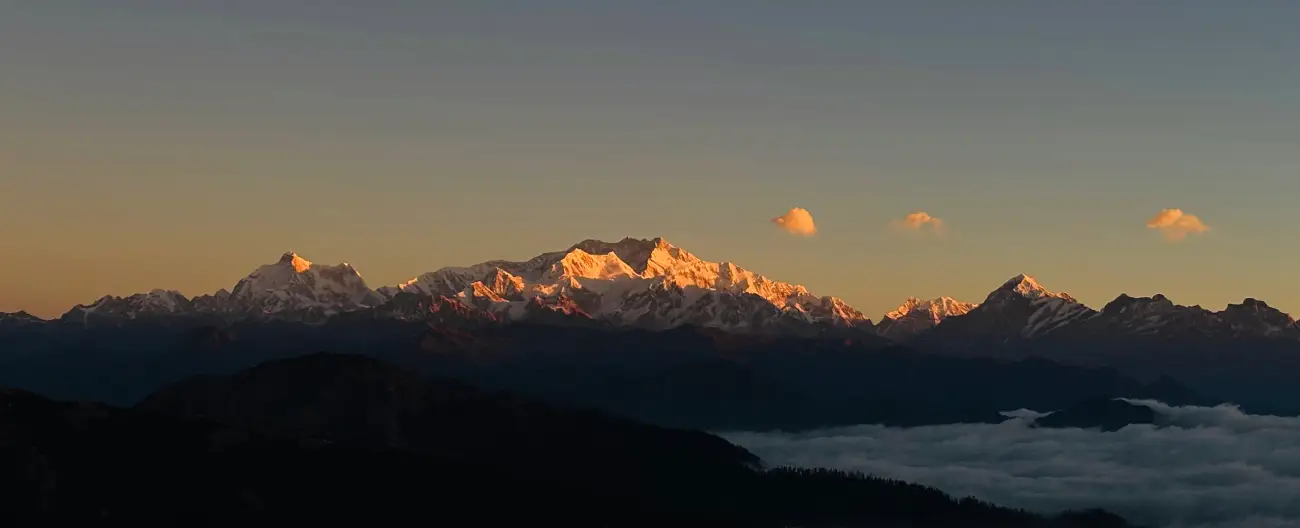
Sandakphu Phalut Trek
Walking Through Clouds to the Sleeping Buddha
Day 1: Ahmedabad to Siliguri — The Beginning of Another Mountain Story
Every trek begins much before the mountains appear.
Sometimes, it begins with a packed backpack sitting quietly in your room.
Sometimes, with excitement hidden behind a tired office week.
And sometimes, it begins with a one-way ticket carrying you toward something unknown.
For me, the Sandakphu journey started on 24th March, when I left from Ahmedabad for Bagdogra Airport.
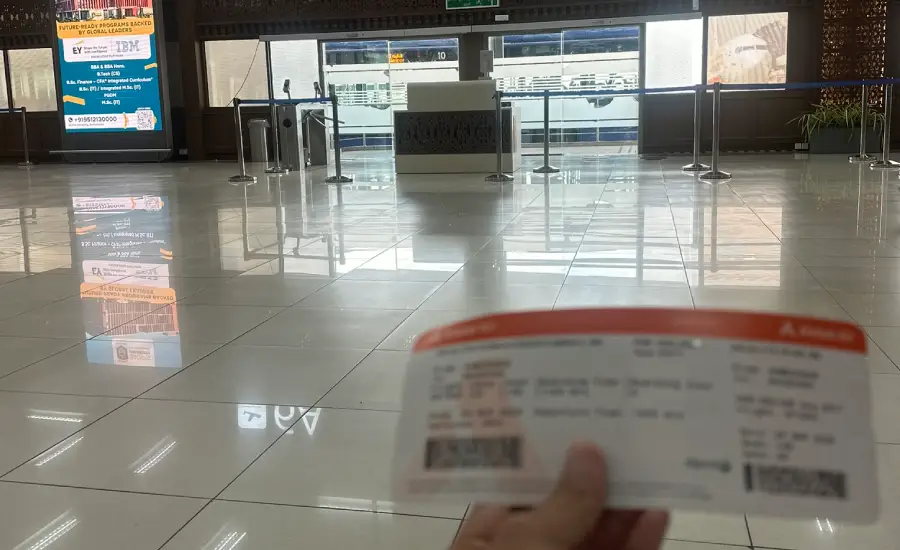
I still remember that feeling at the airport — a mix of excitement, nervousness, and peace. The kind of feeling only mountains give me.
From Bagdogra Airport, I took a shared taxi to Siliguri. Shared cabs are easily available outside the airport, and depending on your bargaining skills, it usually costs around ₹100–₹200.
The drive itself felt beautiful at first. The air slowly started changing. It felt fresher than the city, lighter somehow. The greenery around the roads reminded me that I was getting closer to the mountains.
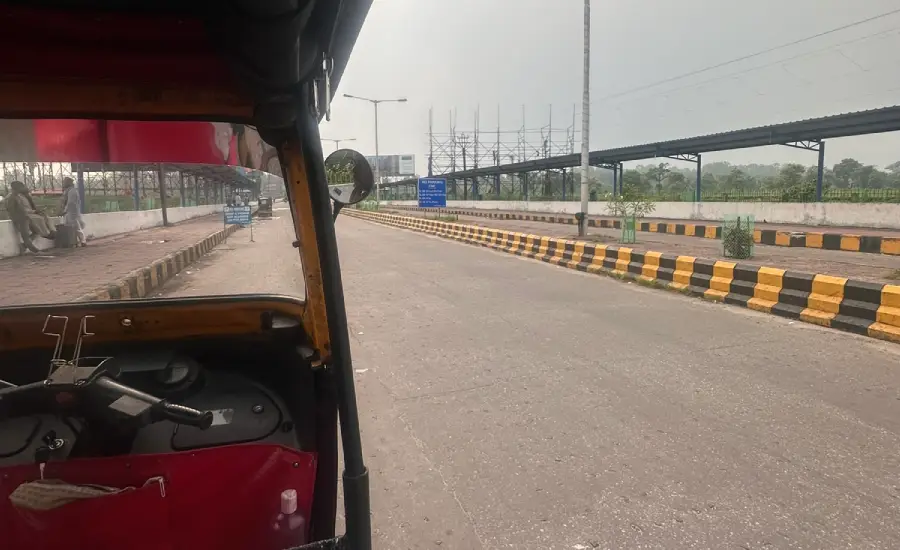
But honestly, one thing that stayed in my mind was the amount of trash visible on the roads.
Different smells mixed in the air, garbage scattered at many places, and roads that weren’t maintained well everywhere — it wasn’t the kind of first impression I expected. As travelers, we often romanticize destinations through pictures, but reality always tells its own story too.
Still, somewhere inside, I knew this was only the beginning.
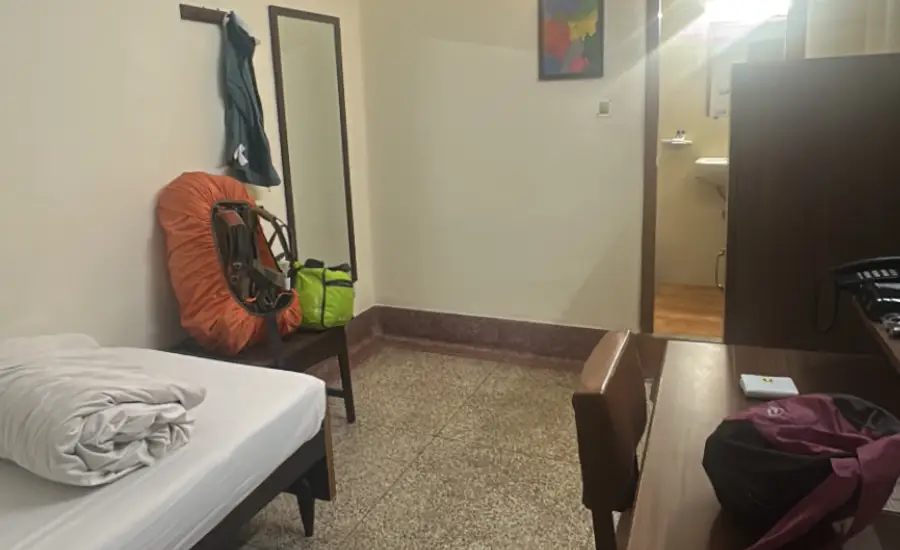
By the time I reached Siliguri, it was almost evening. I checked into Hotel Saluja — honestly one of the best affordable stay options if you’re planning to start your Sandakphu journey from Siliguri.
The room was simple, comfortable, and exactly what I needed after a long travel day. I had opted for a private bathroom, which made things easier, though they also have shared washroom options for budget travelers.
After resting for a while, I checked in with the trekking group. Most of us were staying at the same hotel, so slowly everyone started gathering downstairs.
And that’s when the real journey actually began.
We sat together in the evening for some “chatakbatak” — random conversations, introductions, jokes, travel stories, and those slightly awkward but exciting first interactions with strangers who would soon become your mountain family for the next six days.
Since I was traveling solo, I was trying to mingle with everyone, understand their vibe, and make connections. That’s one thing I genuinely love about trekking — no matter where people come from or what they do in life, mountains somehow make everyone equal.
An hour later, we all went for dinner together at a local dhaba just below Hotel Saluja. Simple food, good conversations, tired faces, and excitement for the adventure ahead — honestly, that combination always feels special before a trek.
And yes… one funny thing I got to know about that dhaba:
If you want alcohol, they usually won’t serve you unless there’s at least one woman in the group. 😄
Apparently, that was their condition.
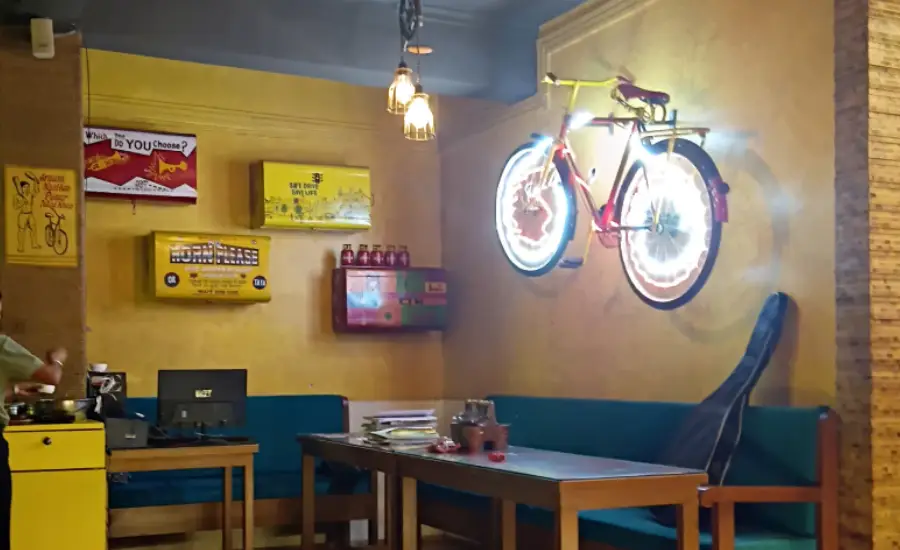
After dinner, I returned to my room and rested early because the next morning we would finally leave for our basecamp near the Nepal border — toward the trails of Sandakphu, clouds, forests, and the mighty Sleeping Buddha.
And somewhere before sleeping, I realized…
The mountains had already started changing my pace.
Day 2: Into the Clouds — From Siliguri to the Beautiful Village Rammam
Morning in Siliguri felt different.
Not because of the city itself, but because we all knew the real mountain journey was finally about to begin.
Around 7 AM, everyone slowly started gathering downstairs near the vehicle arranged for us. Sleepy faces, backpacks loaded on top, hoodies on, chai in hand, and excitement quietly visible on everybody’s faces.
And then… we started driving toward the mountains.
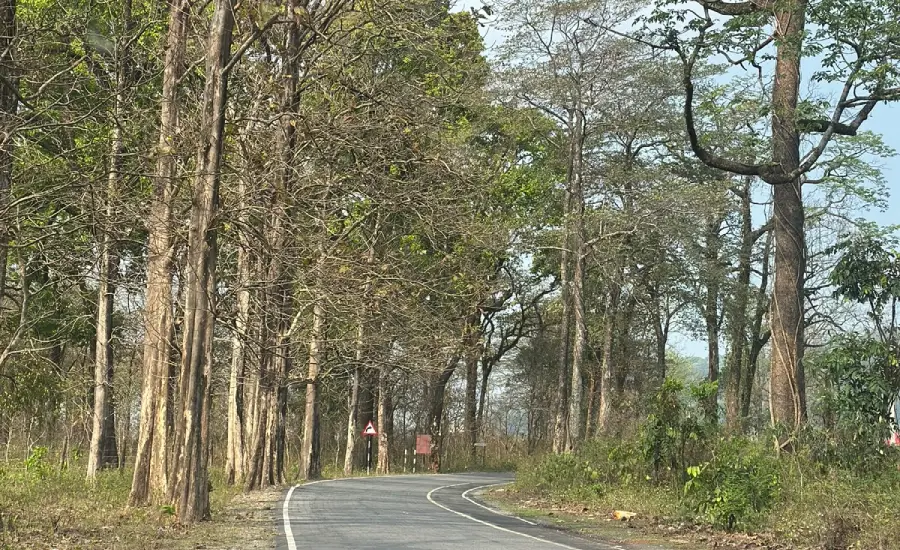
As we left the city behind, the roads slowly started changing.
The air became colder. Fresher.
And somewhere after entering the roads near Sukna Forest, everything started feeling magical.
Tall trees surrounded both sides of the road, cold breeze entered through the windows, and the winding mountain roads felt straight out of a movie.
Honestly, this was one of those drives you don’t forget.
The kind where you stop talking for a while and simply keep looking outside.
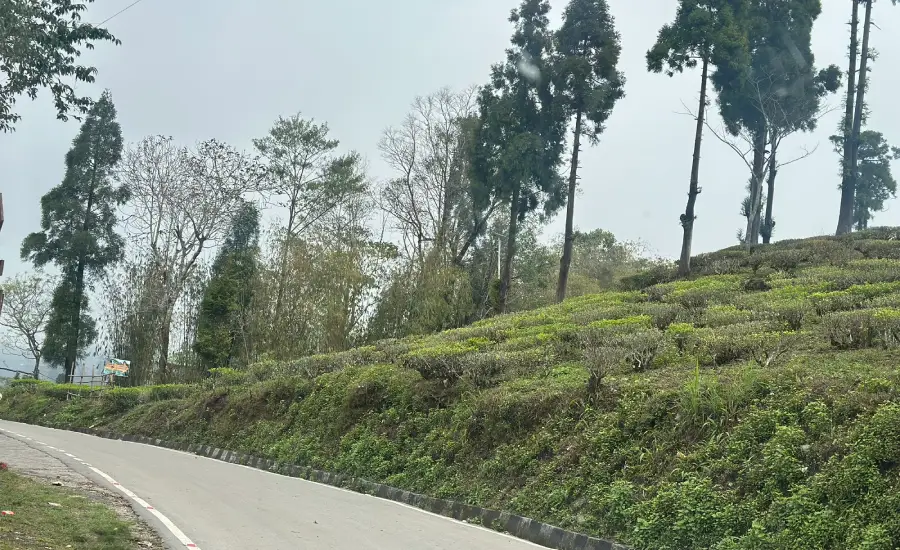
As we continued ahead, we passed through Mirik — a small and beautiful hill town surrounded by tea gardens and mountains.
The weather was cloudy, roads had sharp bends, and endless tea plantations stretched beside us. Every turn looked postcard-worthy.
North Bengal has its own vibe altogether. Slower, greener, softer.
And the roads here teach you patience.
After some time, we stopped at a small roadside dhaba for breakfast before continuing the journey toward the Indo-Nepal border.
And then came a place I had heard so much about before this trek — Manebhanjan.
This village fascinated me even before I visited it.
Manebhanjan sits on the Indo-Nepal border, but what makes it special is how naturally both sides coexist. There are no dramatic boundaries between people’s lives here. Homes stand close to each other, cultures blend beautifully, and from many terraces you can literally spot the border area.
People often place their country’s flag outside their homes, which quietly tells you whether the house belongs to Nepal or India.
And honestly, standing there made me realize something beautiful:
Borders may divide countries on maps… but mountains connect people beyond them.
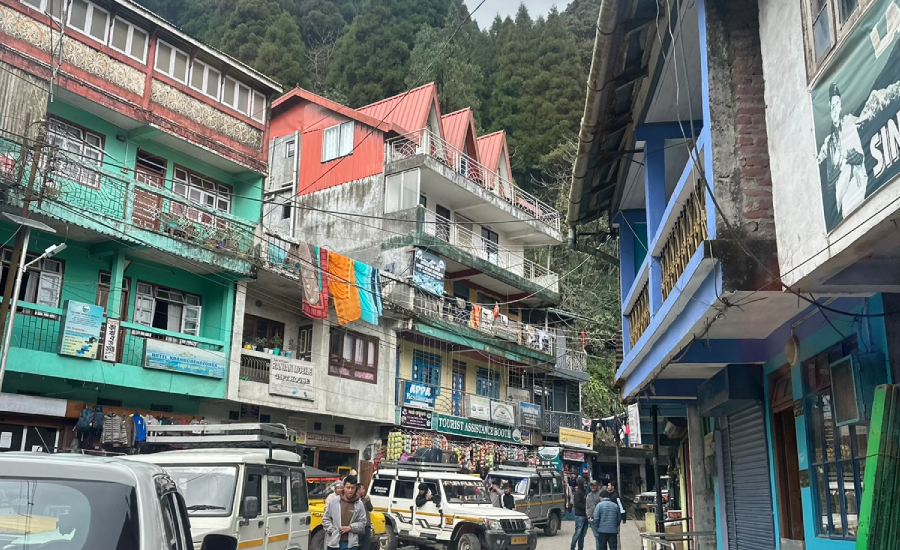
After crossing Manebhanjan, the roads became even more dramatic.
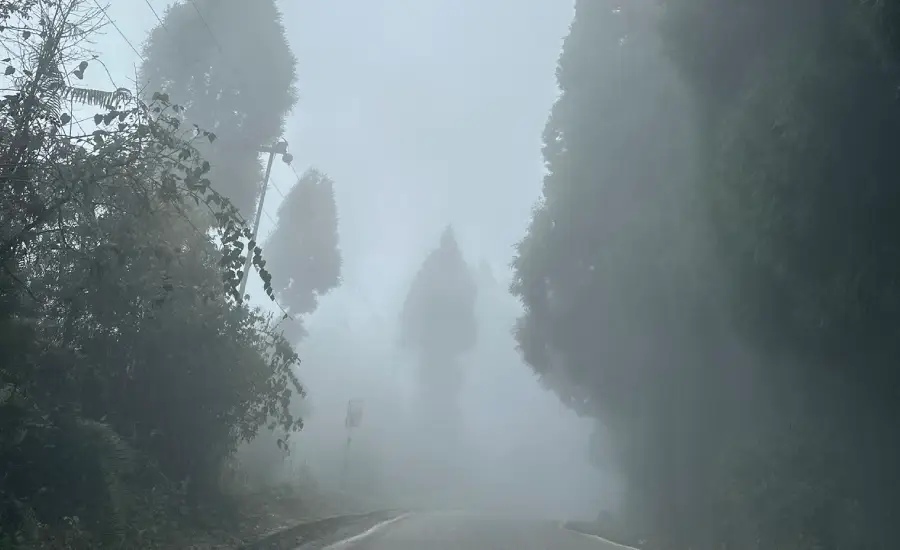
Dense forests. Thick clouds. Sharp turns.
At some points, visibility became so low that we could barely see the road ahead.
The mountains were slowly pulling us deeper into their world.
And I loved every second of it.
Finally, we stopped for lunch at a small dhaba overlooking a flowing river below. The setup itself felt unreal — clouds around us, river sounds from below, cold breeze, hot food, and mountain silence.
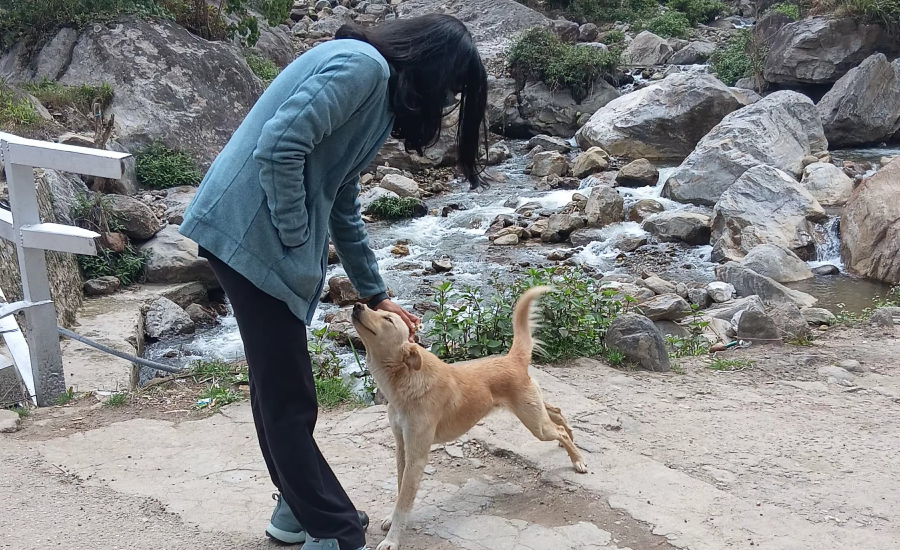
But honestly… the real stars there were the dogs and cats.
Your mountain journey always feels incomplete if you don’t make at least one dog or cat friend on the way.
And this trek gave me so many furry friends that I lost count.
It actually started right there at the lunch point itself.
We played with them, clicked pictures, shared food, and for a while it felt like we had known them forever.
Lunch was simple — Wai Wai and momos.
But somehow, food tastes different in the mountains.
Warmer. More comforting.
And honestly, one thing I absolutely loved throughout this trek was the food, cultural experiences, and the people I met along the way. Everything felt so genuine and overwhelming in the best possible way.
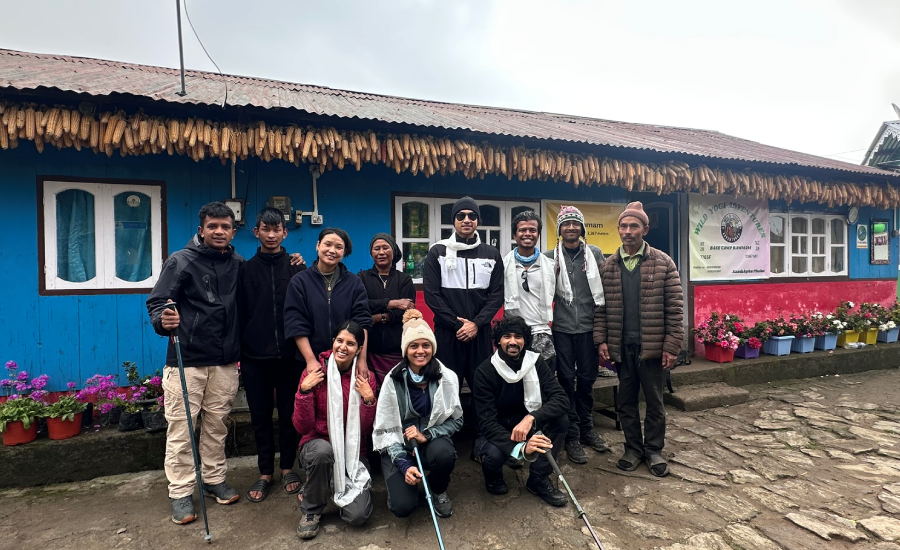
Meet My Trek Family
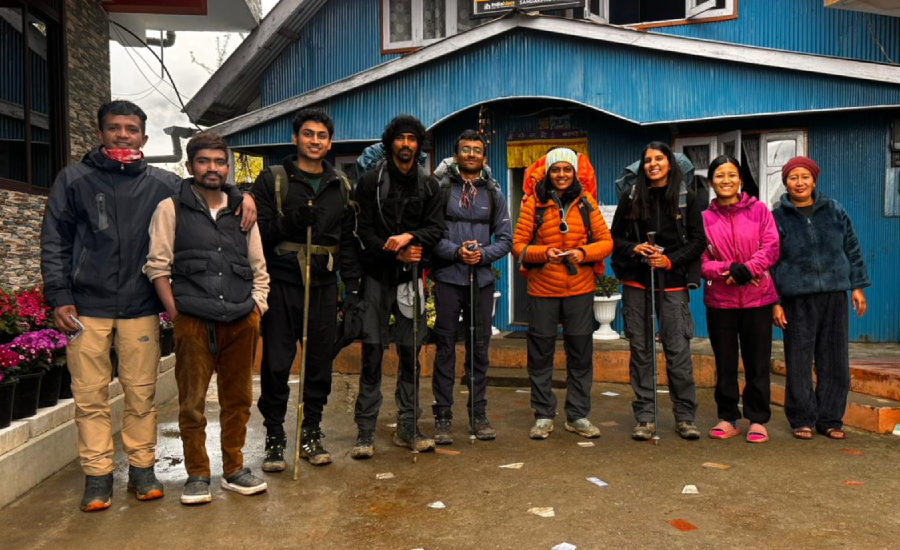
Before I continue the story, let me introduce the people with whom I was going to spend the next few days in the mountains.
Because every trek becomes special not only because of the destination… but because of the people walking beside you.
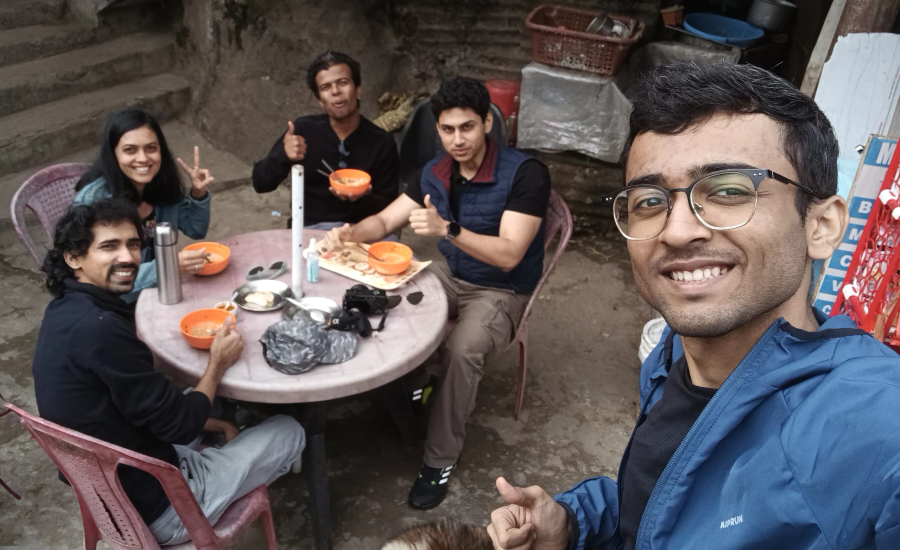
- Krutarth — the memory collector of our trek. He loved clicking candid photos and capturing every tiny moment of everyone’s journey.
- Manas — probably the quietest among all of us, but also the biggest fitness enthusiast. He calculated every calorie he consumed with complete dedication. 😄
- Wallabh & Varun — cheerful, fun-loving people who kept the energy alive throughout the journey. Wallabh especially loved photography and was always busy with his camera.
- Prachi — our trek leader. She wasn’t there in this particular picture, but she was genuinely one of the sweetest people on this trek. She deeply loved cultural experiences, local stories, and village life. Somewhere, I felt our vibes matched a lot.
- Tikaram Ji (TK Ji) — our local guide and honestly one of the most talented mountain people I’ve ever met. He could make spoons from bamboo, cook amazing food, sing beautifully, and carry such warmth in his personality.
And this was us.
A group of strangers slowly becoming mountain companions.
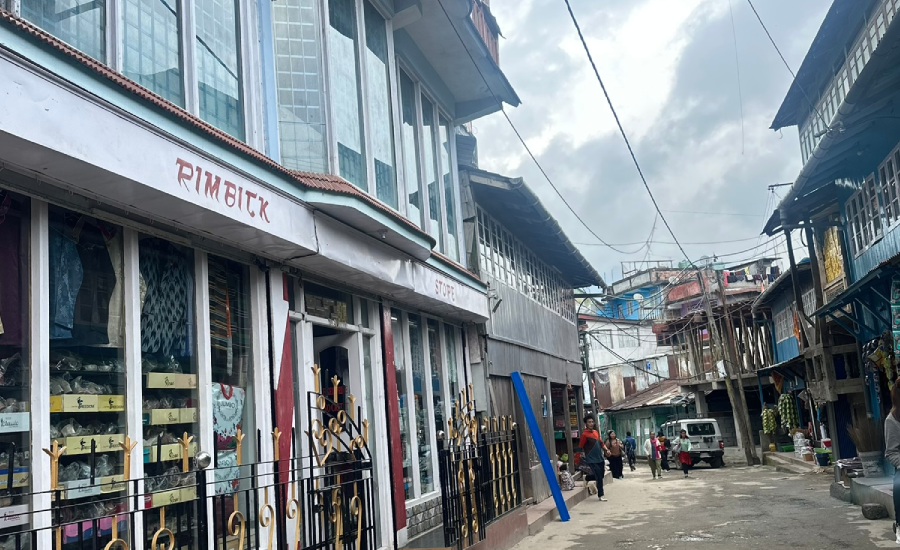
After lunch, we resumed our drive and crossed Rimbik — the last major town before entering deeper mountain villages.
This is an important stop during the Sandakphu route because it’s the final place where you can buy essentials, trekking items, snacks, medicines, or anything you may need ahead.
After this, markets slowly disappear into mountain silence.
Finally, around 3 PM, we reached Rammam.
And honestly… this village felt like a dream hidden inside clouds.
We met Prachi there and started walking toward our homestay. On the way, there was a beautiful monastery standing quietly among the mist, while clouds covered almost everything around us.
Only tiny farms, colorful houses, prayer flags, and mountain paths remained visible.
And somehow, that made the village even more beautiful.
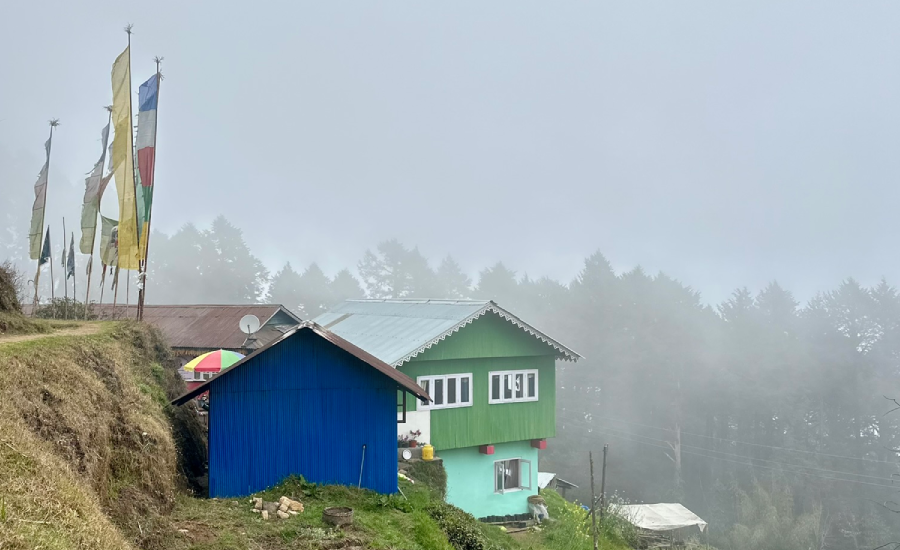
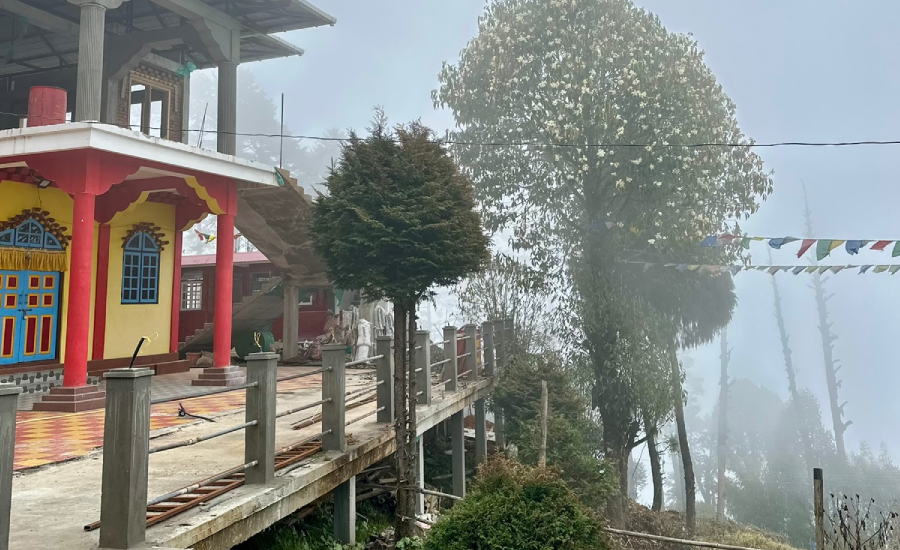
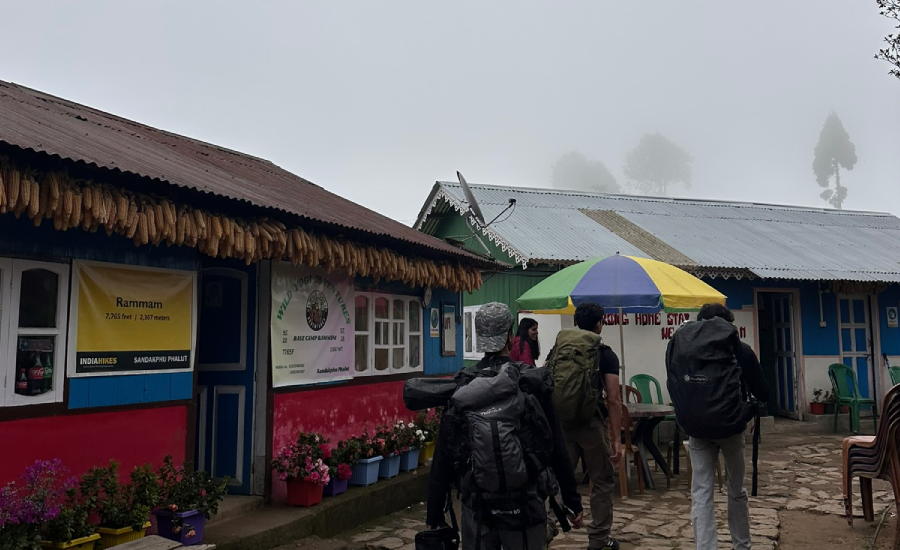
Our homestay was run by a very sweet local couple, especially the lady who took care of all of us with so much warmth that it never felt like we were guests.
After a small break, we had tea, snacks, and our first official trek briefing.
That’s when we got to know the weather conditions weren’t good during those days.
Routes were changing, plans were uncertain, and all of us had only one prayer:
“At least one day… let us see the Sleeping Buddha clearly.”
Because anyone who goes to Sandakphu dreams of witnessing the golden sunrise over Kanchenjunga.
After the briefing, we left to explore the village.
And honestly, this became one of my favorite parts of the entire trek.
We visited neighboring homes, saw traditional mud houses, observed how bamboo houses are built, and learned about the local lifestyle.
This is exactly why I love traveling.
Not just for landscapes.
But for people.
For stories.
For understanding how differently life can be lived.
Mountain villages teach you something cities often forget:
You don’t need luxury to live beautifully.
You need basic things, kind people, warm food, peace, and nature around you.
As we walked ahead, we found a football ground.
And obviously… we wanted to play here.
We played football, laughed endlessly, explored tiny village lanes, farms, plants, and trees around us.
I genuinely love learning about nature and local life during my travels. Every plant, every farming method, every small detail fascinates me.
Later in the evening, we all gathered inside the kitchen.
And honestly, this became one of my favorite memories of the trek.
In many homestays, guests are usually not allowed inside kitchens.
But here, we were literally sitting around the mud stove, warming ourselves, talking, cooking together, and sharing stories.
That warmth felt different.
Real.
Simple mountain life has a beauty that is impossible to explain fully unless you experience it yourself.
We cooked together, sang Nepali songs, laughed loudly, and somewhere from that night itself… I became obsessed with Nepali music. 🙂
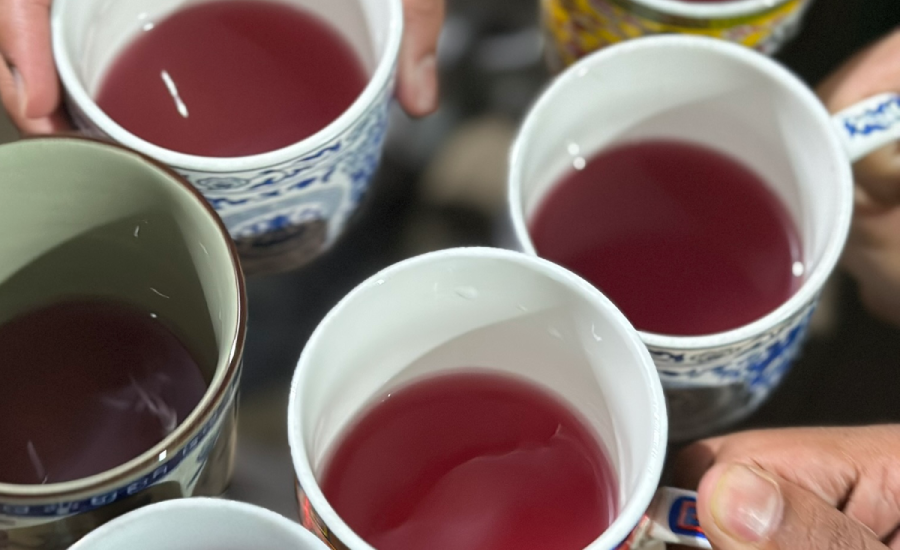
After dinner, we tasted Rhododendron wine while sitting around the angeethi, warming ourselves against the cold mountain night.
We spoke about the day, shared stories, and simply enjoyed being present.
I had brought small gifts from home for everyone I met during this trek — masala boxes and Gujarati snacks for the homestay family as a small gesture of gratitude for their hospitality and care.
Because I always feel:
No matter how little it is, sharing something with people who welcome you with warmth makes the journey more meaningful.
And then, surrounded by clouds, mountains, music, and beautiful strangers slowly becoming friends…
We rested for the night.
Hoping the next day would bring us closer to the Sleeping Buddha.
Day 3: Rammam to Nepal via Sabargram — Walking Through Ancient Forests & Mountain Kindness
Distance: Approx. 16 KM
Altitude Gain: 7,765 ft to 11,500 ft
The morning in Rammam felt magical.
For the first time since we arrived in the mountains, the sky was completely clear.
No heavy clouds.
No mist hiding the mountains.
Just golden sunlight slowly touching the village.
I woke up early, took a cup of warm water, and quietly walked outside the homestay. There was a small sitting spot above the farms right in front of the house, and I sat there watching the sunrise while sipping warm water in the cold mountain air.
Honestly… moments like these are why I travel.
No phone.
No noise.
Just silence, sunlight, mountains, and your own thoughts.
And right in front of us, we could clearly see the borders of Sikkim.
The weather felt perfect.
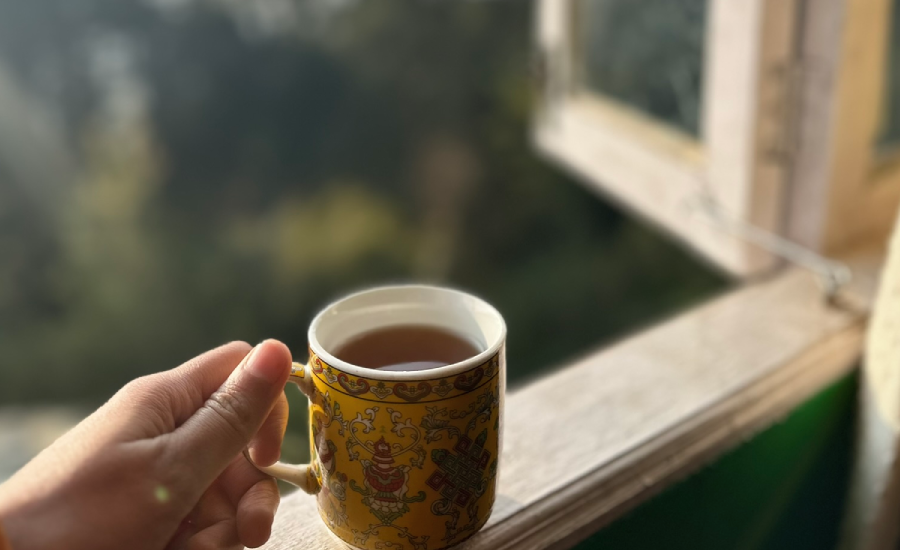
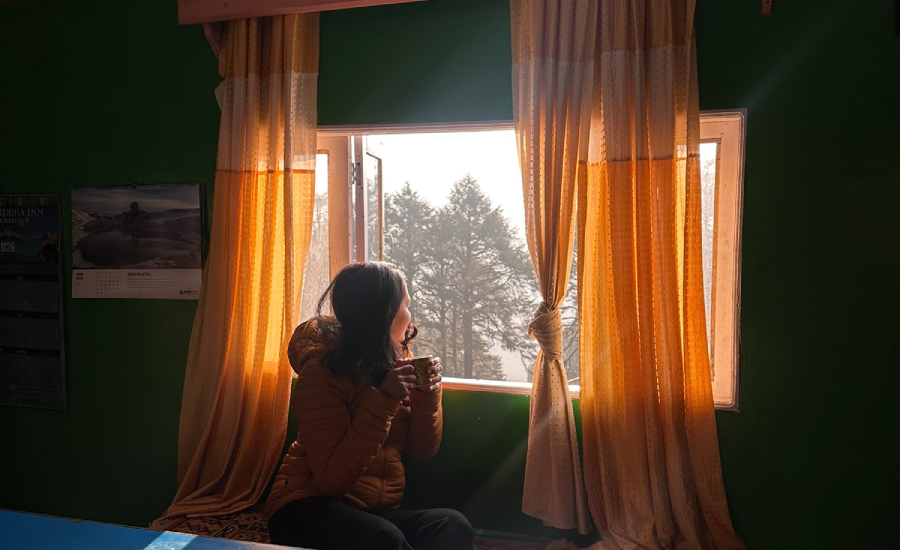
Later, I sat near the window with a hot cup of black tea, soaking in the morning sunlight entering the room.
Mountain mornings heal something inside you very quietly.
After breakfast, we packed our lunch and got ready to leave for the next destination —Nepal via Sabargram.
But before leaving, of course…
One final selfie at the homestay.
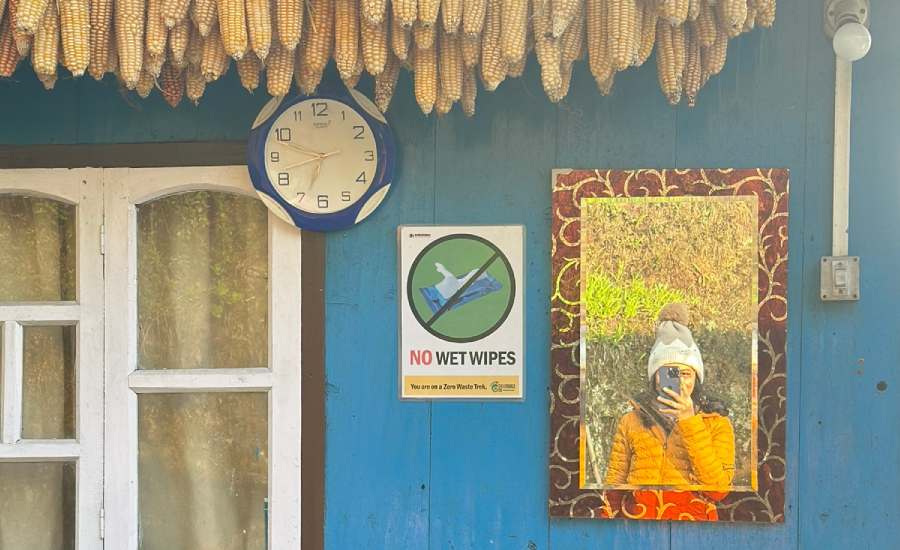
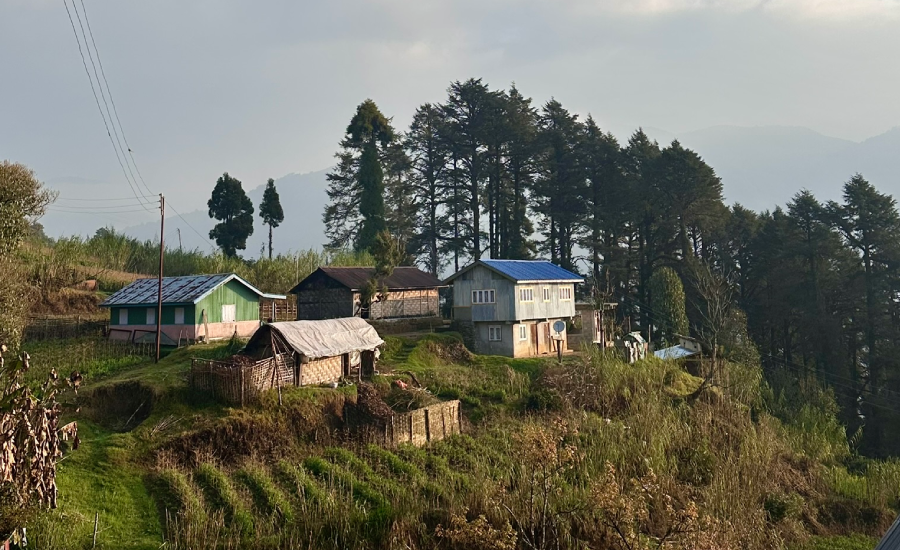
One thing I deeply noticed in almost every mountain house here was flowers.
Every single house had colorful flowers blooming outside — red, yellow, pink, purple — carefully maintained despite the harsh mountain weather.
And honestly, you can tell how much effort mountain people put into these tiny beautiful things.
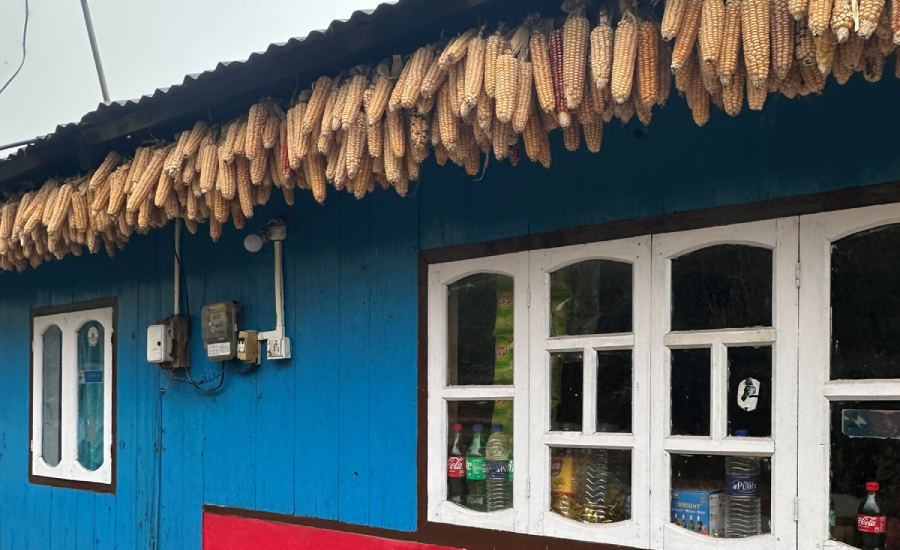
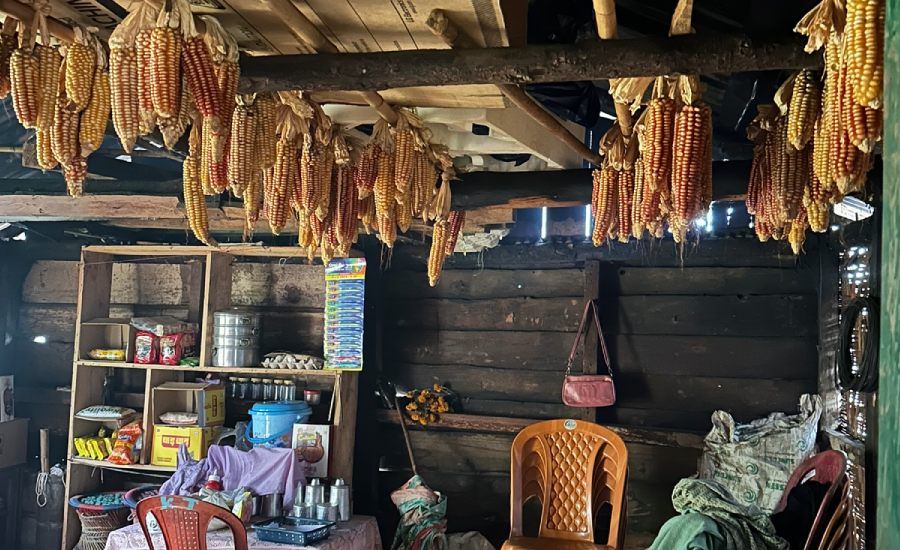
Another thing I loved seeing was corn hanging outside homes to dry naturally. These dried corns are later used during winters when conditions become harsher in the mountains.
Simple mountain life teaches sustainability without even trying.
Before we left, the homestay family gifted us Khata.
Khata is a traditional Tibetan ceremonial scarf symbolizing blessings, respect, purity, goodwill, and safe journeys. It is often offered to guests, monks, travelers, or loved ones as a gesture of warmth and positivity.
Receiving Khata in the mountains feels deeply emotional because it’s more than just a cloth — it feels like someone genuinely praying for your safe journey and return.
And honestly… that warmth stays with you.
After exchanging smiles and saying “Pheri Bhetaula” — meaning “See you again” in Nepali — we finally started walking ahead.
This was going to be one of the longest days of the trek.
Around 16 KM of gradual ascent.
Our altitude would increase from nearly 7,765 feet to around 11,500 feet, which honestly makes this stretch slightly challenging, especially for beginners.
Originally, our plan was to trek from Rammam to Samandan. But due to route closures and destruction in the bamboo forest area, we had to change the route and continue directly toward Sabargram.
And honestly, sometimes mountains decide your journey for you.
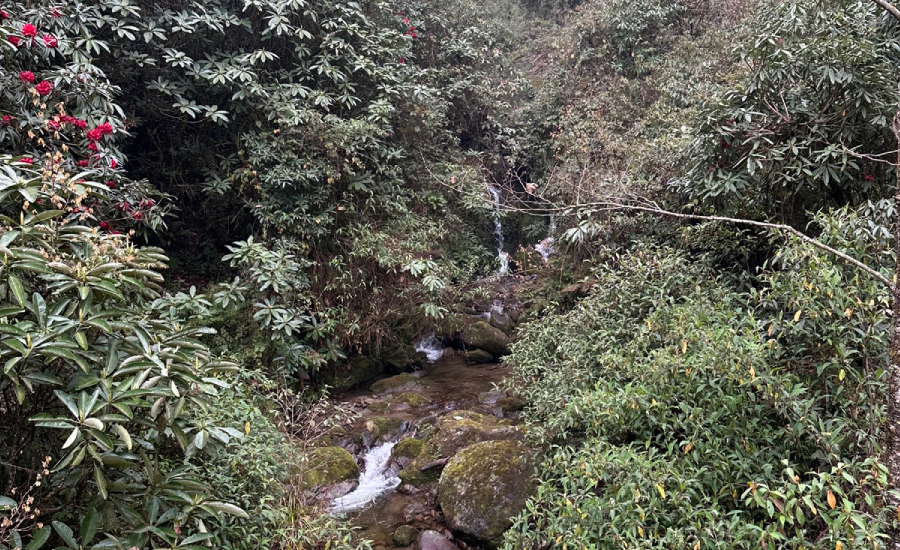
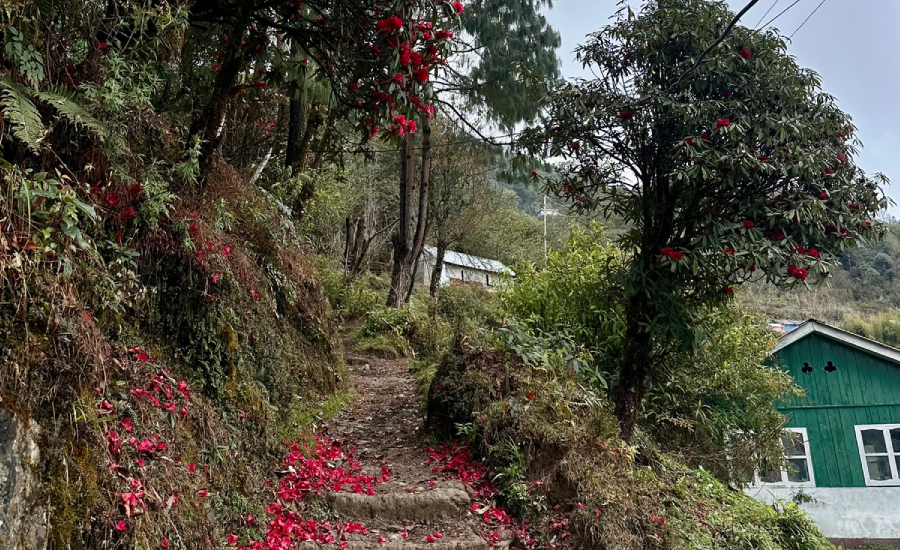
As soon as we started walking out of the village, the trail looked breathtaking.
Rhododendrons blooming around us.
The sound of the flowing Srikhola River beneath the mountains.
Dense forests ahead.
That river sound itself felt meditative.
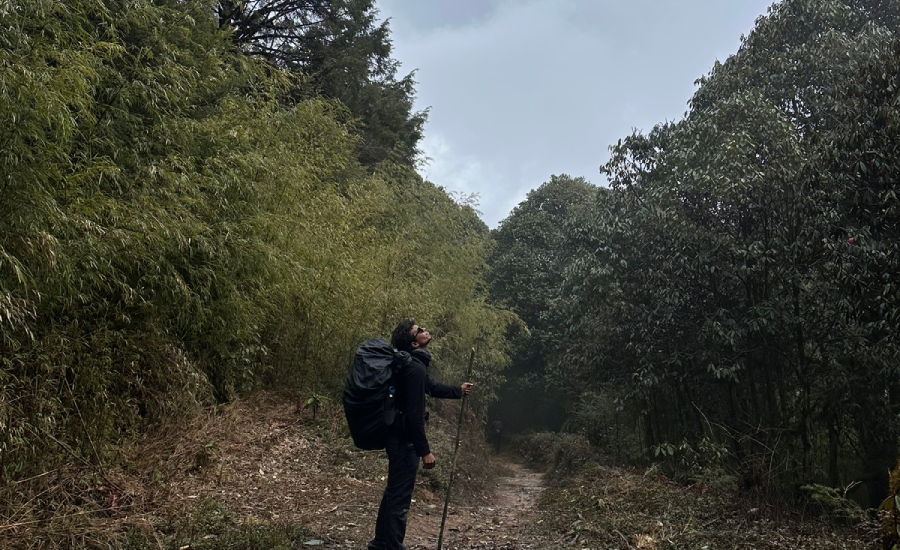
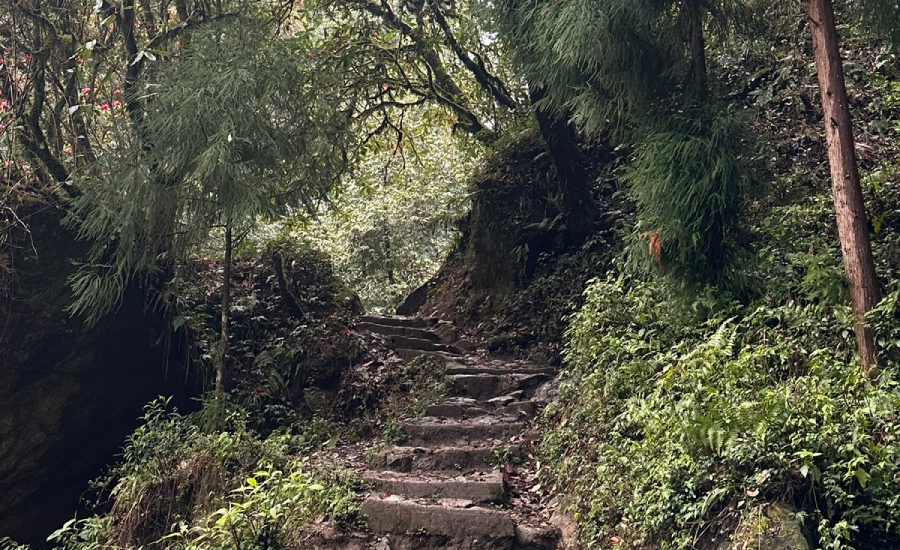
Soon we entered the deep forests of Singalila National Park.
And honestly… this forest felt ancient.
Some trees looked hundreds, maybe even thousands of years old.
Huge trunks covered in moss. Dense canopies blocking sunlight. Cold air flowing silently through the woods.
There are certain forests where you don’t just walk through nature…
You feel nature watching you too.
Some sections of the trail looked like they were made personally for you — giant trees above your head, dry leaves beneath your footsteps, soft forest sounds surrounding you completely.
And the sound of dry leaves crunching beneath trekking shoes?
Pure magic.
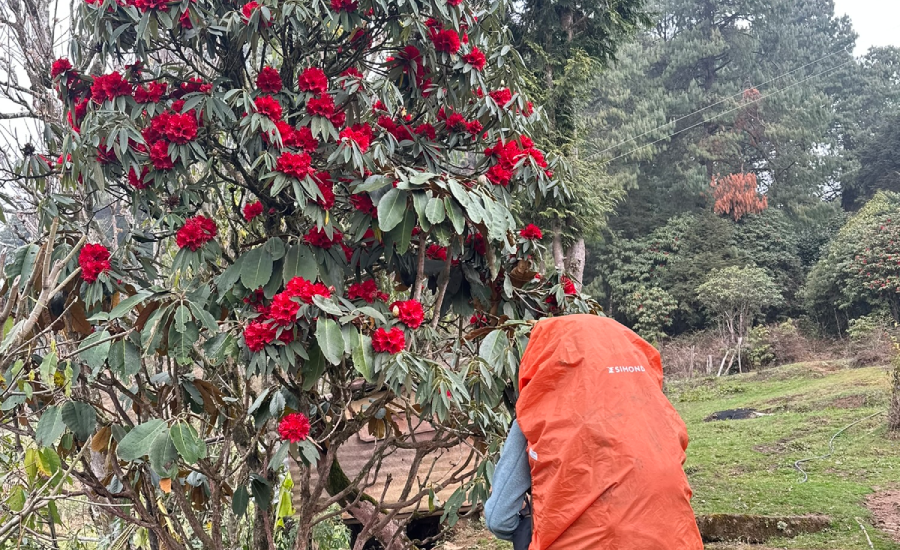
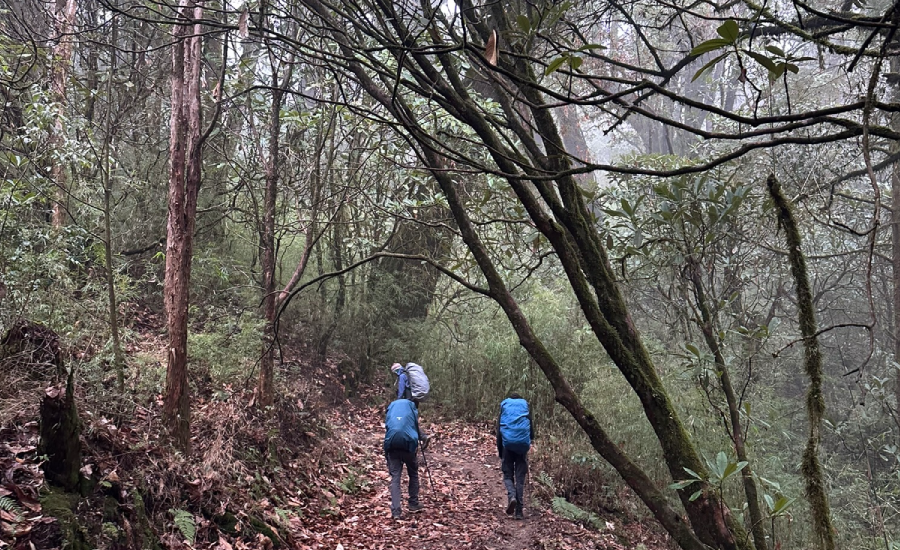
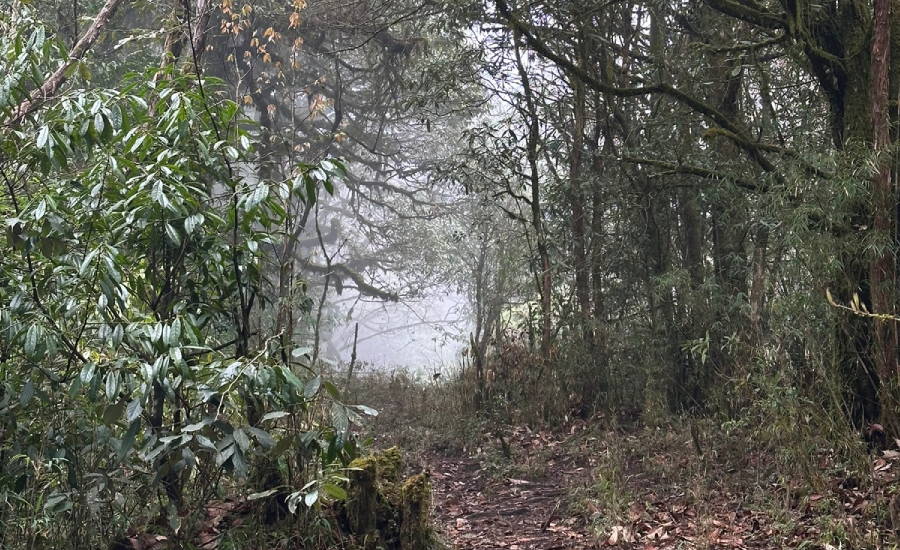
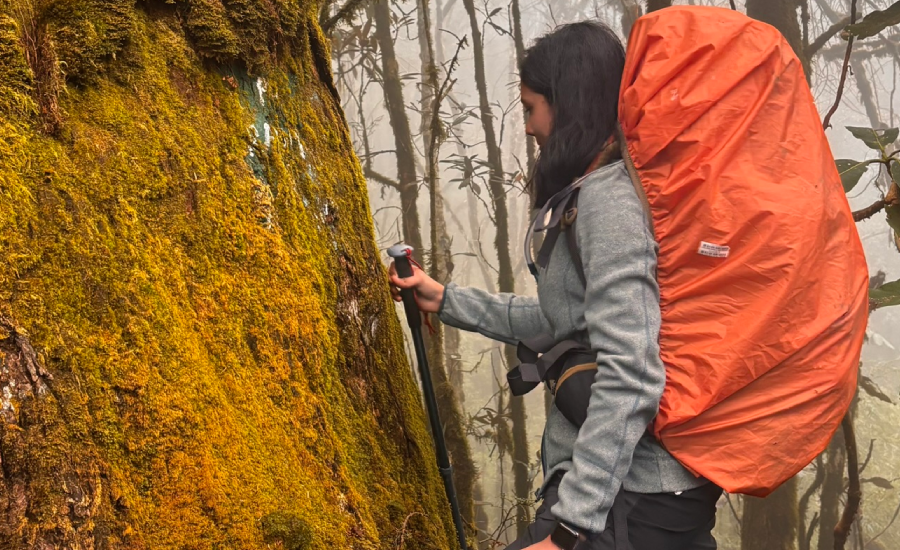
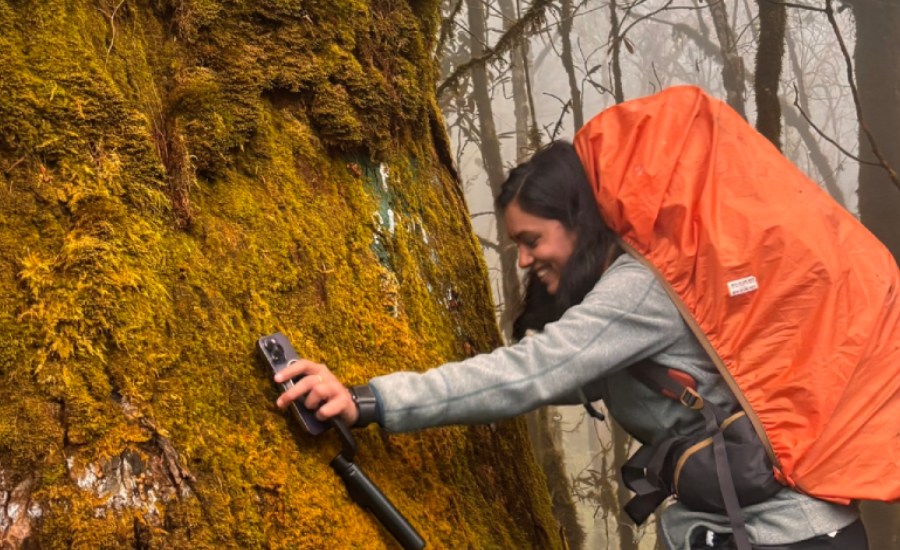
The beauty of the trail made the long walk feel lighter.
Honestly, nature distracts you from exhaustion.
We kept walking, talking about trees, flowers, species, birds, and learning so much about mountain ecology along the way.
This trek slowly became more than just reaching Sandakphu.
It became about observing life differently.
After a while, we stopped for lunch in the middle of nature.
And that’s when we realized Wallabh had forgotten his lunch box back at the homestay. 😄
Without even thinking twice, everyone started sharing food with him.
And then TK Ji casually made a spoon for him using bamboo right there.
Yes… an actual spoon from bamboo.
That moment genuinely stayed with me.
Because in cities we often complicate life so much.
And here, people create solutions with nature, simplicity, and kindness.
I felt truly grateful to meet such beautiful humans during this trek.
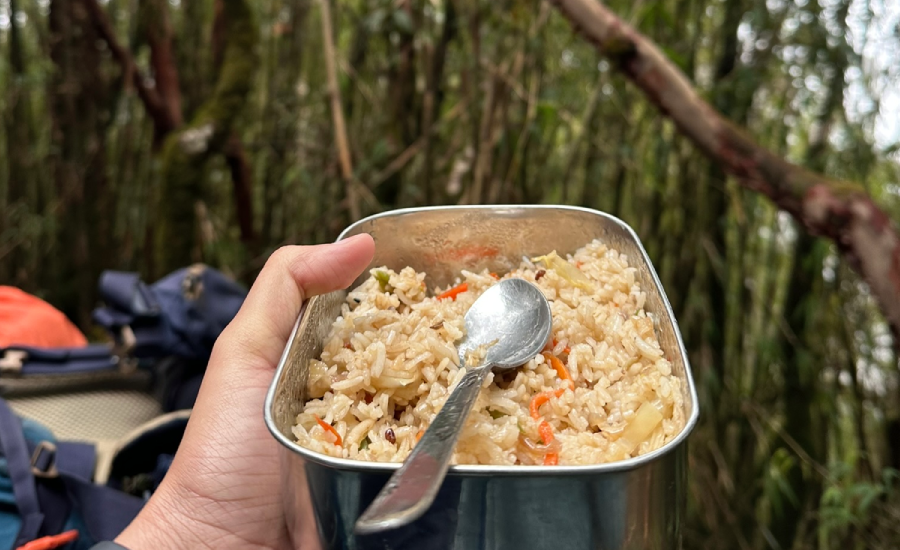
After lunch, we continued walking before the weather could turn worse.
Eventually, we reached Molley, where we met a very sweet homestay uncle and aunty.
The weather had started becoming extremely cold by then.
Without hesitation, they invited us into their kitchen to warm ourselves around the mud stove and served us hot tea.
And honestly, this is what I’ll always remember most about mountain people.
Their kindness toward strangers.
No expectations.
No formality.
Just warmth.
I had brought a shawl from home as a small gift, and I gave it to aunty as a token of gratitude for her hospitality.
The smile on her face was priceless.
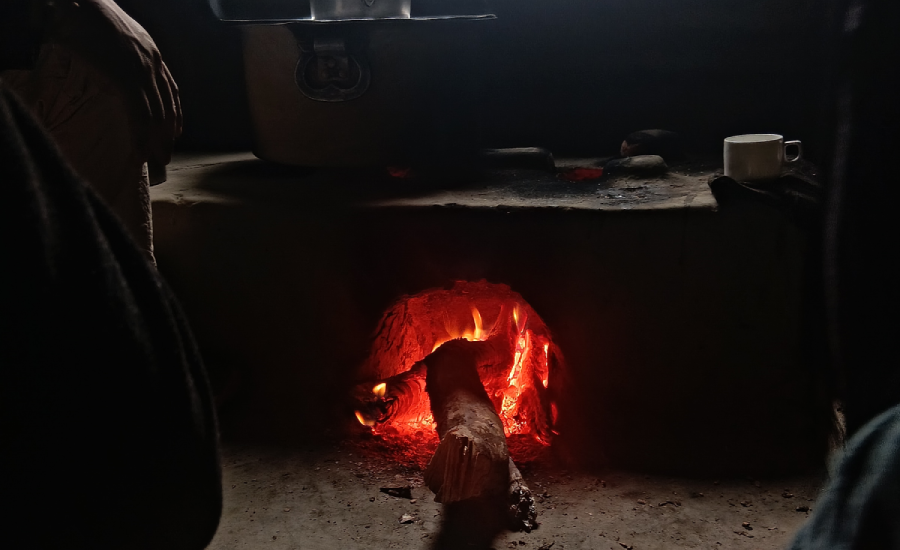
As we moved ahead, we crossed an army checkpoint where identity verification was mandatory before entering deeper routes.
By now, the wind had become brutally cold.
Hands were freezing.
Faces numb.
And the trail ahead looked endless inside the clouds.
We were told Sabargram was only around 2 KM away.
But honestly, mountain distances always feel longer in bad weather.
And then finally…
We reached Nepal around 4 PM.
The wind there was unbelievably strong.
Visibility was poor, clouds moved aggressively around us, and the cold entered straight through every layer of clothing.
We quickly changed into warm layers and wrapped ourselves inside heavy blankets.
But honestly, at that altitude and weather, even blankets struggle against the mountain wind.
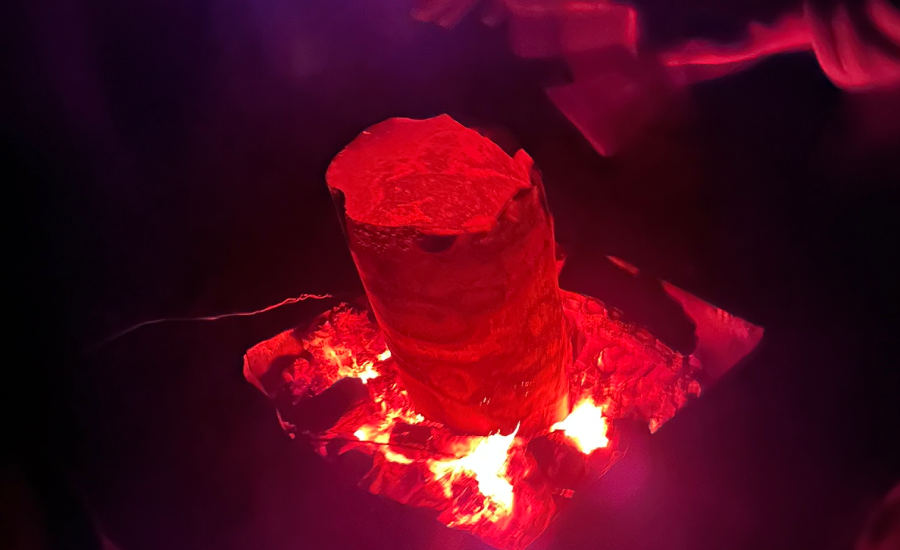
After tea and snacks, the angeethi became our lifesaver.
Everyone sat around it trying to warm frozen hands and feet.
And somehow, difficult weather always brings people closer.
After dinner, we all gathered in one room, played cards, laughed endlessly, and shared stories after one of the longest and most tiring days of the trek.
That warmth of friendship felt even better than the blankets outside.
And somewhere during those conversations, I kept thinking about one thing:
This place is famous for clear views of the mighty Sleeping Buddha.
But looking at the weather outside…
I honestly wondered if we would even get to see it.
Maybe the mountains were still testing our patience.
Maybe they wanted us to earn the view first.
Day 4: Sabargram Exploration — Waiting for the Mountains to Reveal Themselves
The mountains teach you patience in ways no book ever can.
That morning in Sabargram, we woke up early with only one hope in our hearts:
“Maybe today we’ll finally see the Sleeping Buddha.”
The plan was simple.
Wake up before sunrise.
Step outside.
Watch the golden Himalayan peaks reveal themselves slowly through the first light.
But mountains don’t always follow your plans.
When we stepped outside the homestay, the weather was brutally cloudy. Wind was moving aggressively, fog covered everything around us, and visibility was so poor that we couldn’t even see 100 meters ahead.
No sunrise.
No mountains.
Only white clouds swallowing everything.
We looked outside quietly for some time… and then honestly, we just went back to sleep again.
Because sometimes in the mountains, there’s nothing else you can do except surrender.
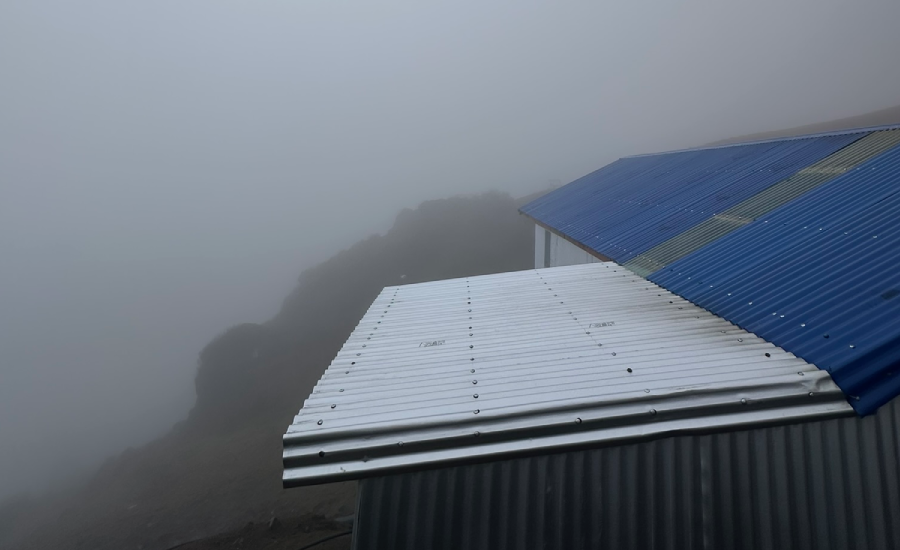
Originally, our plan was to move further toward Aal that day. But due to harsh weather conditions and route safety concerns, we didn’t get permission to continue ahead.
So instead, we decided to stay back for one more day.
And secretly, all of us were hoping for just one thing:
Even a small weather window of 30 minutes… enough to finally see the mighty Sleeping Buddha.
Sometimes trekkers wait days for those few magical minutes.
And honestly, that wait itself becomes part of the mountain experience.
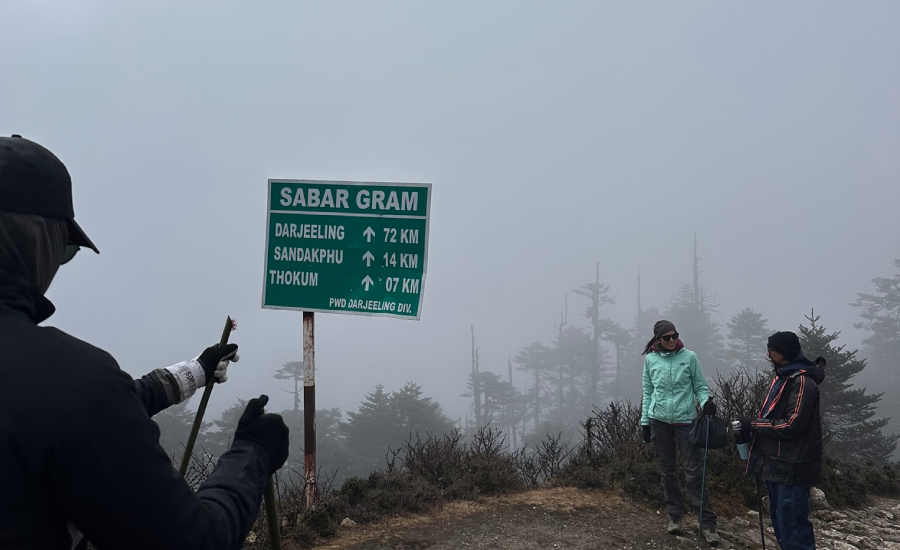
Since we suddenly had an unplanned free day, we decided to explore the village nearby.
Honestly, Sabargram itself is a very small settlement with very few people living there permanently. Our homestay was actually on the Nepal side, which made the whole experience even more fascinating.
There’s something surreal about casually walking between borders in the mountains.
No giant fences.
No dramatic checkpoints everywhere.
Just mountains, clouds, and people quietly living their lives.
After breakfast, we wore rain jackets, packed water bottles, and stepped out into the cold windy weather to explore nearby areas.
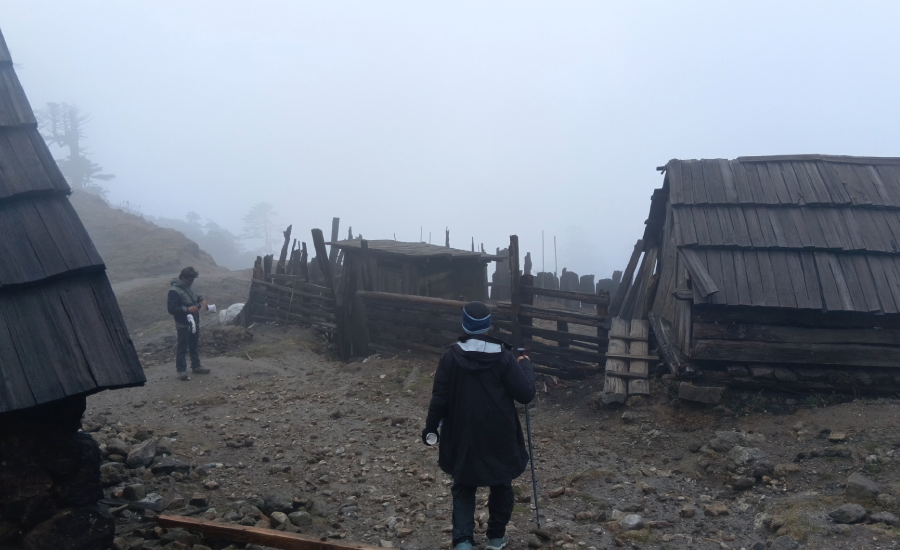
While walking, we came across a simple stone marker placed between the trail.
And that single stone quietly represented the border between two countries — India and Nepal.
No massive walls.
No loud separation.
Just one small stone in the middle of the mountains.
Honestly, moments like these make you realize how nature never created borders. Humans did.
The mountains simply exist beyond them.
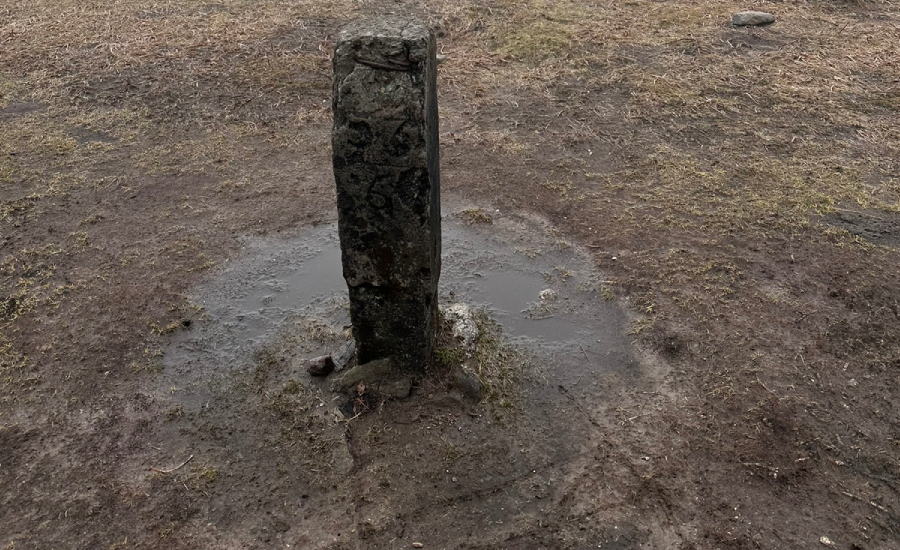
As we continued walking, we eventually reached a small house known locally as the “Nepali Hut,” where a mountain family lived surrounded by sheep, yaks, and horses.
Visiting this place became one of the most memorable experiences of the entire trek.
They welcomed us warmly inside despite being complete strangers.
Inside the kitchen, we could see yak meat and local cheese called Chhurpi hanging and drying above the stove area.
Chhurpi is a traditional Himalayan cheese commonly made from yak milk, especially popular in Nepal, Sikkim, and North Bengal regions. Some versions are soft while others become extremely hard and chewy after drying.
Mountain food culture itself feels deeply connected with survival and weather conditions.
And honestly, that fascinated me a lot.
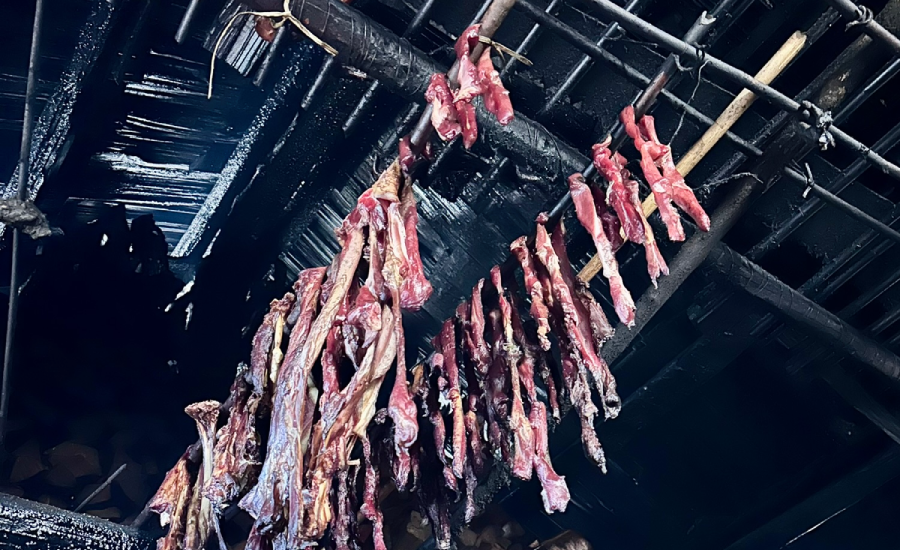
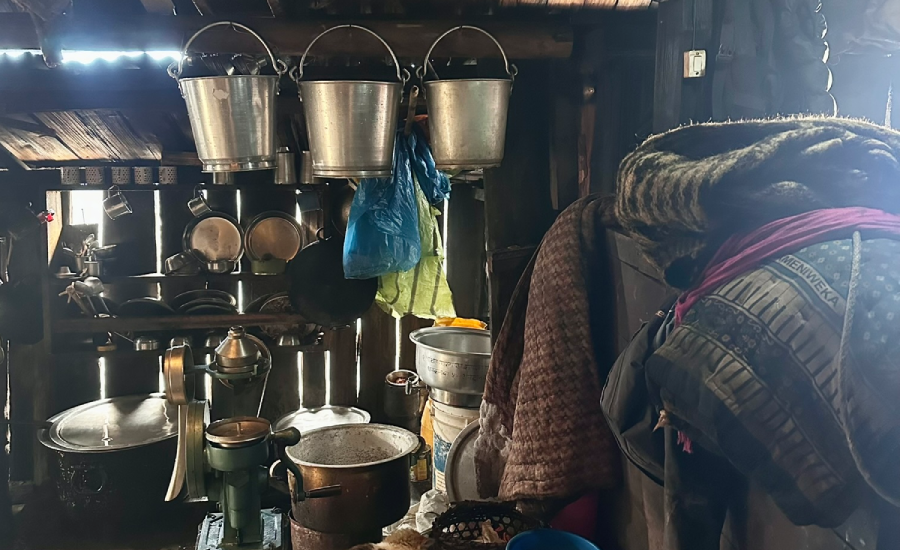
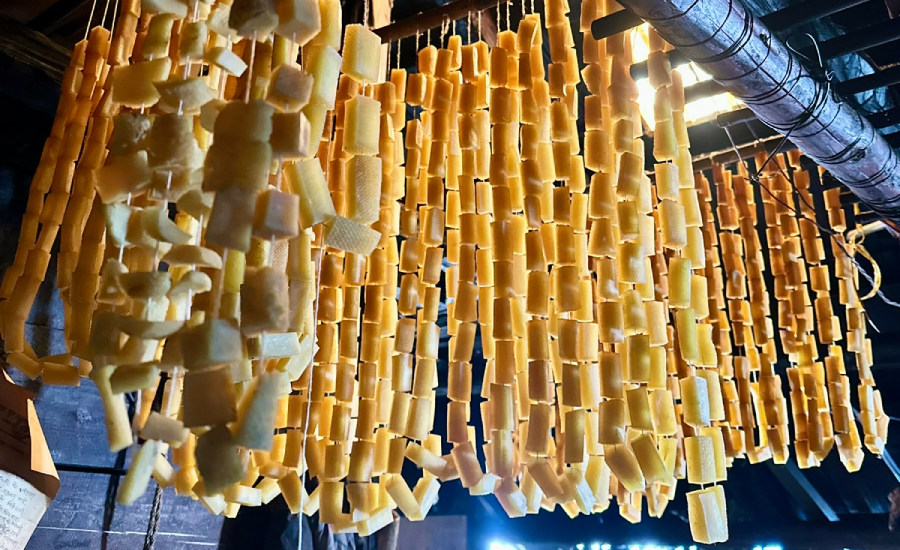

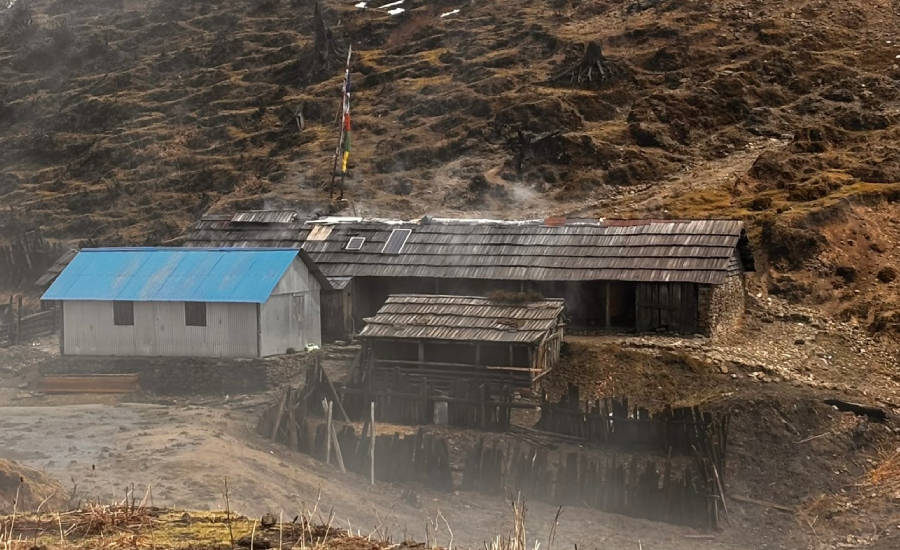
What touched me most was seeing how the family practically lived inside the kitchen itself during harsh weather conditions.
Because in those freezing temperatures, the warmth of the mud stove is what truly keeps life moving.
That kitchen wasn’t just a place to cook.
It was warmth.
Comfort.
Survival.
Family space.
They offered us hot yak milk, and we all sat there quietly drinking an entire glass while warming ourselves around the fire.
Honestly, I don’t think I’ll ever forget that feeling.
Outside — freezing cold wind.
Inside — warmth, kindness, and mountain hospitality.
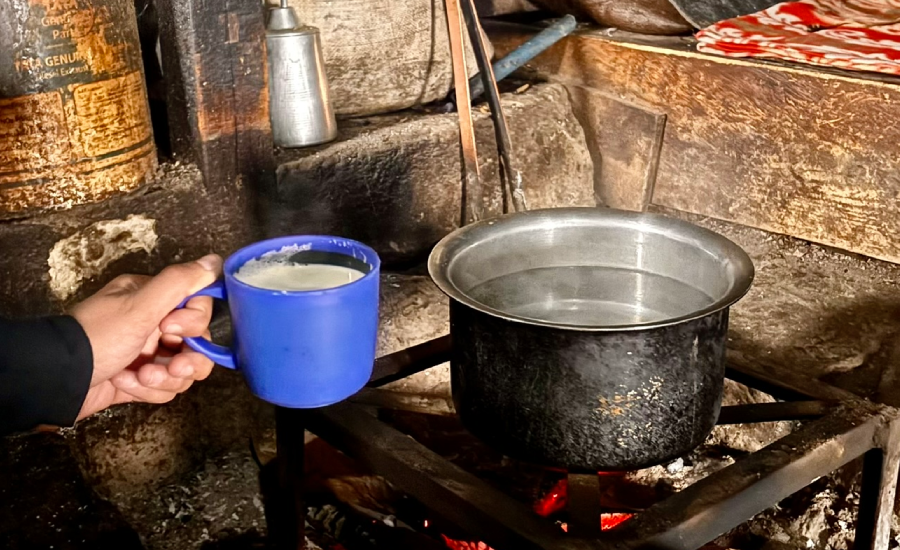
And of course… there were cats again. 😄
Beautiful fluffy mountain cats who immediately became the center of our attention.
We played with them, spent time there, and slowly learned more about the family’s lifestyle.
Usually, their full family stays together there during the season. But because the weather had turned unusually harsh, many family members were still staying in lower villages and had not moved up yet.
Mountain life depends completely on weather.
And this trek made me respect that reality deeply.

After spending time there, we walked around nature again, constantly looking toward the sky and hoping the clouds would clear for even a few moments.
But maybe the mountains had different plans for us.
Not even a single window opened that day.
No Sleeping Buddha.
No golden peaks.
Only endless clouds.
And strangely… I slowly started accepting it.
Because mountains don’t owe us views.
Sometimes they simply want us to experience their silence instead.
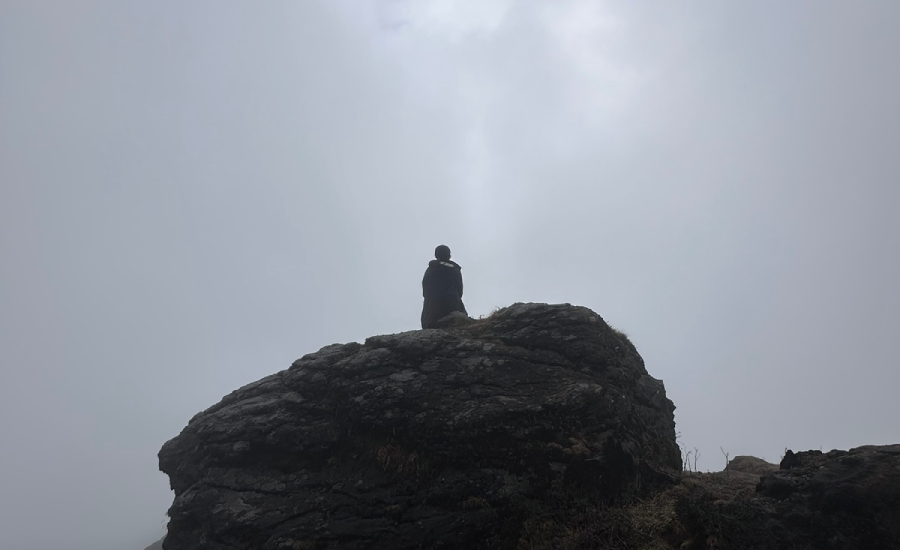
By afternoon, we returned to our homestay.
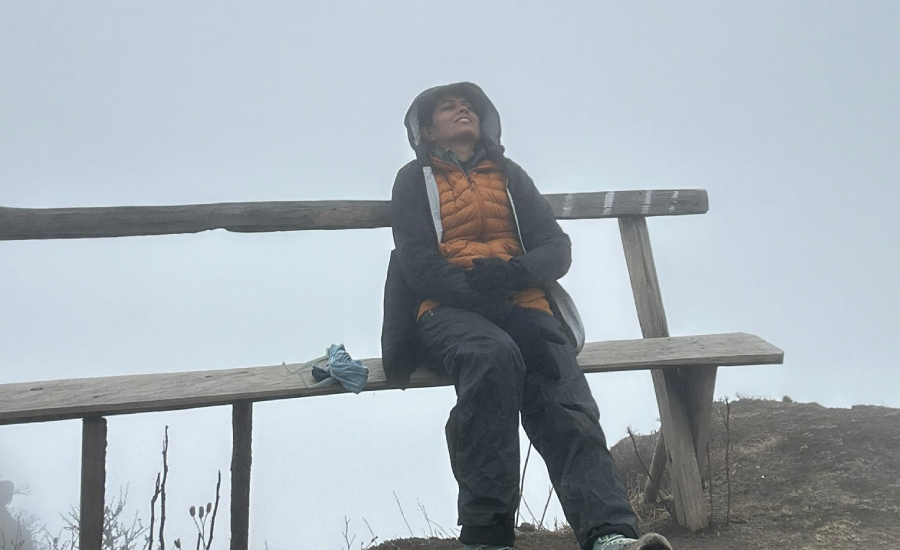
Right beside the homestay, there was a bench overlooking the valley.
And since I genuinely love sitting alone in nature, there was no way I was missing that moment.
I sat there quietly for a long time.
No music.
No phone.
No thoughts.
Just me… sitting inside the mountains.
And honestly, I think this feeling is one of the biggest reasons why I love trekking so much.
To go far away from noise.
Far away from people sometimes.
Far away from constant chaos.
And just exist peacefully for a while.
After lunch, we spent the rest of the day together at the homestay.
The homestay had a cat whom we lovingly called “Nani,” and obviously she became part of our group instantly. 😄
We played with her, spent time talking, laughing, resting, and simply enjoying a slow mountain day.
At night, we gathered again to play games and spend time together.
But somewhere in everyone’s mind, one thought was still running constantly:
Will the weather clear tomorrow?
I personally woke up multiple times during the night — maybe two or three times — just to check outside and see if the sky was finally opening.
But every single time…
Clouds.
Fog.
Wind.
Maybe the mountains still wanted us to wait a little longer.
And just like that, another night quietly passed in the Himalayas.
Day 5: Nepal to Rammam — Snowfall, Ancient Forests & the Warmth of Mountain Homes
That morning felt magical even before I fully opened my eyes.
When I woke up and looked outside the window, everything had changed overnight.
Snow.
Fresh white snow had covered the roofs of every house around us. Our homestay itself looked frozen under layers of ice and snow, as if the mountains had quietly transformed the entire landscape while we were asleep.
And honestly… it looked breathtaking.

The mountains had finally gifted us something unexpected.
After breakfast, we were planning to leave for Rammam.
But the moment I stepped outside…
It started snowing again.
And I couldn’t control my happiness.
I completely forgot about the cold, the wind, the wet shoes — everything.
I just stood there enjoying the snowfall like a child.
Maybe because snowfall still feels magical no matter how old you grow.
Maybe because some moments cannot be explained, only felt.
It was unexpected, beautiful, emotional, and I genuinely felt grateful that nature blessed us with this experience.
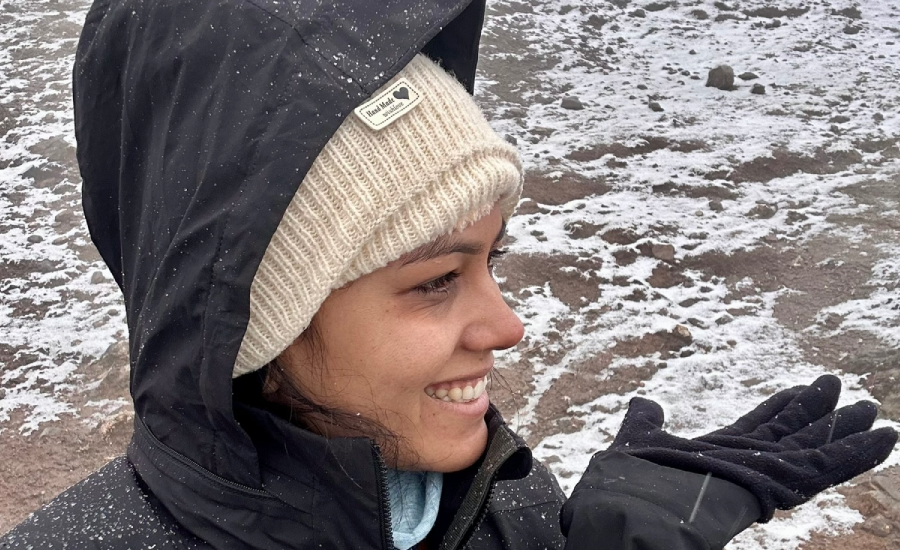
The cold was intense though.
Hands freezing.
Face numb.
Breath visible in the air.
But somewhere, that harsh cold made the snowfall even more memorable.
After some time, we finally started our journey back toward Rammam.
And honestly, the same trail looked completely different now.
Just one day earlier, we had walked through dry forest paths covered with leaves.
Now everything was hidden under snow.
The landscape had transformed entirely overnight.
And that’s the beauty of mountains — they never stay the same.
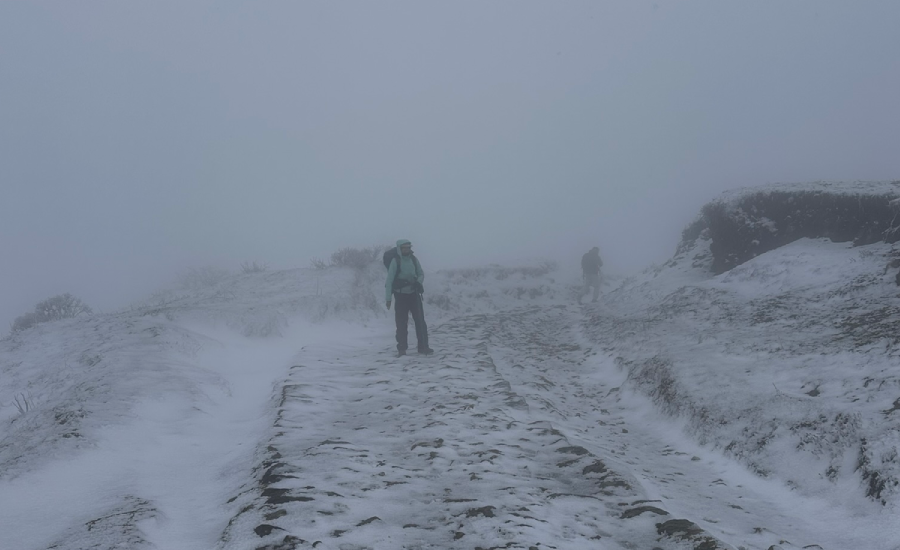
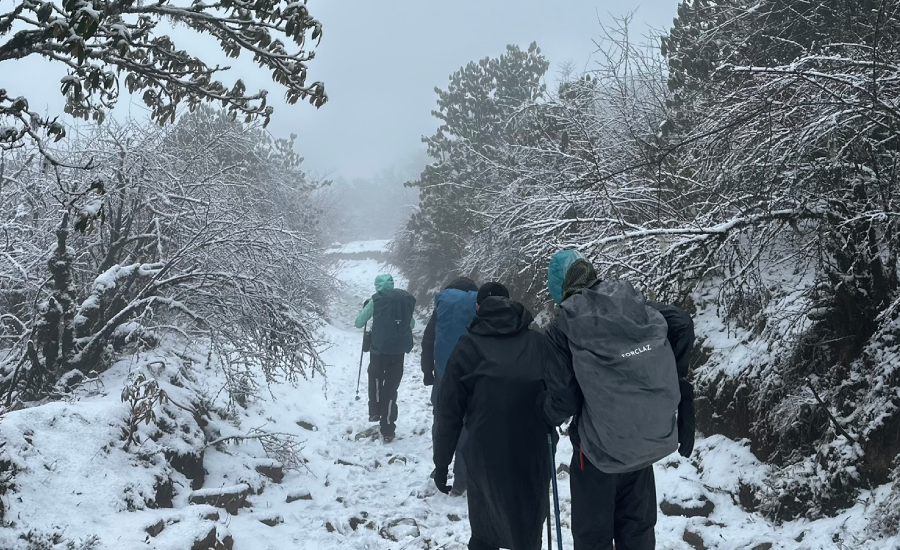
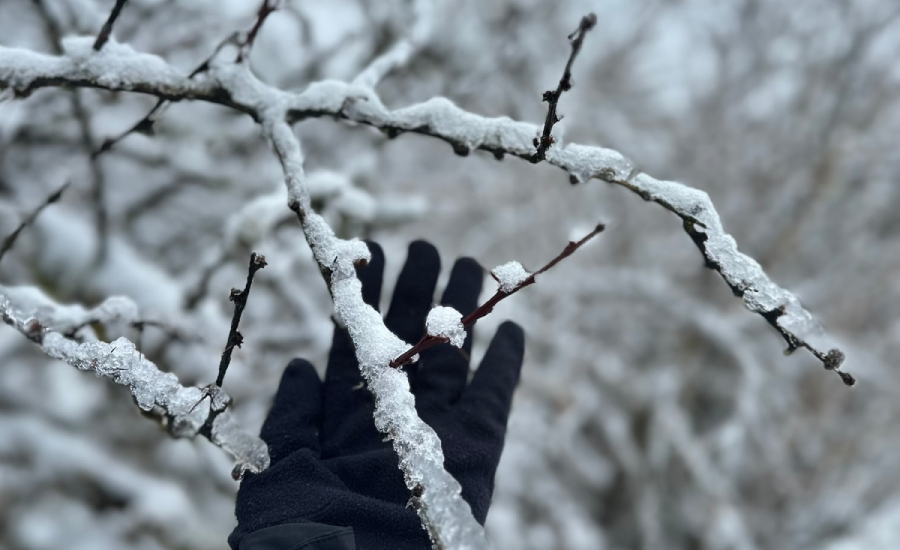
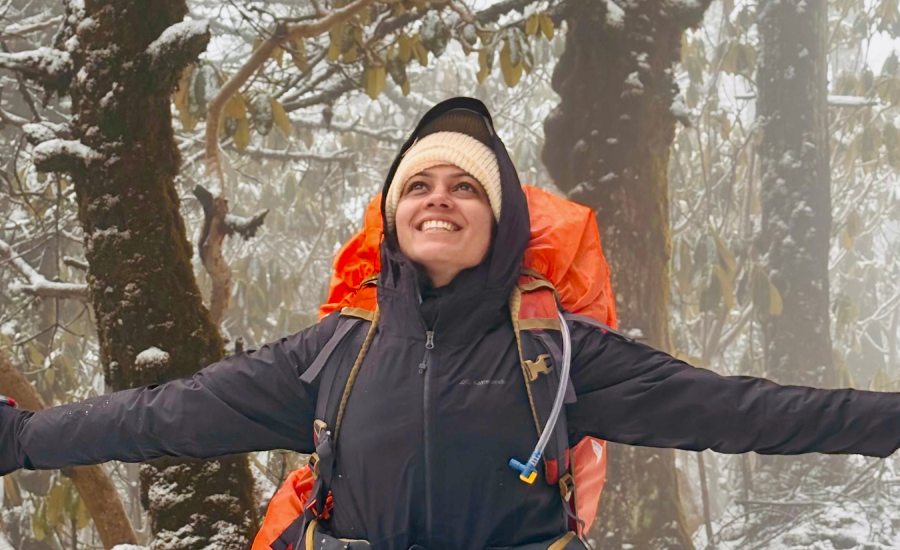
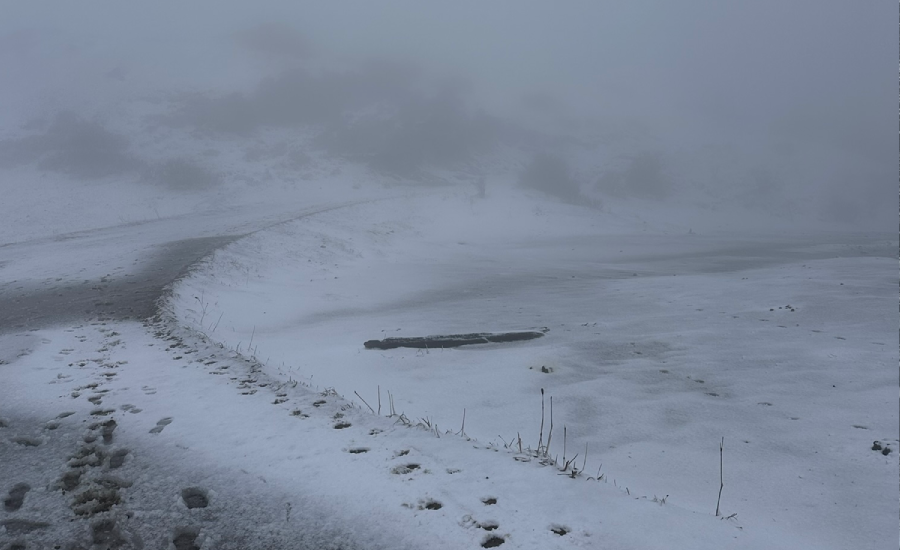
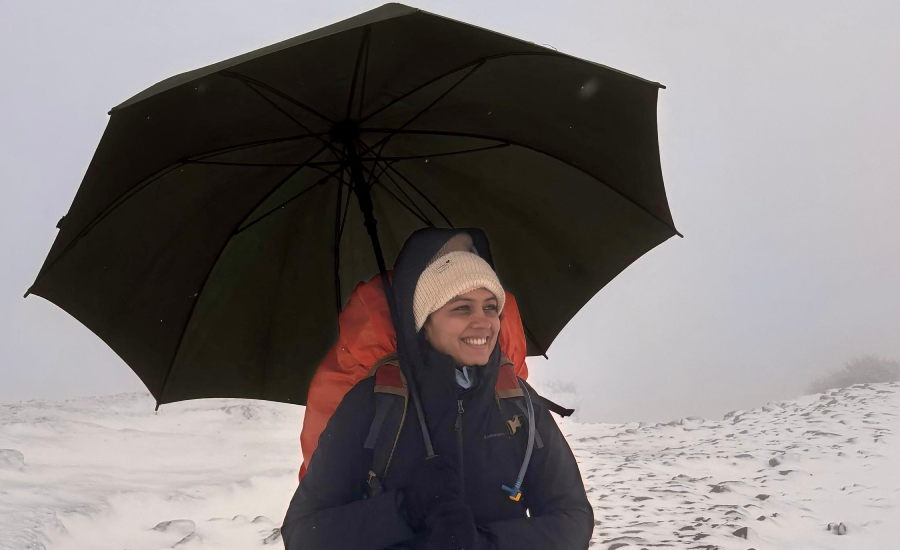
We kept walking through snow-covered paths, talking to people we met along the way, enjoying the weather, laughing at frozen hands, and simply soaking in every moment.
And then we started spotting yaks on the trail.
Huge, calm, beautiful mountain animals peacefully moving through the cold weather as if this harsh climate belonged only to them.
Because honestly… it does.
Yaks are usually found in high Himalayan regions and are deeply connected with mountain life and survival in these cold altitudes.
And somehow, seeing them in snowfall made the experience feel even more Himalayan.
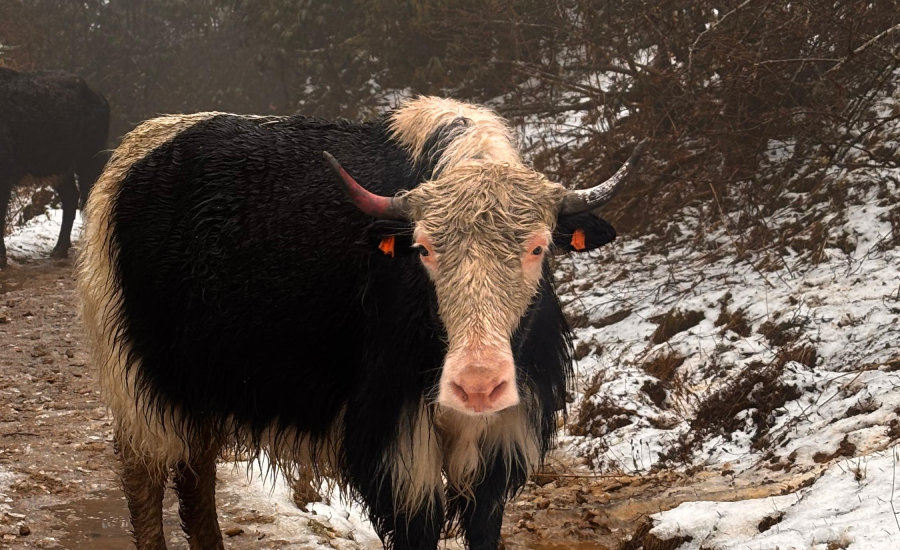
Eventually, we entered the forest again.
And this forest…
I think it will always stay with me forever.
Earlier, the forests of Shyalmii Campsite during my Deoriatal Chandrashila trek had a special place in my heart.
But after this journey…
The forests of Singalila National Park quietly took that place.
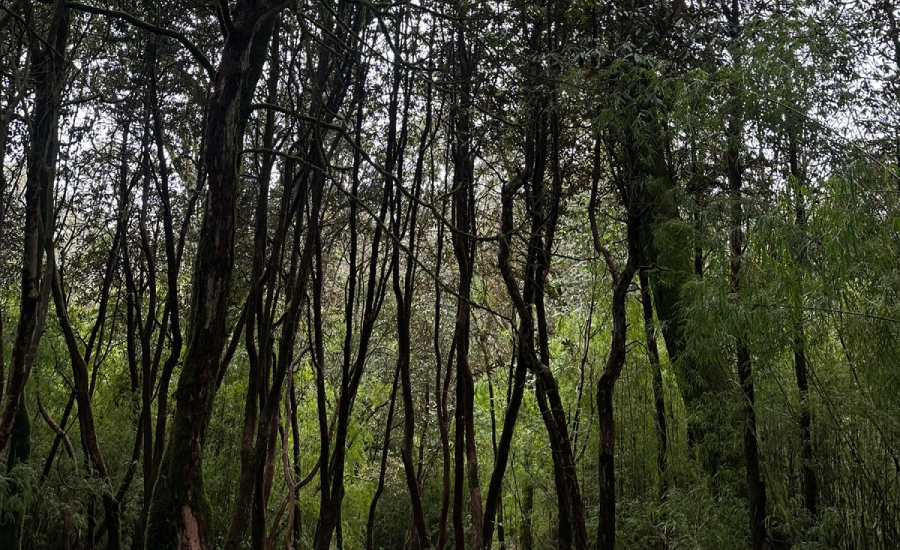
This forest feels ancient.
Dense beyond imagination.
Huge trees standing silently for hundreds, maybe thousands of years.
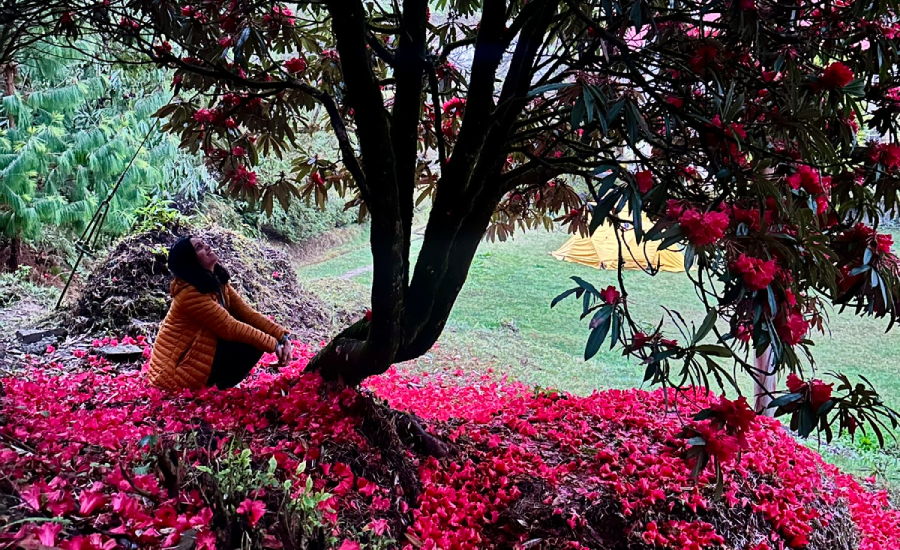
And honestly, I become a very different person inside forests like these.
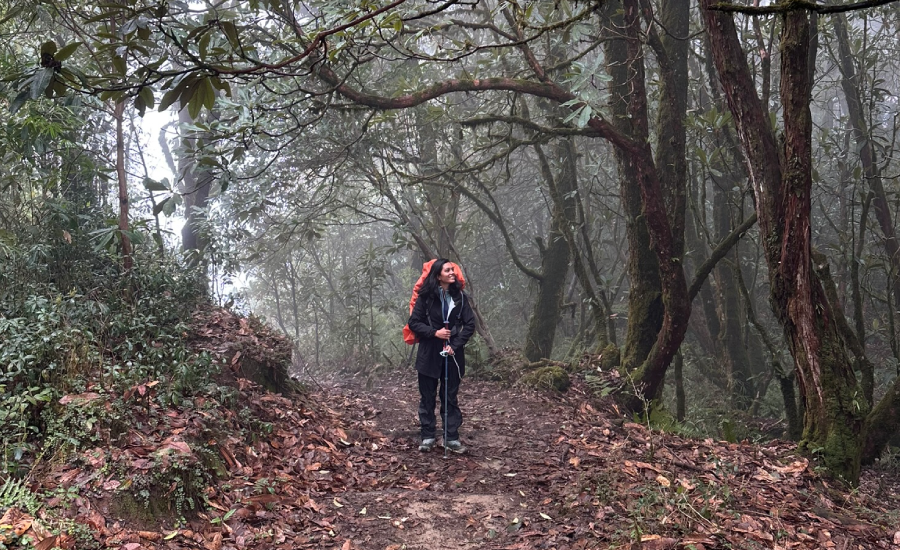
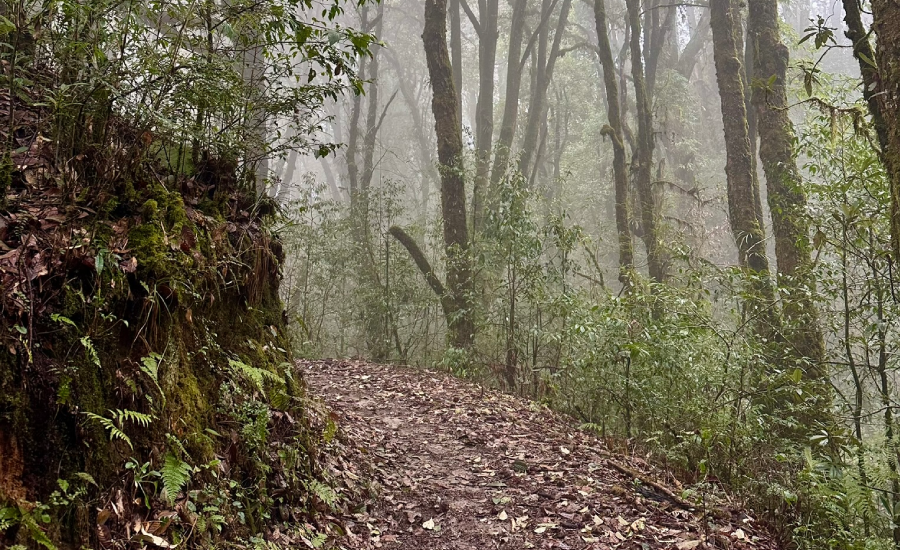
There’s something deeply emotional about sitting beneath giant trees.
Sometimes I simply stop walking, place my hand on the tree bark, hug the trunk gently, and quietly say:
“Grow well. Thank you for protecting nature and all of us.”
I know it may sound strange to some people.
But forests make me feel connected in a way cities never can.
Every tree looked different.
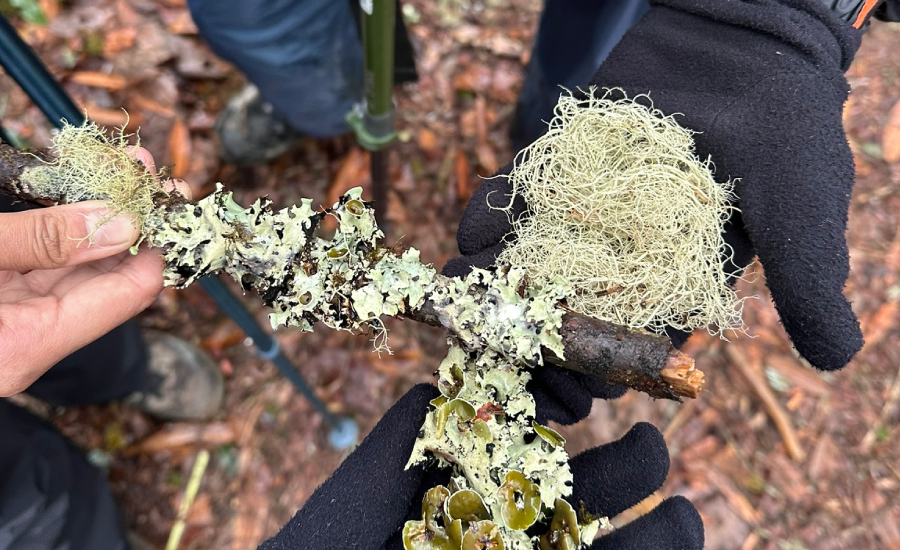
Some had twisted branches merging into each other. Some formed beautiful natural shapes and tunnels. Moss covered old trunks while snowfall slowly rested over branches.
It honestly felt like walking inside a living fairytale.
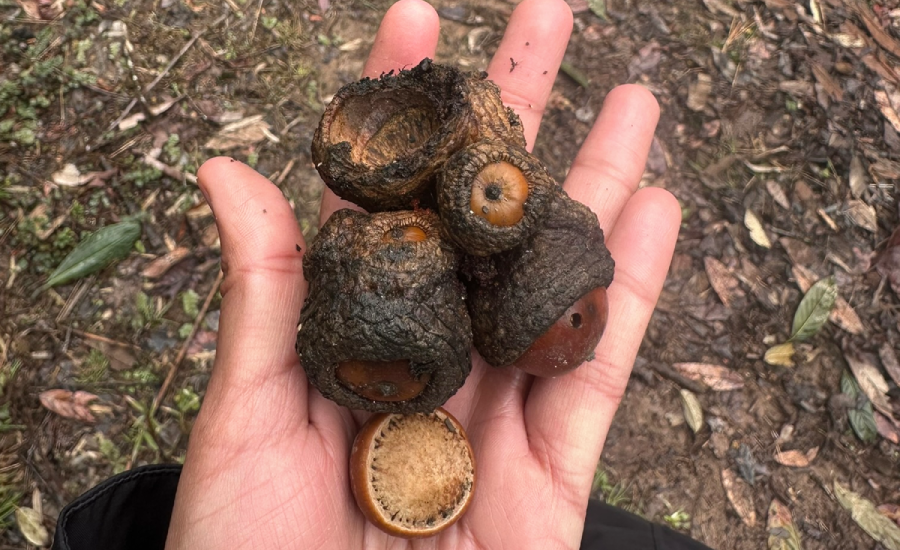
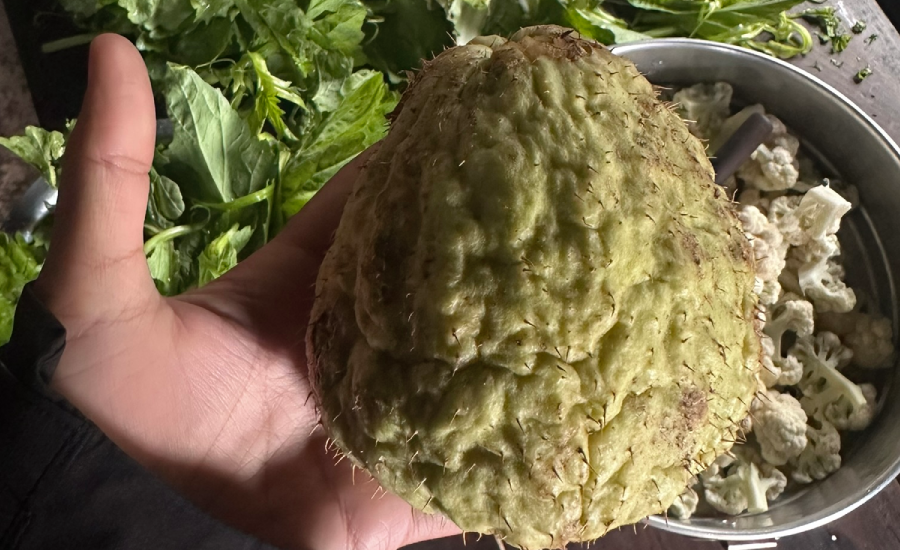
That day, I also noticed oak nuts scattered around the forest and learned something fascinating from TK Ji.
Edible oak nuts are used in mountain regions to prepare nutritious drinks and milk-like preparations, especially valued for their health benefits in cold Himalayan climates.
This is what I love most while trekking.
Not just landscapes.
But learning small local knowledge passed through generations.
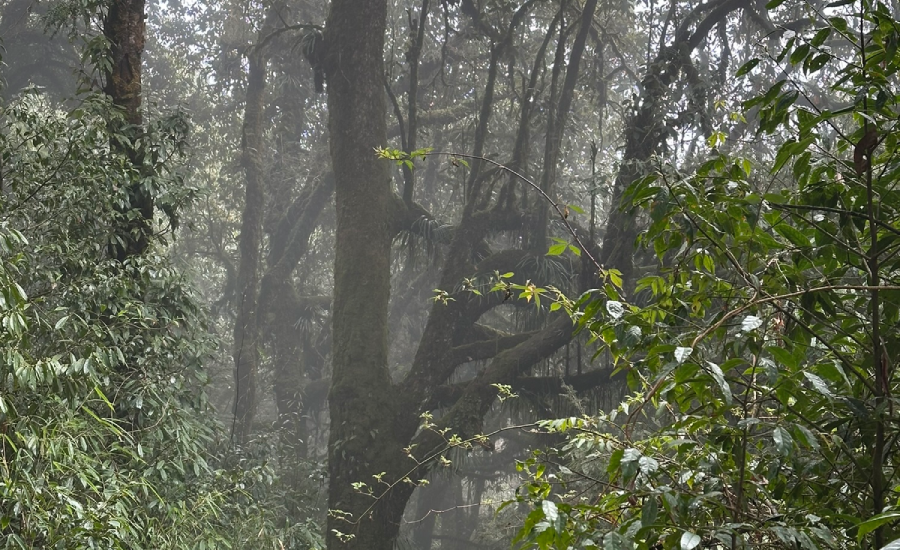
At one point, I decided to stop completely.
I simply laid down beneath one giant tree and stared upward toward the sky through branches while listening to birds whispering somewhere above.
And honestly…
I cannot fully explain what I felt in that moment.
Peace.
Stillness.
Belonging.
Maybe for the first time in a long time, my mind was completely quiet.
No thoughts.
No stress.
No rush.
Just me and the forest.
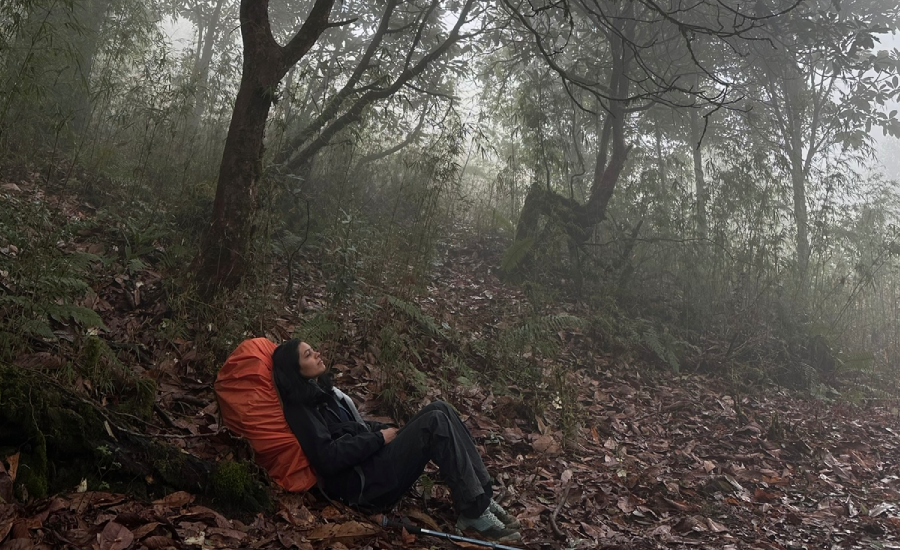
After resting for some time, we slowly continued walking through the dense forest again.
We kept taking small breaks to hear birds, identify trees, and talk with TK Ji about mountain culture, local stories, birds, forests, and life in the Himalayas.
And somehow…
Hours passed without us realizing.
That’s what nature does when you truly immerse yourself in it.
Finally, we reached Rammam again.
And yes, somewhere inside, we were still hoping the weather might clear and finally show us the Sleeping Buddha.
But maybe this trek was teaching us something beyond mountain views.
This time, we stayed in another beautiful homestay managed by a sweet uncle and aunty.
And honestly…
I can confidently say this homestay served some of the tastiest food I’ve ever had during any trek.
They welcomed us with hot squash momos, spicy green chutney, and corn soup.
Simple food.
But made with so much warmth that it tasted unforgettable.
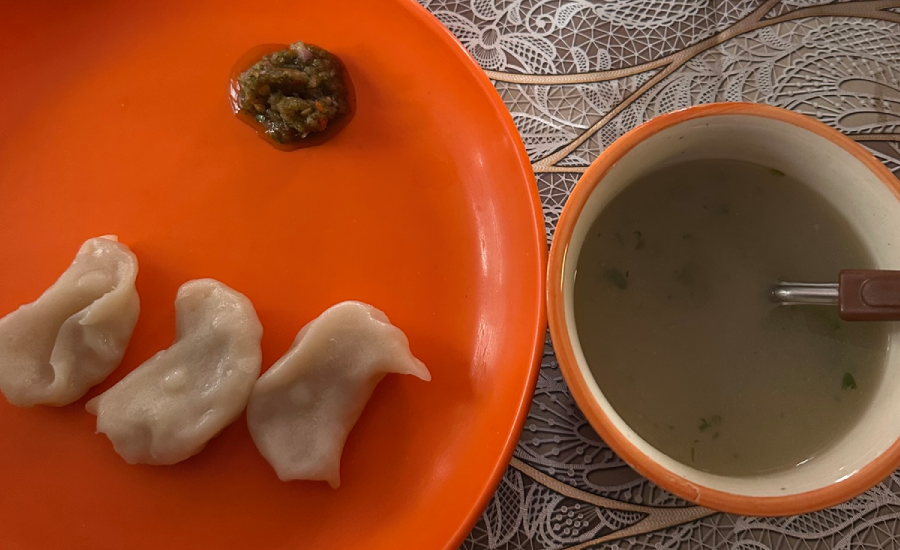
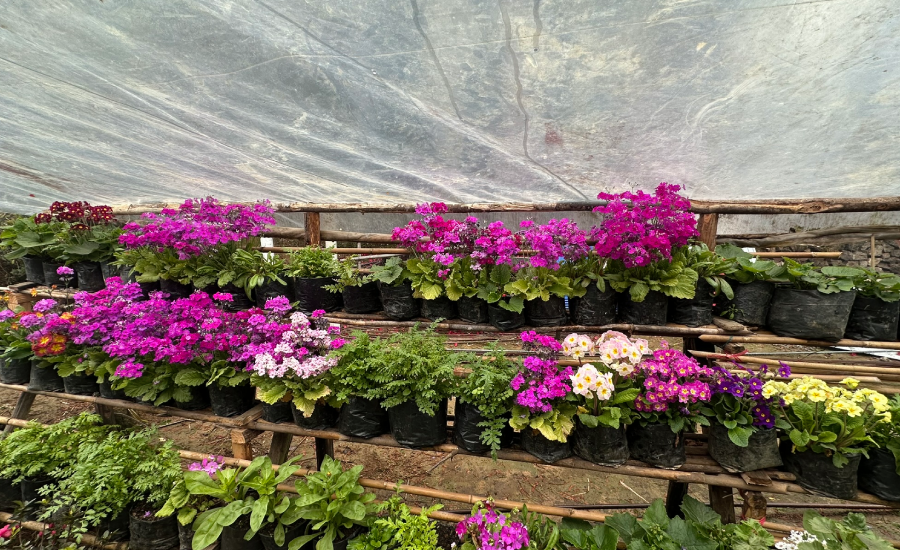
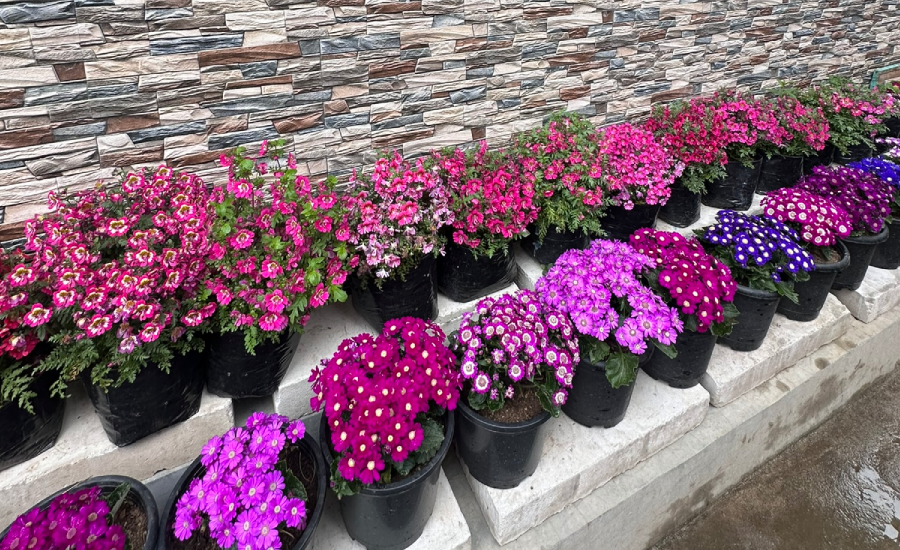
They also had a beautiful nursery filled with colorful flowers and plants around the house.
And obviously, I couldn’t stop myself from touching every plant I saw. 😄
Nature genuinely makes me happy in the smallest ways.
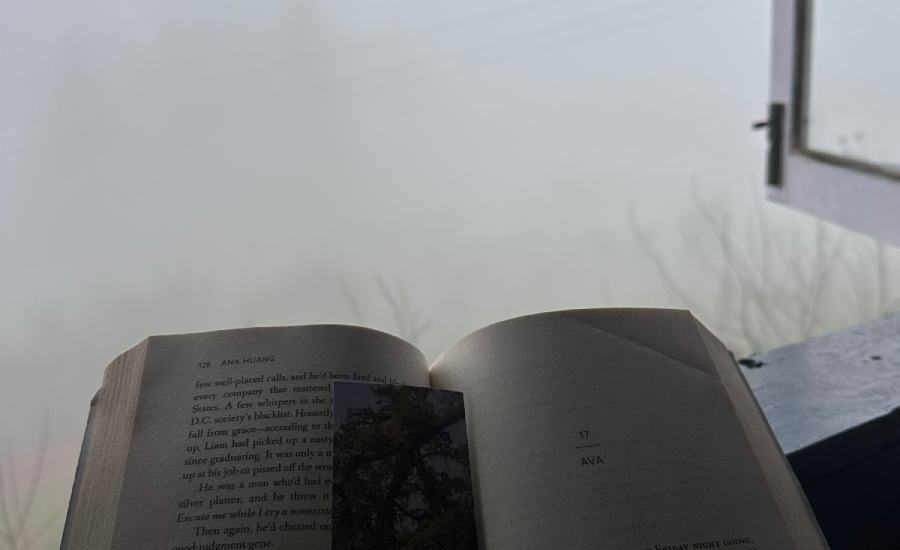
The upper floor of the house was empty, so I quietly went upstairs, sat near the window, started reading a book, and listened to birds chirping outside.
That felt like one of the best moments of my life.
Just peaceful existence.
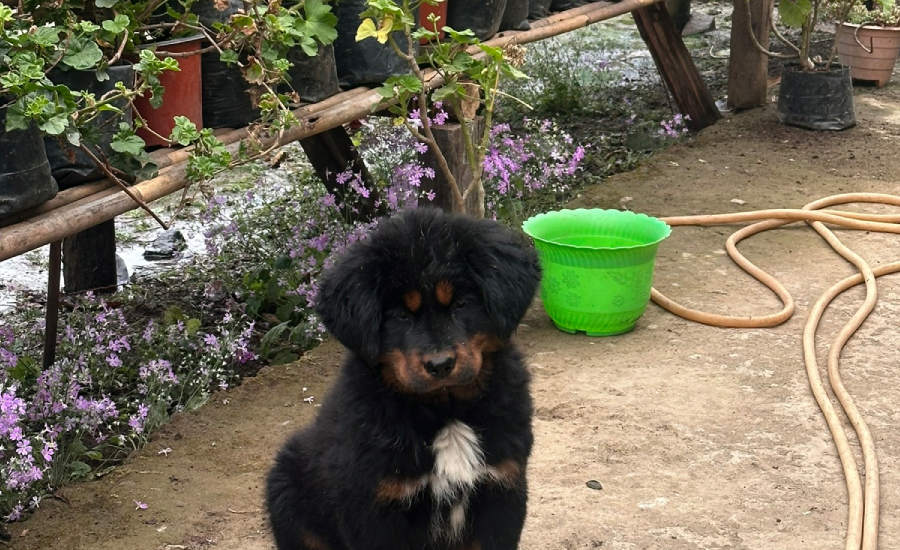
Later, I spent time playing with their mountain shepherd puppies.
They were unbelievably playful and adorable.
And, the funniest thing was how dramatically they reacted when you stopped playing with them. Their expressions looked genuinely offended. 😄
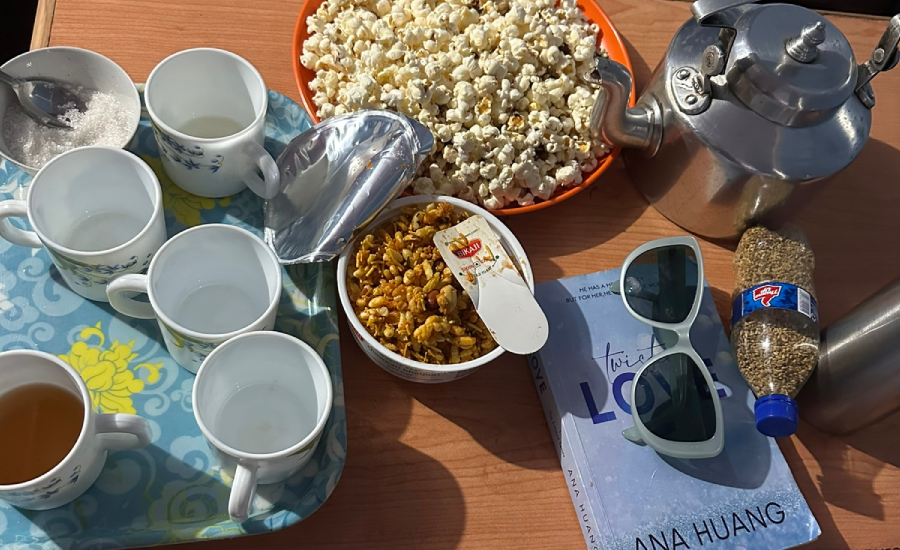
In the evening, we had tea and snacks together.
I had brought dry bhel from home, mixed everything properly, and we enjoyed bhel, popcorn, and tea together while sitting around chatting.
Small moments like these become core memories during treks.
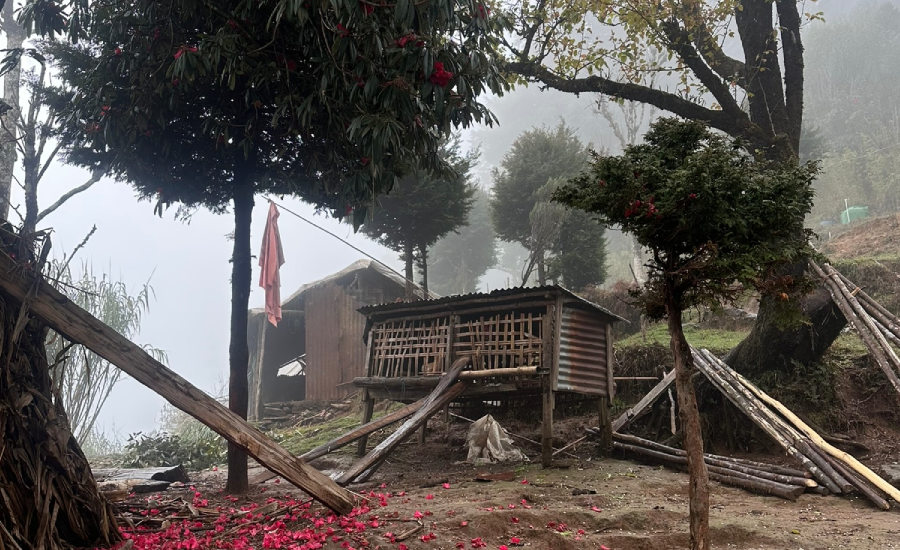
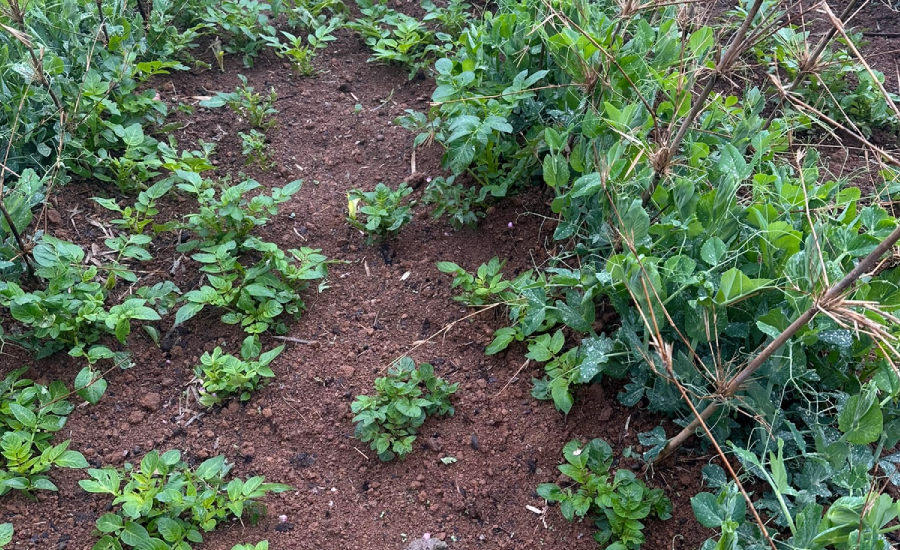
Later, I roamed around their farms where they were growing peas, potatoes, and other vegetables.
I was honestly waiting to pluck fresh peas and eat them right there, but they weren’t fully grown yet. 😄
Still, I loved walking through their farms and observing everything around me.
Eventually, I went back inside the kitchen.
And mountain kitchens have become one of my favorite places in the trek.
They allowed me to sit directly near the mud stove while they cooked dinner. We kept talking, though language was still a small barrier sometimes.
But kindness never needs perfect language.
Aunty barely understood my Hindi properly, but she was so caring and loving that conversations somehow still felt complete.
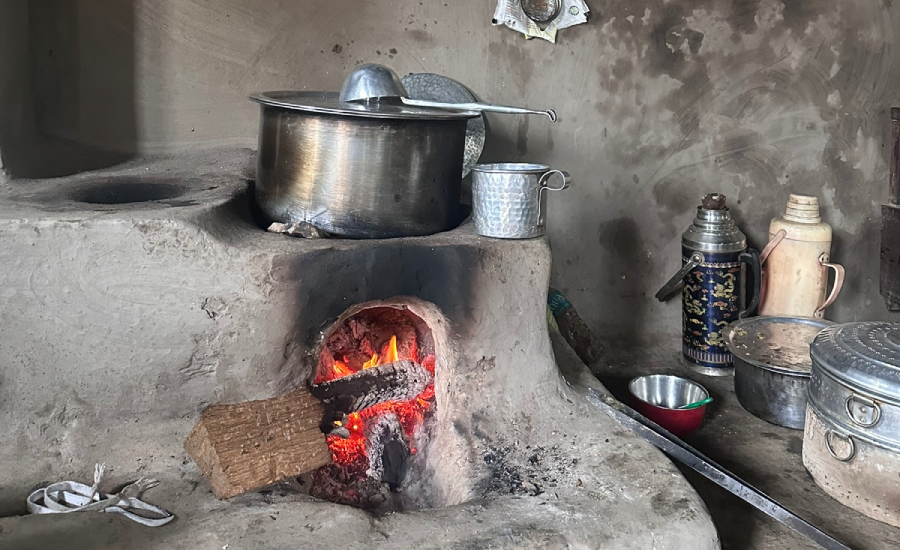
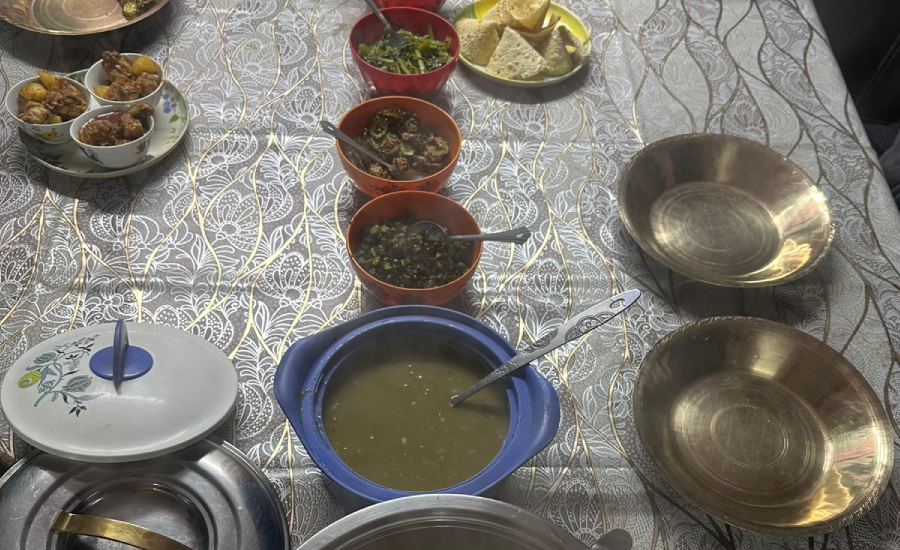
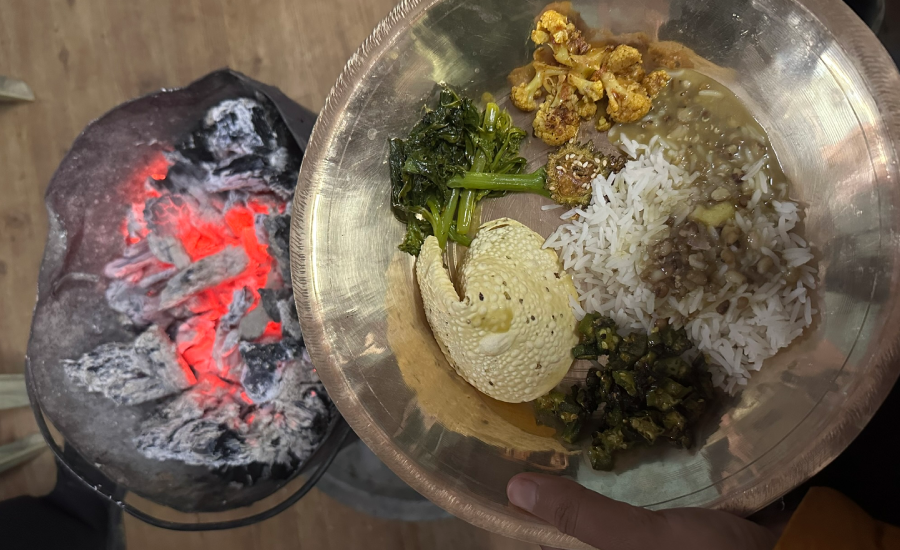
For dinner, they prepared a complete local meal served in traditional utensils.
Dal.
Rice.
Saag.
Bhindi.
Cauliflower.
And fried bitter gourd.
And honestly, their bitter gourd preparation became one of my favorite dishes from the trek.
I loved it so much that after returning home, I actually tried recreating the same recipe — and everyone at my home loved it too.
That’s the beauty of travel.
Sometimes you don’t just bring back memories.
You bring back flavors too.
After dinner, we created a cozy room setup, watched a horror movie together, laughed endlessly, and tasted a traditional local drink called Tongba.
Tongba is a warm fermented millet drink popular in Nepal and Himalayan regions, traditionally served in wooden containers with a bamboo straw.
And honestly, in cold mountain weather, it feels perfect.
And finally…
Wrapped inside warm blankets, surrounded by mountain silence, tired after a beautiful day, and resting in comfortable weather after days of extreme cold…
I had one of the best sleeps of the entire trek.
Day 6: Rammam to Gurdum — Quiet Adventures, Warm Kitchens & Mountain Happiness
I woke up early again that morning in Rammam.
My bed was placed right beside the window, and the very first thing I did was open it and take a deep breath of the cold mountain air.
Honestly, the first breath in the mountains feels different.
Cleaner.
Lighter.
Alive.
And in that moment, I just felt grateful for everything.
For being there.
For the people I met.
For the mountains allowing me to experience this journey.
After freshening up, I went exactly where I always go in mountain homes — the kitchen.
Honestly, don’t be surprised if you always find me sitting inside kitchens during treks. 😄
Because for me, kitchens are the heart of mountain homes.
That’s where stories happen.
That’s where warmth lives.
That’s where you truly connect with local people, culture, food, and their lifestyle.
I grabbed warm water and quietly sat in front of the mud stove as usual.
And honestly… I could spend hours there doing absolutely nothing.
Aunty asked me what kind of tea I wanted — black tea, salt tea, or milk tea.
And since I absolutely love milk tea, obviously I chose that. 😄
She sweetly handed me the tea right there near the stove so I could stay warm while drinking it.
And honestly, their tea cups were the cutest things ever.
Small mountain details like these make me so happy.
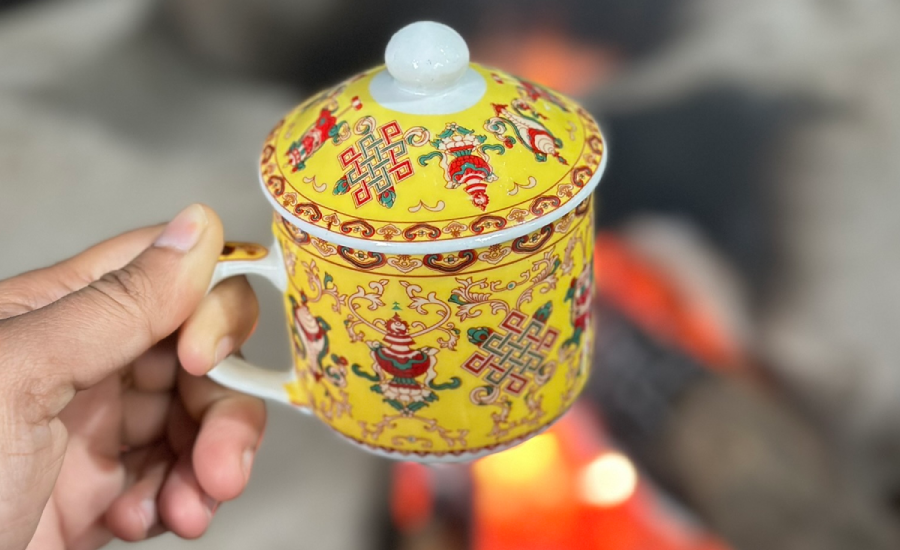
One thing I’ve noticed in the mountains is that people always prefer warm meals and hot drinks.
And, it makes complete sense.
At high altitudes, food becomes cold very quickly, and warm food helps your body stay comfortable in freezing weather.
Even the simplest meal feels healing there.
While having tea, I was also playing with their dog who was sleeping comfortably in front of the mud stove.
This became one of my favorite morning routines during the trek.
Tea.
Warmth.
Dogs.
Silence.
What else do you really need?
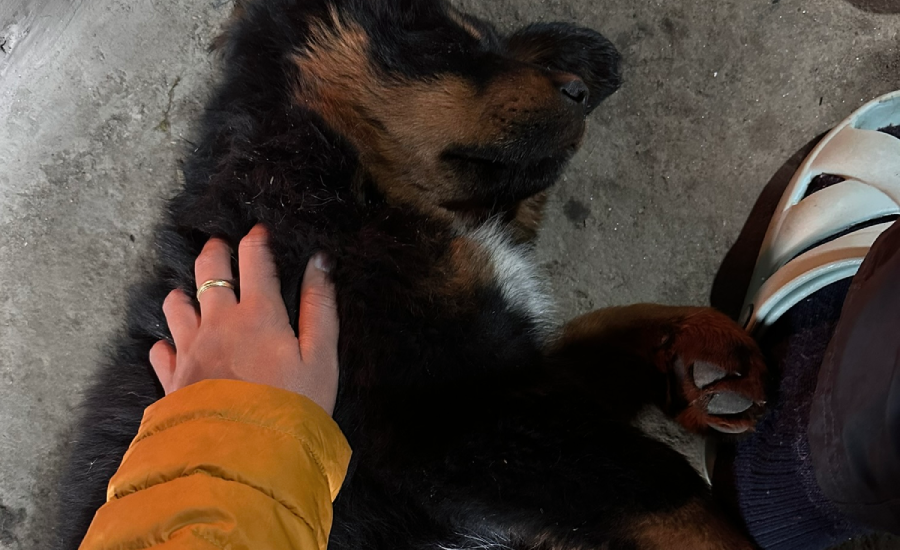
For breakfast, aunty made pancakes, oats, and warm milk for us.
Simple food again — but made with so much care that it felt special.
After packing our bags and getting ready to leave, I gave them the Gujarati snacks I had brought from home as a small token of love and gratitude for the way they took care of us.
And honestly…
What happened after that became one of the sweetest moments of the entire trek.
Out of nowhere, aunty gifted me a flower pot from her own nursery.
A living plant.
I genuinely became emotional.
Because sometimes small gestures stay with you forever.
And this was one of those moments.
I don’t think I’ll ever forget it.
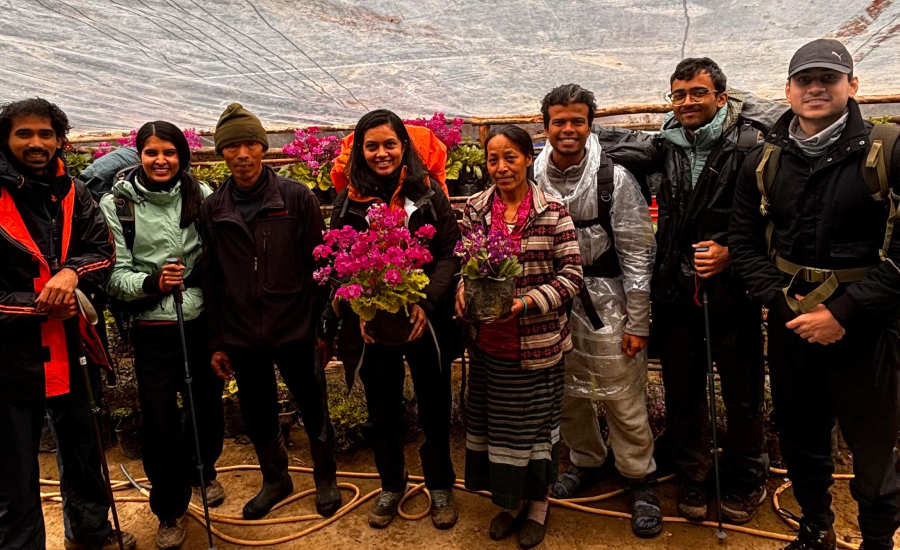
We clicked pictures together, said goodbye for now, and exchanged “Pheri Bhetunla” — meaning “See you again” in Nepali.
And then we started walking through the peaceful lanes of Rammam village.
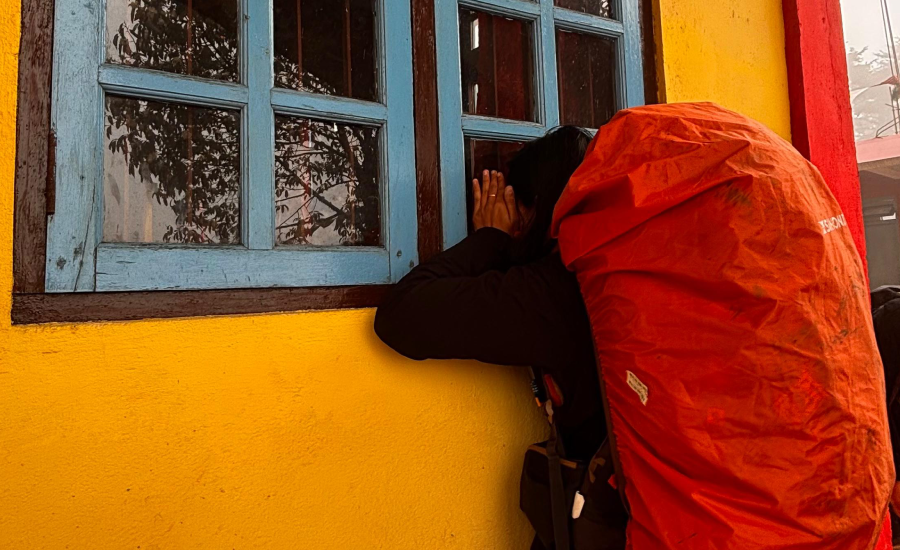
On the way, we quickly stopped near the monastery again.
The monastery was closed, but I was still trying to sneak one small glimpse of Lord Buddha from inside. 😄
And at that exact moment, Prachi captured a beautiful candid photo of me.
Sometimes your favorite pictures are the ones you never pose for.
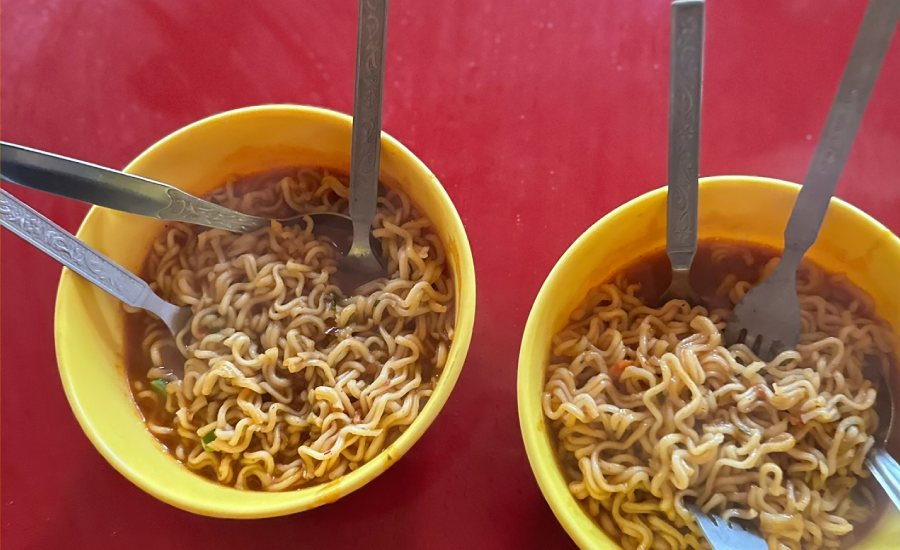
On the way, we stopped at a homestay where we finally tried something I had wanted for a long time — Current noodles.
As a big Korean food lover and spice enthusiast, I had heard so much about these noodles being extremely spicy. I absolutely loved them.
Right there itself, I decided I was definitely taking packets back home if I found them anywhere later.
And then…
The adventure truly started.
Instead of walking immediately, we hopped into an open Bolero vehicle for the next stretch toward Timbure.
And, this ride became one of the craziest and most fun parts of the journey.
Open vehicle.
Sharp mountain roads.
Cold wind hitting your face.
Trees bending over your head while driving through narrow paths.
It felt wild in the best possible way.
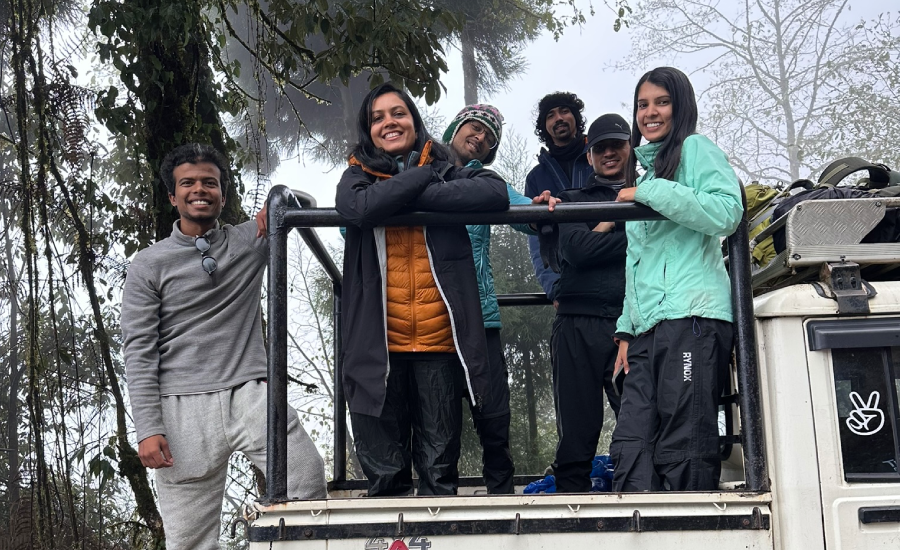
The roads were rough, steep, and full of crazy turns that honestly looked slightly scary at times.
But all of us were loving every second of it.
Meeting people on the road, waving at villagers, laughing continuously while trying not to hit branches above our heads…
It felt like pure mountain freedom.
Somewhere in between, we dropped Wallabh near a point from where he would continue toward Siliguri by taxi.
Saying goodbye during treks always feels strange.
Because in just a few days, strangers quietly become part of your memories forever.
From Timbure, we finally started trekking toward Gurdum.
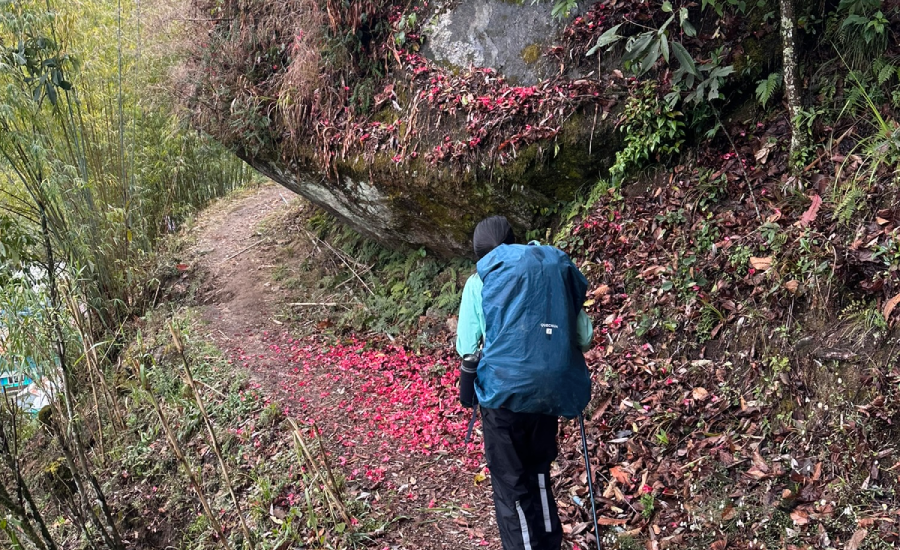
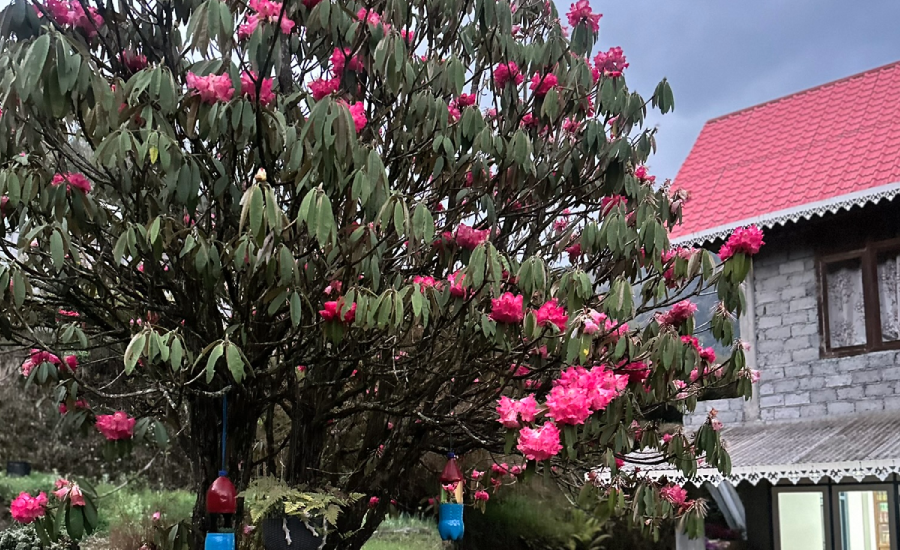
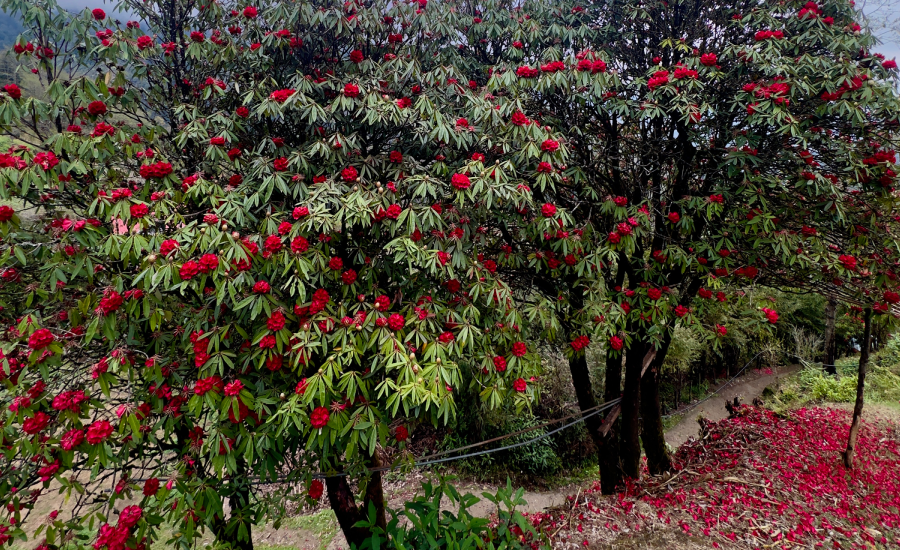
And right at the beginning of the trail, we saw beautiful rhododendron flowers blooming near our feet.
The forests here looked magical.
This region is often called the “Black Forest,” and local stories say that black panthers also live deep inside these forests.
I immediately remembered stories shared by Charan — my trek leader from the Pin Bhaba trek — about these forests.
Even Prachi shared some experiences and stories while walking.
Though honestly, since we were walking on proper defined trails, there was no real chance of spotting any black panther.
Still, the mystery of the forest itself felt exciting.
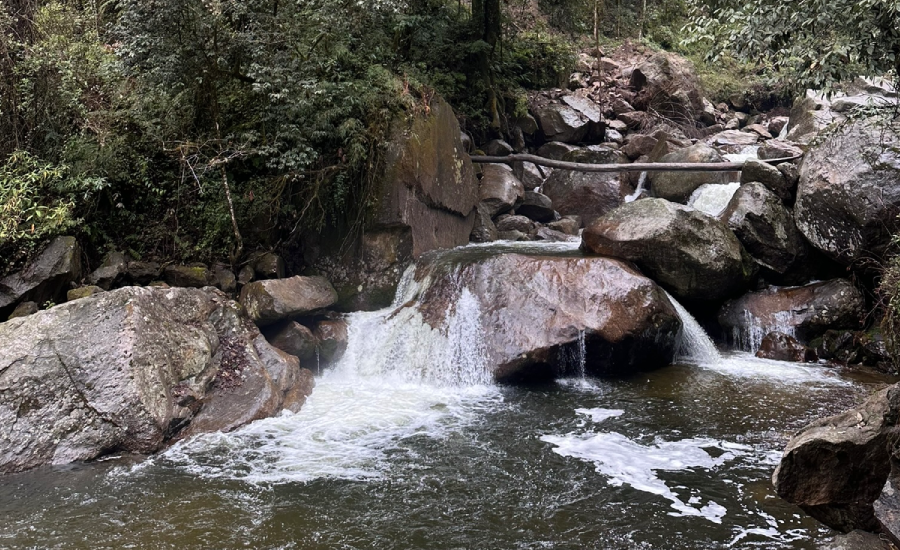
After some time, we reached a beautiful flowing river with naturally formed pools between giant rocks.
Birds were bathing there peacefully while water flowed endlessly through the stones.
The place looked unbelievably soothing.
I sat quietly on one large rock for some time, simply staring at the flowing river and letting every thought leave my mind.
That’s one thing mountains do beautifully.
They slowly empty the noise inside you.
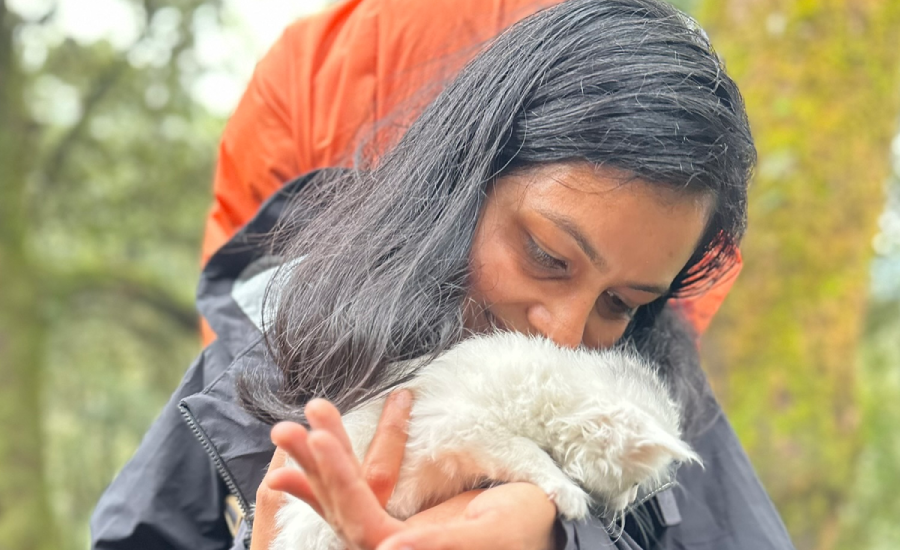
As we continued walking through forests and open grounds, we even crossed a football field on the way.
And somewhere near the trail, I met the tiniest little kitten who had probably been born only a few days ago.
She looked unbelievably adorable.
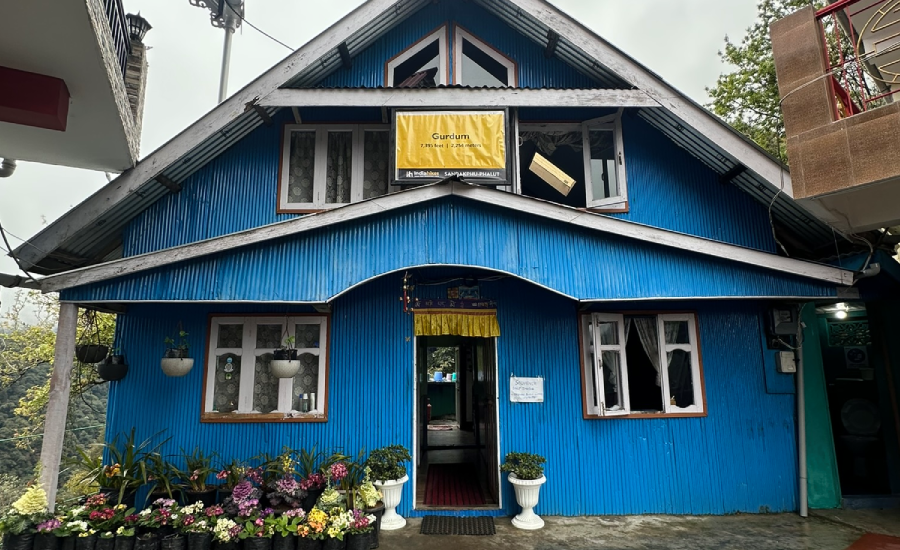
After a continuous gradual ascent, we finally reached Gurdum village.
And honestly, my first impression itself was:
This place is beautiful.
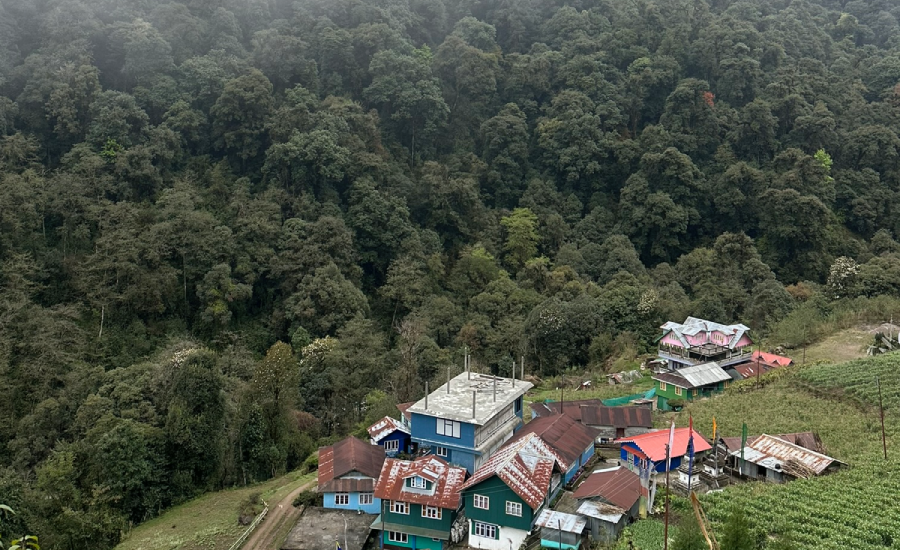
The homestay was surrounded by flowers everywhere, and right in front of us, across the mountains, we could clearly see parts of Sikkim.
The entire atmosphere felt peaceful and deeply relaxing.
We quickly kept our bags in the rooms and immediately headed to the top floor, which had been designed like a cozy little mountain café.
The interiors looked absolutely lovely.
Warm lights, wooden setup, mountain views — it genuinely felt straight out of a movie.
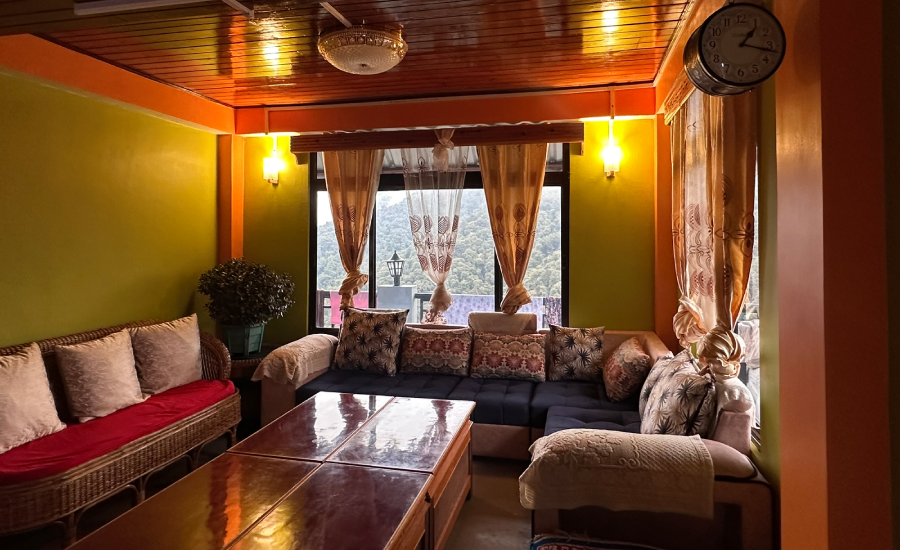
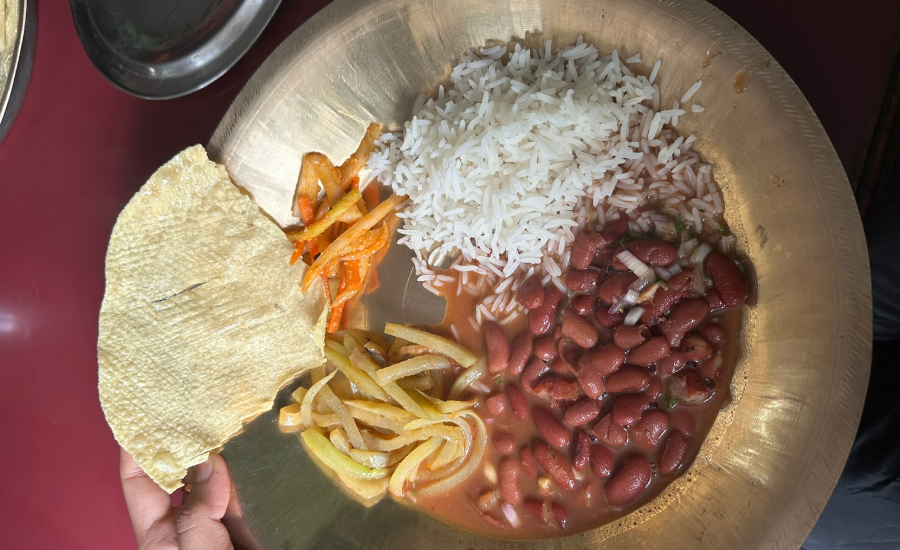
For lunch, we gathered in the kitchen again.
This time we had rajma, rice, potato side dish, radish salad, and papad served in traditional plates.
The homestay was managed by uncle, aunty, and their daughter — who was extremely calm and sweet by nature.
She cooked fresh food right in front of us and kept serving hot meals with so much care.
Yet again, the food tasted incredible.
After lunch, we went to explore the village.
Gurdum is actually a fairly large mountain village, and we walked almost all the way toward the upper side.
Every house had flower gardens, trees, rhododendrons blooming around, birds chirping, and cats casually roaming everywhere.
It genuinely felt like one peaceful living ecosystem.
We met locals on the way, visited homes, and even saw handmade bamboo furniture created by villagers themselves.
One large bamboo sitting bench especially caught my attention — completely handmade and beautifully crafted.
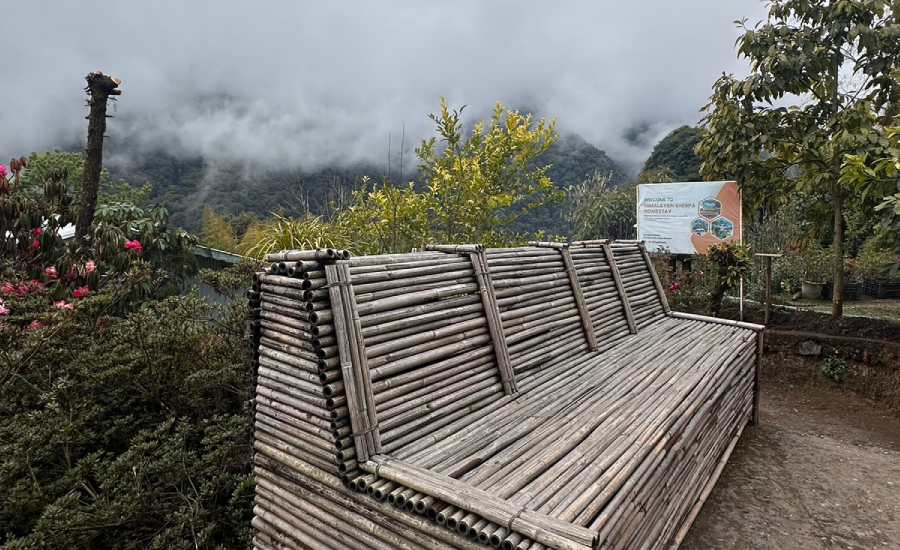
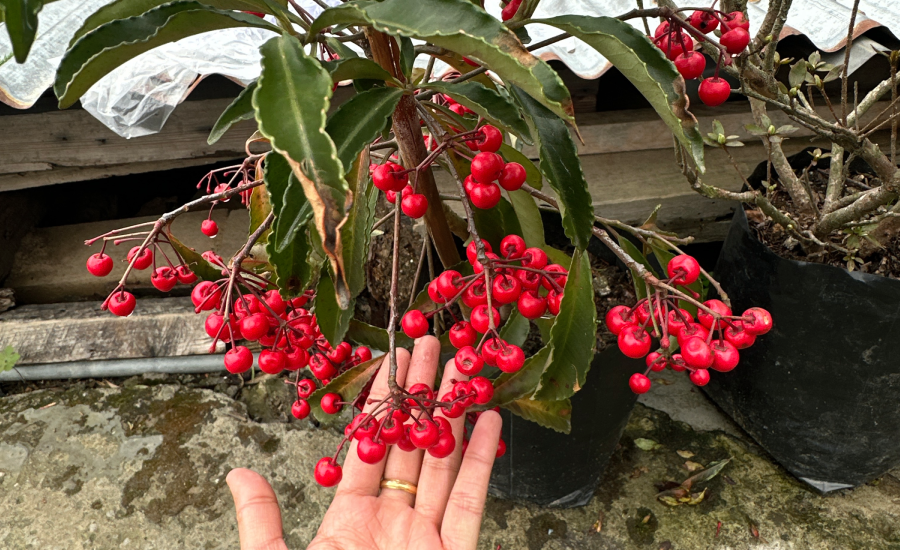
We also noticed Christmas berry plants near homes, which felt very unique to see in the mountains.
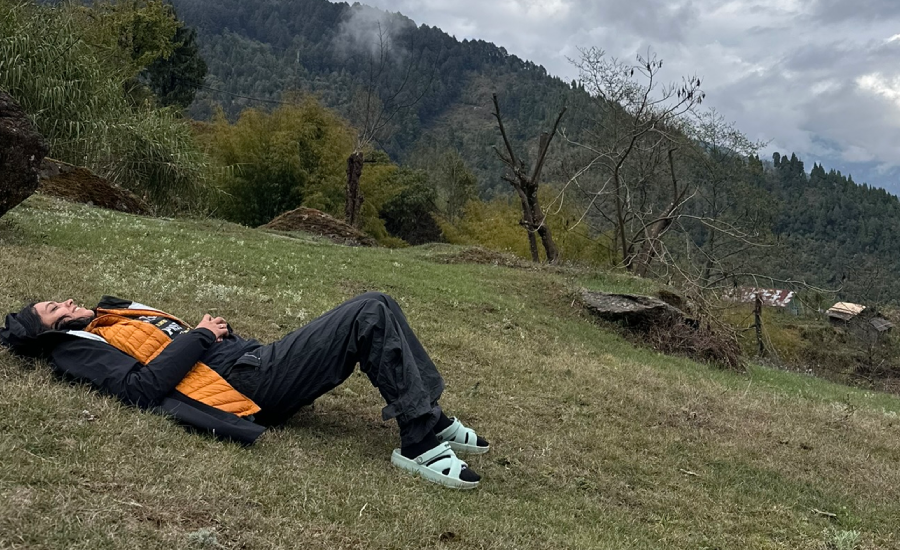
At the top of the village, I again spent some quiet alone time lying on the ground, simply being with nature.
Those moments alone in the mountains heal me deeply.
Back at the homestay, we were offered coffee.
And honestly, I never expected to have such tasty coffee at that altitude.
One thing I absolutely loved throughout this trek was how lovingly people cooked and served whatever we asked for — often even before asking.
That warmth stays with you.
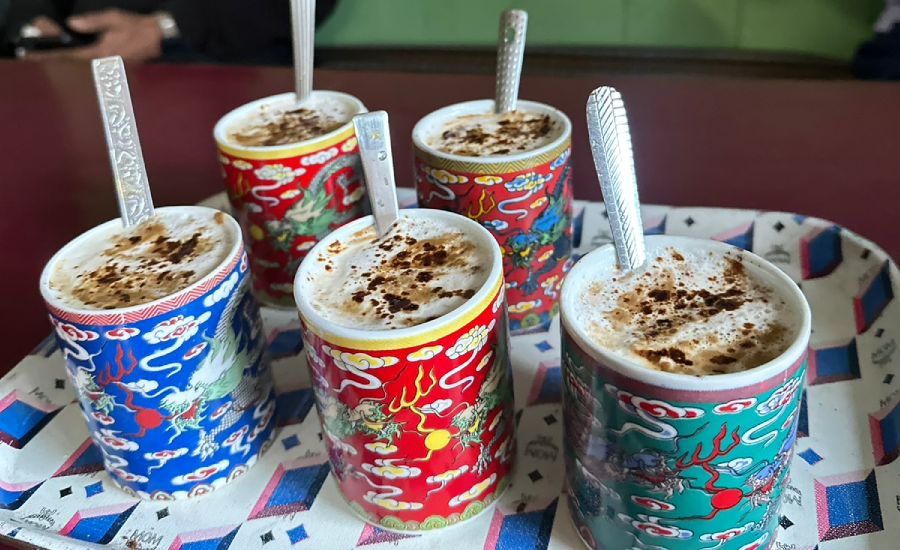
In the evening, we all decided to make momos together.
And, this became one of the most fun experiences of the trek.
We learned how to fold momos, shape them, stuff them properly — though mine still looked completely weird. 😄
Meanwhile, Prachi made an unbelievably tasty Dalle chutney to go along with them.
And finally, after all the effort, the momos were ready.
Hot, soft, spicy, comforting.
Honestly, momos are one of those foods where your stomach may become full…
…but your heart always wants more.
If this story made you feel connected to the mountains, maybe it’s time to plan your own Himalayan journey and experience the magic beyond the views.
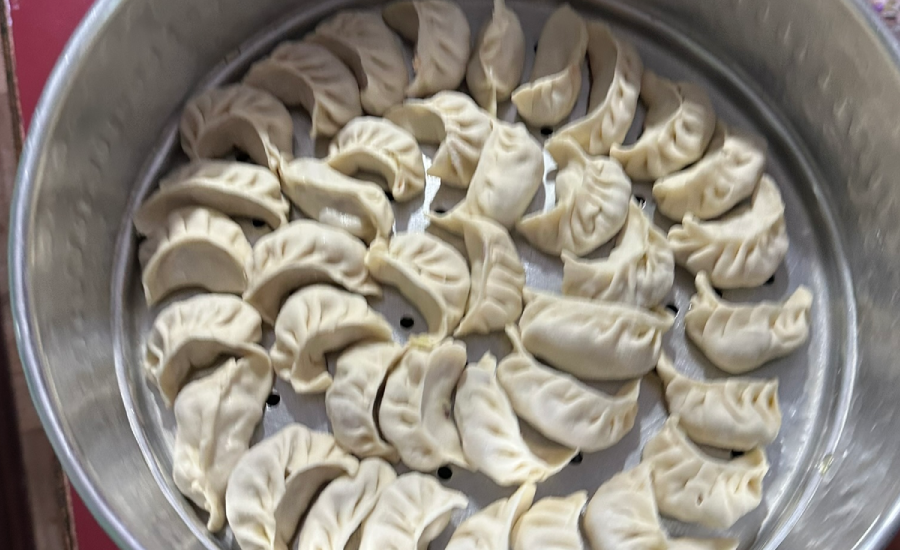
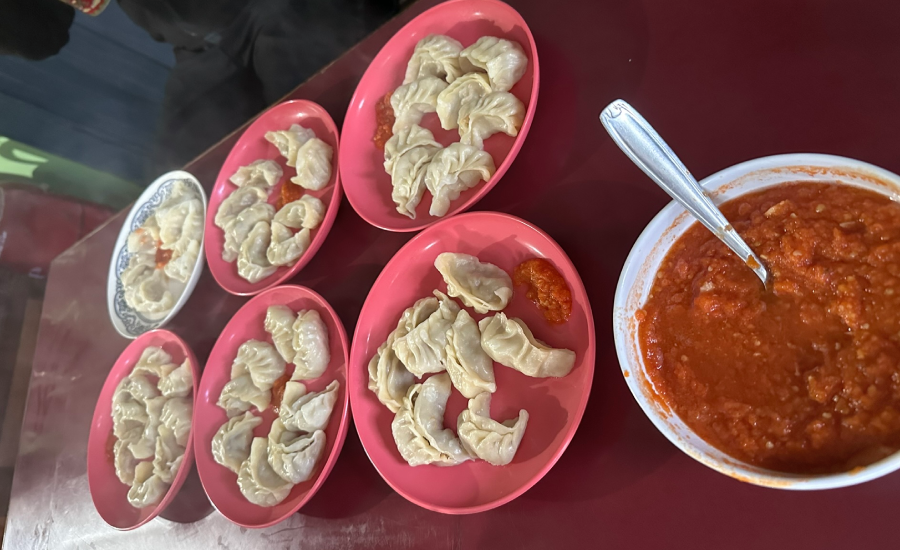
While cooking and eating together, we met several trek leaders and local guides from different trekking organizations.
The conversations became so funny and lively that time passed without us realizing.
That entire evening felt warm, joyful, and deeply human.
Later, we visited a beautiful cottage-style homestay nearby surrounded by blooming rhododendrons.
It looked straight out of a mountain movie scene.
After dinner, we gathered upstairs again, played games, listened to guitar music, laughed endlessly, and simply enjoyed another peaceful Himalayan night together.
And just like that…
Another beautiful mountain day quietly came to an end.
Day 7: Gurdum to Darjeeling — Goodbyes, Mountain Roads & Leaving a Piece of My Heart Behind
Morning in Gurdum felt extra beautiful that day.
Maybe because it was our last morning in the mountains together.
Or maybe because somewhere inside, I already knew I wasn’t ready to leave yet.
I woke up slowly, looked outside at the peaceful mountain morning, and honestly… I felt emotional.
That’s the hardest part about treks for me.
The ending.
No matter how tired your body feels during the journey, your heart never wants the mountains to end.
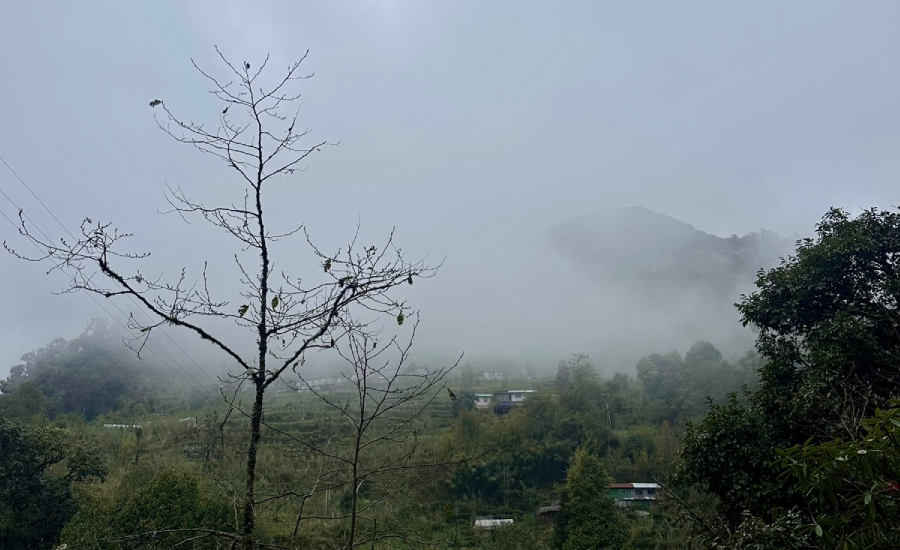
For breakfast, they made delicious hot aloo parathas and tea for us.
And honestly, mountain people have a different kind of warmth while serving food.
The aunty and her daughter kept asking us sweetly:
“One more? One more?”
And that care itself makes the food taste even better.
Simple homemade food served with genuine love always feels unforgettable in the mountains.
Finally, it was time to say goodbye.
We packed our bags, gathered outside, and prepared ourselves for the journey ahead.
Before leaving, I went to meet the daughter of the homestay family.
She managed a small souvenir corner inside the homestay, so we had already bought some souvenirs from her earlier.
And since I had brought small gifts from home for people throughout the trek, I gifted her a cute stationery set — notepad, sticky notes, and pens — as a small gesture of gratitude and love.
And honestly, her reaction was so pure and sweet.
She thanked me warmly and even offered me Rhododendron wine to take along with me.
But since I don’t really drink much, I politely refused.
Still, despite that, she gifted return presents to all of us before leaving.
That moment genuinely touched my heart.
Because mountain people somehow always give more love than you expect.
And while leaving, I kept thinking one thing quietly in my mind:
I want to come back here someday… not just for trekking, but simply to stay, slow down, and live this peaceful mountain life again for a few days.
And then we finally started descending toward the road where our vehicle was waiting.
The trail down felt peaceful.
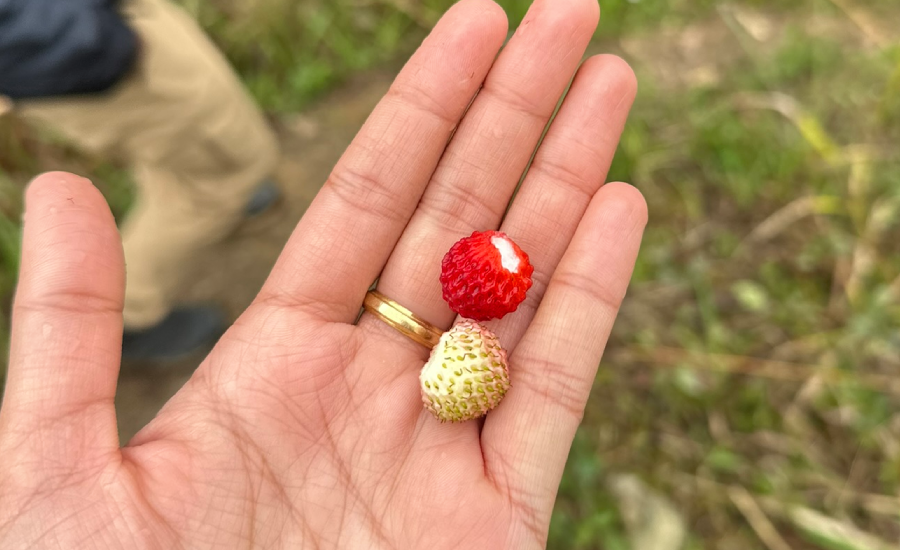
Somewhere on the way, I found wild berries and strawberries growing naturally near the trail. I absolutely love moments like these.
Plucking something directly from nature and eating it fresh in the forest feels strangely satisfying and grounding.
Small mountain joys are often the purest ones.
Eventually, we reached the road point from where everyone’s journeys slowly started separating.
Most of the group members were returning toward Siliguri.
But I had already planned something different.
I wanted to continue toward Darjeeling and spend more time exploring the mountains before heading home.
And this became the final goodbye.
At least for now.
Because that’s the strange thing about trekking.
You meet strangers for a few days, share food, stories, exhaustion, laughter, weather, silence, and memories together…
…and suddenly they become part of your life forever.
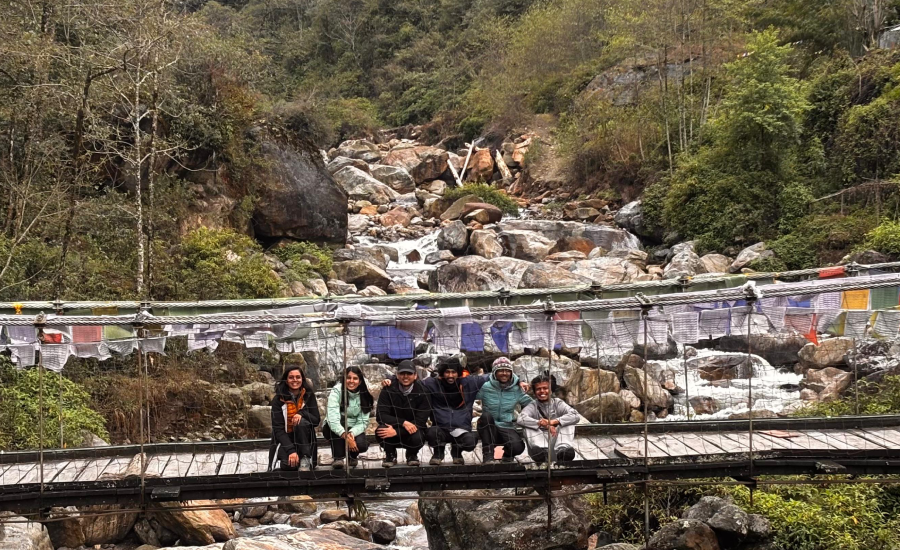
Since my taxi arrived earlier, I left before everyone else and hopped into a shared local taxi toward Darjeeling.
And honestly, even that ride itself became another experience.
I sat in the front seat while the taxi slowly kept filling with passengers from different villages and towns on the way.
Local people.
Travelers.
Families.
Mountain conversations.
Shared taxis in the mountains have their own stories.
At one point, I met an elderly couple from Mumbai who had also come for trekking. We spoke about mountains, experiences, journeys, and travel stories throughout the ride.
I also kept talking with local people sitting around — random conversations about weather, elections, mountain life, roads, and daily experiences.
That’s something I genuinely love while traveling solo.
You connect with people you would probably never meet otherwise.
There was heavy traffic on the way because of election activity happening nearby, so the journey became slower than expected.
But honestly, I didn’t mind.
I kept looking outside the window at the mountains slowly disappearing behind us.
And somewhere inside…
I think I was already missing them.
Finally, by evening, I reached Darjeeling and checked into my hostel.
The trek had officially ended.
But honestly…
It didn’t feel like an ending.
Because some journeys don’t finish when the trail ends.
They stay alive inside you.
What Sandakphu Left Inside Me
This trek gave me much more than mountain views.
It gave me:
- forests that made me feel alive
- mountain kitchens full of warmth
- strangers who became friends
- dogs, cats, birds, and yaks who became part of my memories
- stories from locals
- snowy mornings
- endless rhododendrons
- silence I didn’t know I needed
- and moments where I truly felt present
And maybe the most beautiful thing?
Even after waiting so much…
The mountains never showed us the Sleeping Buddha clearly.
But strangely, I returned fulfilled.
Because sometimes mountains teach you that journeys are not only about reaching the view you came for.
Sometimes they are about:
- slowing down
- observing deeply
- connecting with people
- listening to forests
- sitting quietly beside rivers
- and finding peace in uncertainty
Sandakphu didn’t just become another trek for me.
It became a feeling.
And I know…
A part of me is still walking somewhere inside those forests of the Himalayas.
Which part of this journey amazed you the most?

Rinkal
Rinkal is a passionate traveler from Ahmedabad who loves exploring hidden gems, savoring local foods, and sharing adventures with fellow wanderers. Rinkal’s goal is to inspire others to travel on a budget while truly experiencing the essence of each place.
Leave a Reply