
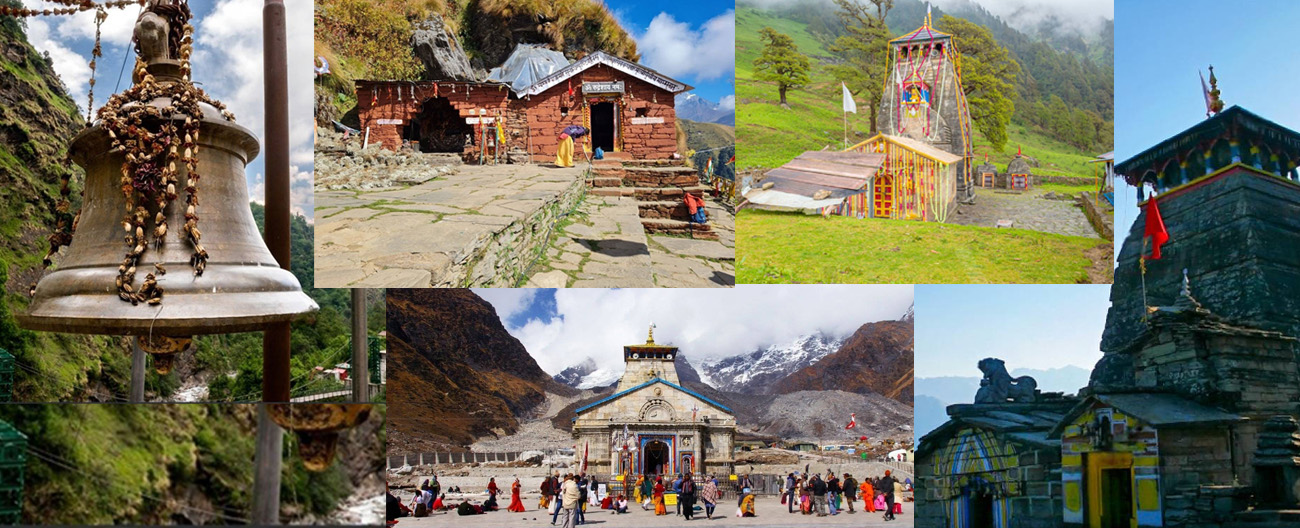
Panch Kedar Yatra
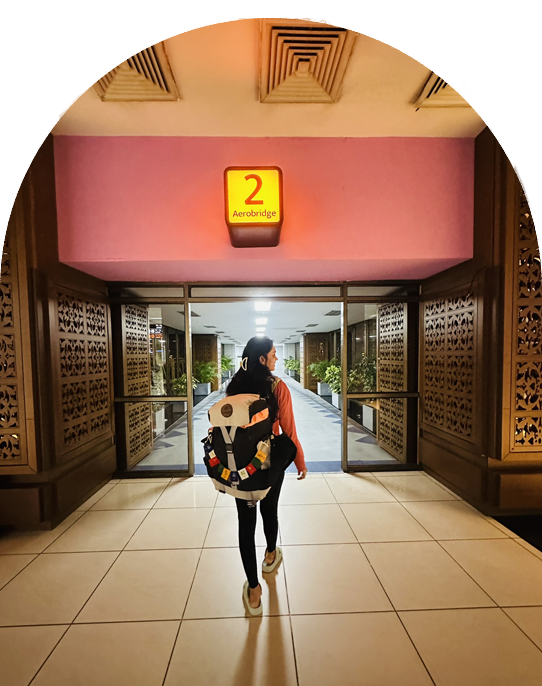
A night before my journey, my flight got cancelled. No direct flights from Ahmedabad to Dehradun were available. I was still at the office, scrambling to pack last-minute, when I finally booked a 3:50 AM flight to Delhi instead. No sleep, no food — just that restless anticipation before something big.
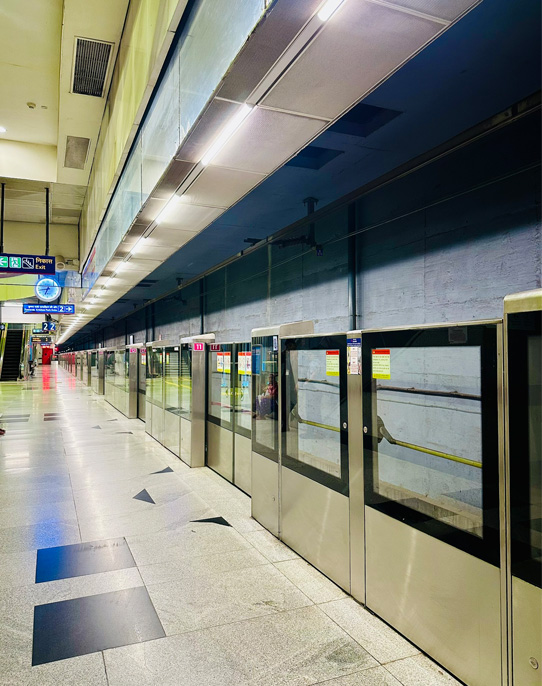
From Delhi, I took the metro — confused, lost — hopping off in the middle of nowhere before finally reaching the interstate bus station. I arrived an hour early, tried to reschedule my bus to Rishikesh, failed, cancelled, and booked another one. Only to be told by the conductor to go via Haridwar instead. And so I did.
Two bags. Zero meals. Delhi heat. Rushing crowds. And yet, somehow — I was moving.
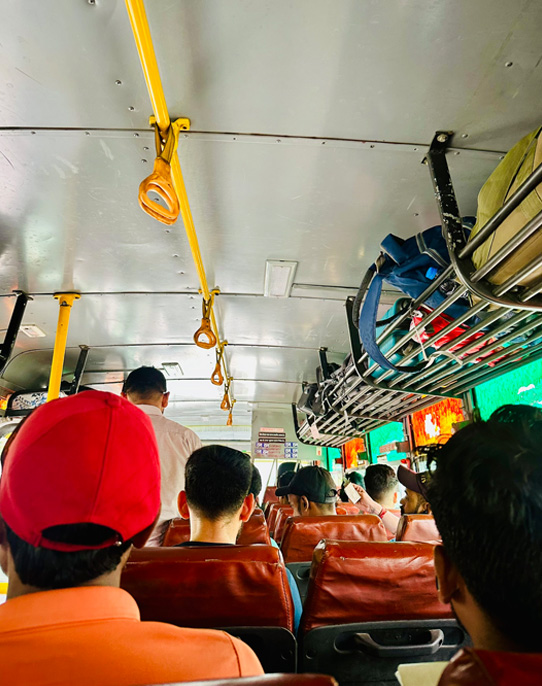
From Haridwar, another bus. From Rishikesh bus stop, an auto to Tapovan. But due to Char Dham season diversions, even the auto couldn’t go further. I walked the rest of the way, through a busy road, fully packed, finally reaching my hostel by 4:30 PM. I’d been on the road for over 12 hours, from 2:30 AM to 4:30 PM.
I collapsed on the bed at Live Free Hostel, my second home. Same hostel. Same room. Same bed. And the same warmth — the kind you feel when the mountain already knows you’re coming back.
That evening, I met a sweet Marwari girl in the room. We connected instantly — chatting about jobs, businesses, travel dreams, and the randomness of life. We shared stories like we’d known each other forever. Later, I stepped out, had a beautiful dinner at Beatles Café, and walked around Laxman Jhula and the local market — that quiet Rishikesh calm settling into my chest.
It always feels like home here. And I mean that with all my heart.
Trekking the Panch Kedar: My 130+ KM Journey in 10 Days
This wasn’t just a pilgrimage — it was my journey of strength, surrender, and deep devotion. Over 10 days, I walked more than 130 kilometers through the heart of the Garhwal Himalayas, covering all five Kedars — Kalpeshwar, Rudranath, Tungnath, Madhyamaheshwar, and Kedarnath — entirely on foot.
Each temple was a reward earned through sweat, steep ascents, changing weather, and long days on unpredictable trails. Some days broke me physically, others emotionally, but every step built something inside me — clarity, courage, and unshakable peace.
This wasn’t an easy journey. It required real preparation, fitness, and most importantly, a strong will. But I did it — and it changed me.
If you ever dream of walking this path, know that it’s not just a trek — it’s a transformation. And it’s worth everything.
This journey wasn’t a tour. It was a tapasya.
And I’m proud to have walked every bit of it. In 10 days, I trekked over 130 km across Uttarakhand’s sacred Himalayas — from Kalpeshwar to Kedarnath — visiting all five Kedars on foot.
It tested my body, quieted my mind, and opened my heart.
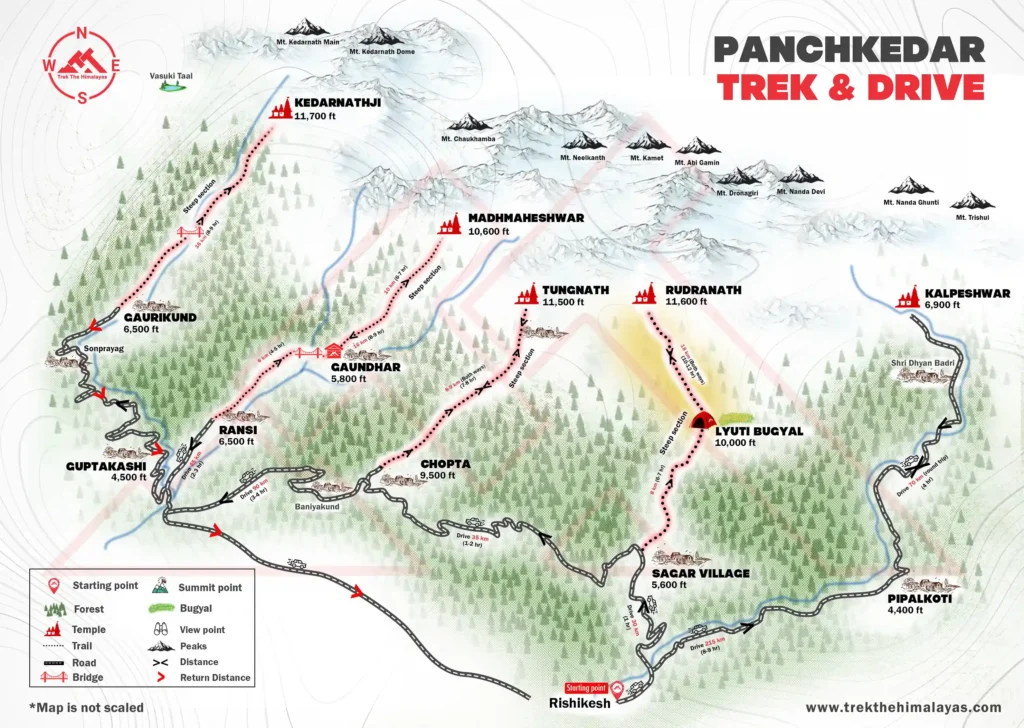
Map Courtesy: Trek The Himalayas
The night was short — I had to leave early for my Panch Kedar journey.
I left at 4 AM, heading towards Badrinath (more on that in another section), and eventually to Kalpeshwar, the first of the Panch Kedar.
As with every spiritual journey through Uttarakhand, I made it a point to begin by paying respects at Dhari Devi Temple and Devprayag on the way. Devprayag — where Alaknanda and Bhagirathi merge to become the holy Ganga — always feels like nature’s reminder of surrender and power. And Dhari Devi Mata, the fierce protector goddess of Uttarakhand, is someone I never skip visiting. It’s said that your journey becomes smoother when you take her blessings. So, as usual, we stopped, offered prayers, and then continued driving into the heart of the mountains.
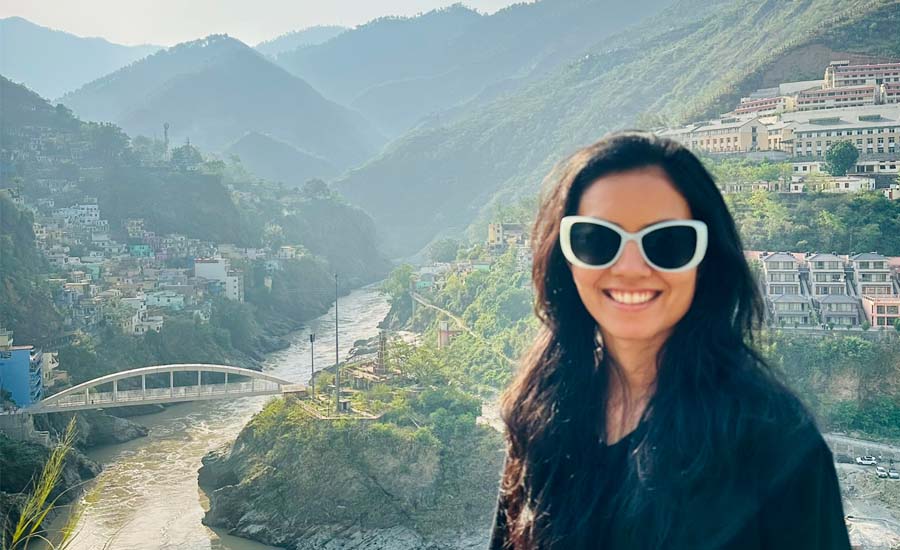
And the tests weren’t over yet. A puncture on the way, a quick spare tyre change… but I didn’t mind.
Because while I was being driven, I was already getting emotional.
The mountains towering, the rivers flowing — it hit me so hard: we’re nothing in front of nature.
Mountains don’t just stand. They speak. They feel.
A single river here can split two giant mountains. That’s the kind of power nature holds.
And every time I witness it, I feel like Shiv is walking beside me — silent, steady.
There’s something in Uttarakhand’s mountains that I can’t explain.
I’ve never felt this kind of energy anywhere else. I get emotional just looking at them. It feels like I’ve been here before — like a deep connection I still don’t fully understand.
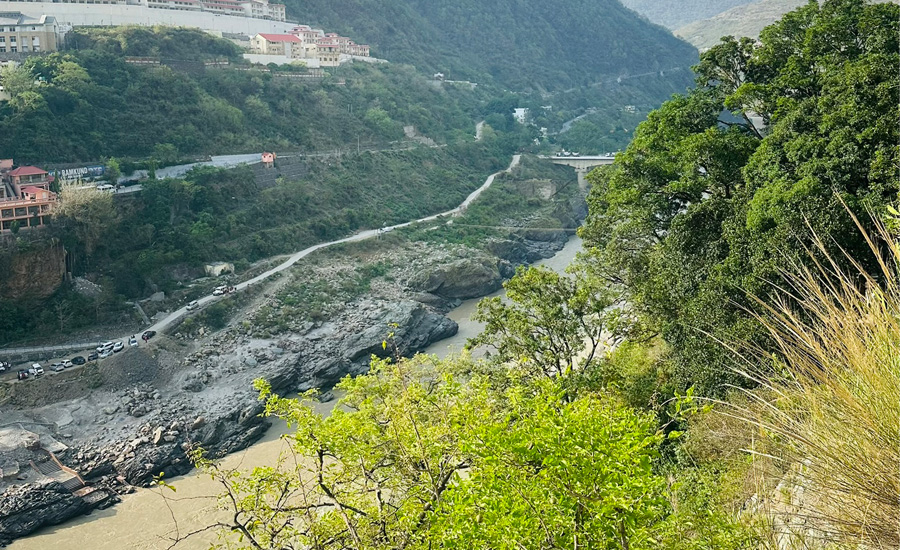
I saw yogis and sadhus walking barefoot in harsh sun — on tar roads, heads covered, silence in their steps. How do they do it? What makes them that strong? I’ve always been curious, always inspired.
And yet…
In the middle of this natural purity, I also saw people littering, throwing plastic, leaving food wrappers behind.
These mountains give us clean air, water, energy, and peace. And we’re giving them back trash?
Please — if you ever walk these paths — carry your trash back with you. Be mindful. These are Shiva’s homes.
So here begins the soul-journey.
It’s not just a 10-day trek.
It’s a calling, an experience, a shift.
Stay tight. Read it slow. Feel what I felt.
This is my Panch Kedar Yatra — written with effort, love, and a heart that bowed down before the Himalayas.
Kalpeshwar Mahadev – The Beginning That Felt Like a Blessing
Aahh… I was about to reach Urgam village, the base of Kalpeshwar Mahadev — the fifth Kedar in the Panch Kedar journey.
(Yes, I was doing it in reverse order — starting from the toughest trails while I still had the energy to survive those intense 15+ km treks one way.)
But Kalpeshwar? It’s the only Kedar you can reach by road. No trekking required.
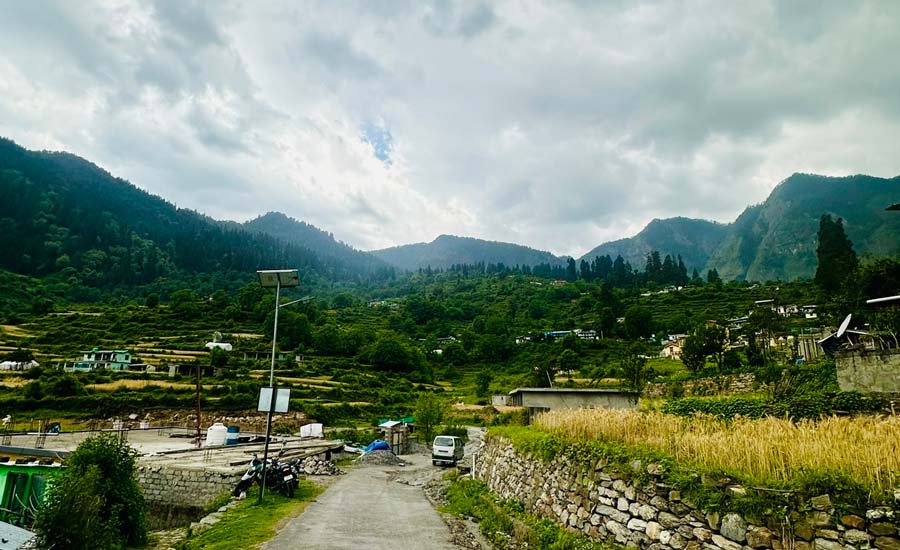
So I thought — why not pause, breathe, and soak in the village of Urgam for a day?
The Drive to Urgam — A Scenic Test
Getting to Urgam wasn’t easy.
Sure, there’s a road — but oh, what a road.
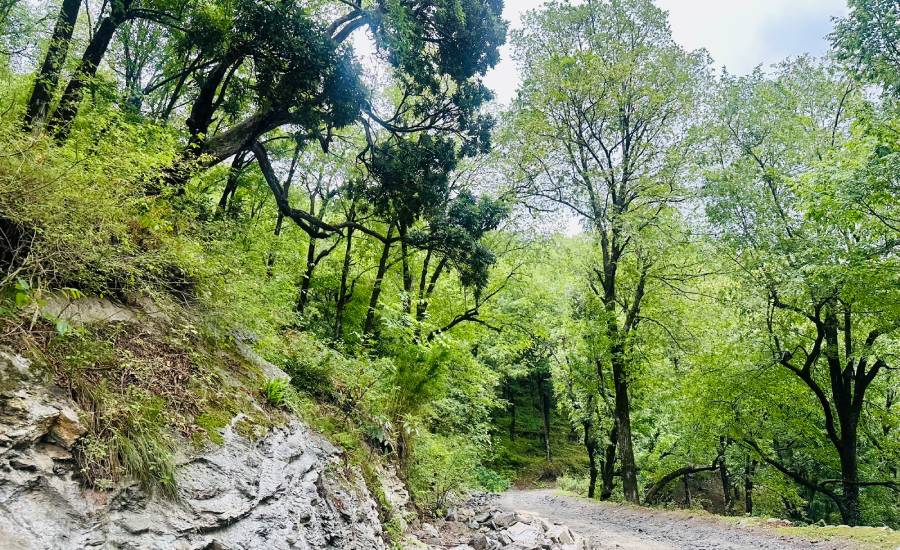
Rocky, muddy, narrow, and wild — driving here requires a pahadi expert, not just any driver.
At one point, I had to step out of the car and walk because it was just too risky to sit inside while crossing the stretch.
One side? Towering cliffs.
The other side? A deep pit with a roaring river flowing beneath.
But the beauty? Unmatched.
Birds flying free, mist weaving through pine trees, and that calm before reaching somewhere sacred.
Our pahadi driver handled it like a champ, and I reached Urgam village — heart full and head spinning from that rollercoaster drive.
A Warm Welcome in Urgam
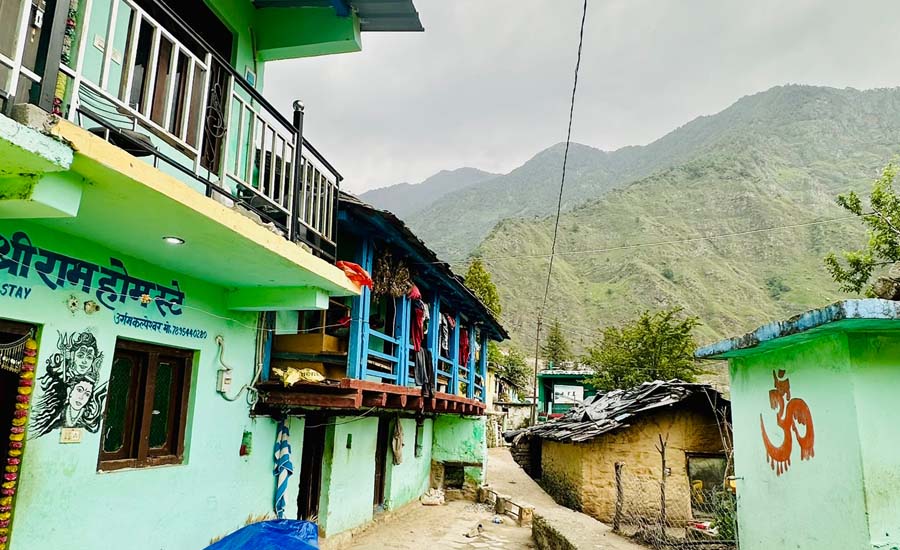
My homestay sat right at the entrance of the village — with a small shop outside.
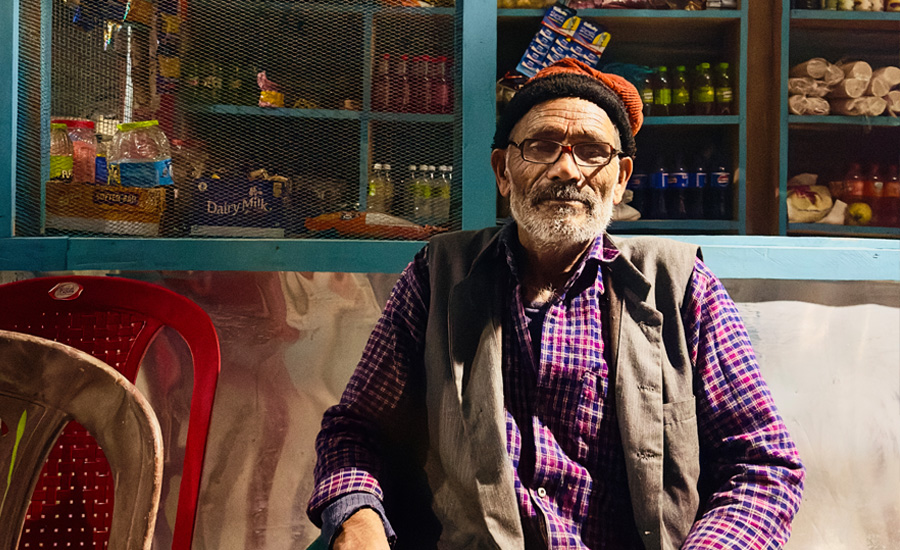
I stopped, had a proper pahadi lunch, and chatted with a sweet old nana who was making bamboo products by hand. So grounded, so kind.
Then I checked in, rested for a bit… and then? Rain. Heavy.
A blessing in disguise — gave me time to slow down, breathe, and prepare.
Kalpeshwar Temple Darshan in the Rain
As the rain stopped, the clouds rolled in — making the whole road feel like a dreamy painting.
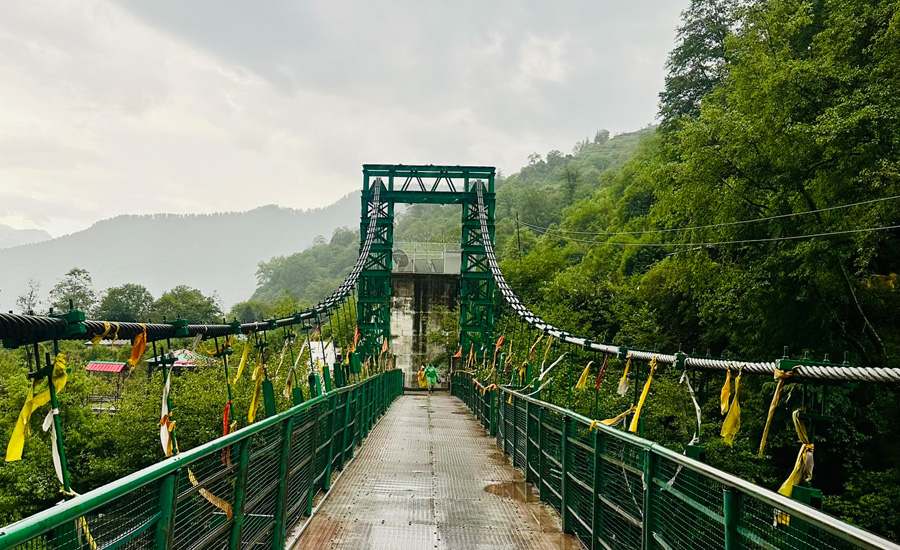
I crossed a beautiful iron bridge with a waterfall beside it, and soon, I reached Kalpeshwar Mahadev.
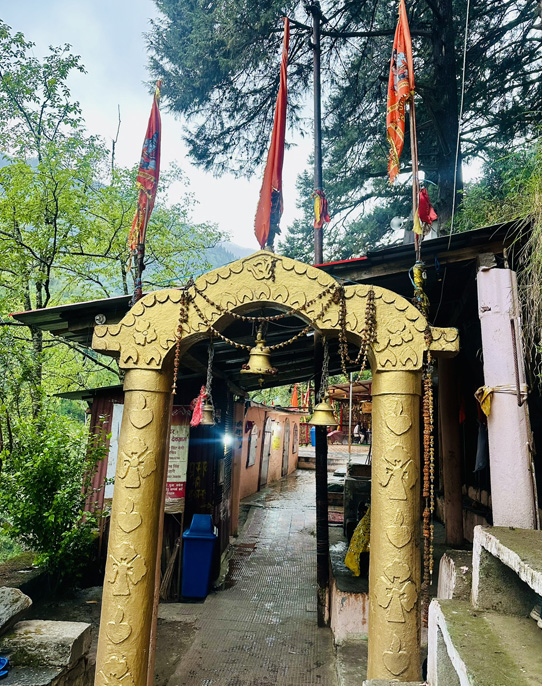
It’s a cave temple. Quiet. Humble. But full of power.
Here, Lord Shiva is worshipped in the form of his jata (matted hair) — symbolizing timeless silence and energy.
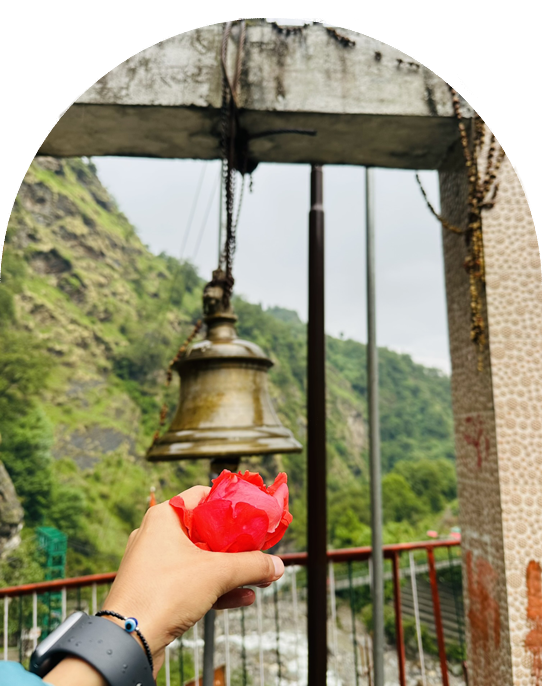
I reached right at Sandhya Aarti. In my poncho, damp but smiling, I sat inside the temple while the bells rang, diyas flickered, and chants filled the air.
That moment? Stillness.
Like time stopped and it was just Mahadev and me.
After the darshan, I sat on benches nearby — watching the waterfall, soaking in nature, whispering thank yous to the skies.
The Village Walk & Unexpected Blessings
While walking back, I saw some wild berries. Edible ones.
You know what I did — I stopped at every bush, picked and ate them like a child.
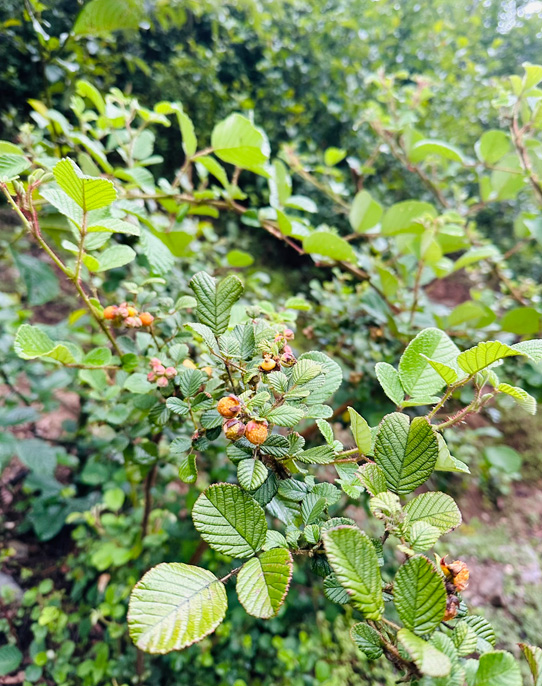
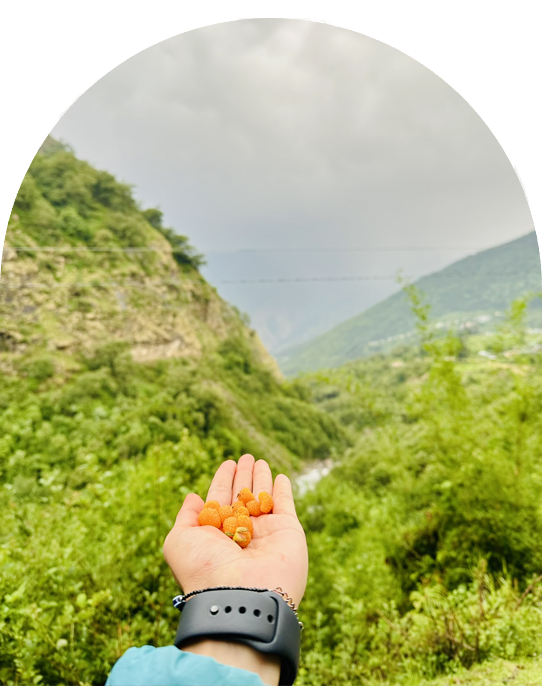
I met some other travellers on the way, told them about the berries — soon, we were all on a mini berry-picking spree.
Simple joys.
And then, something divine — I saw Kartikey ji’s dolly (palanquin) on the way to meet Shiv. Felt blessed to witness that unexpectedly.
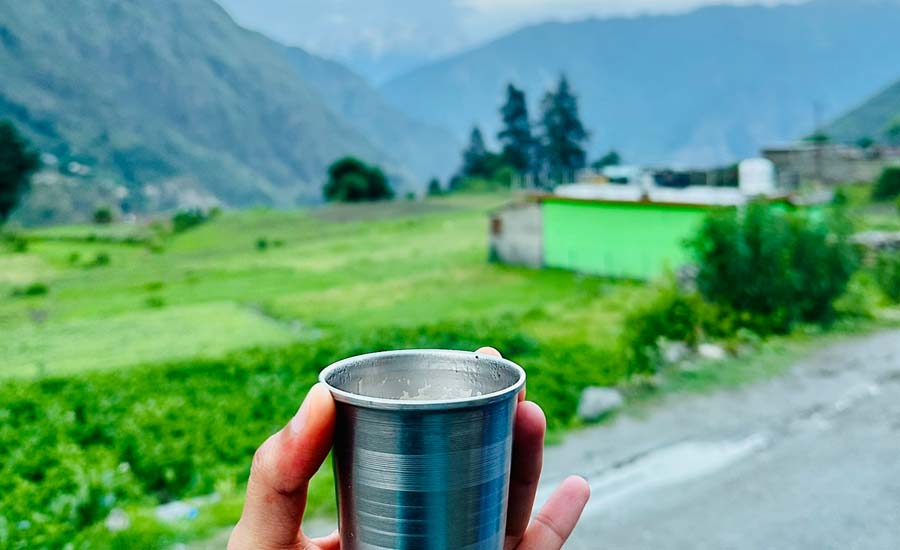
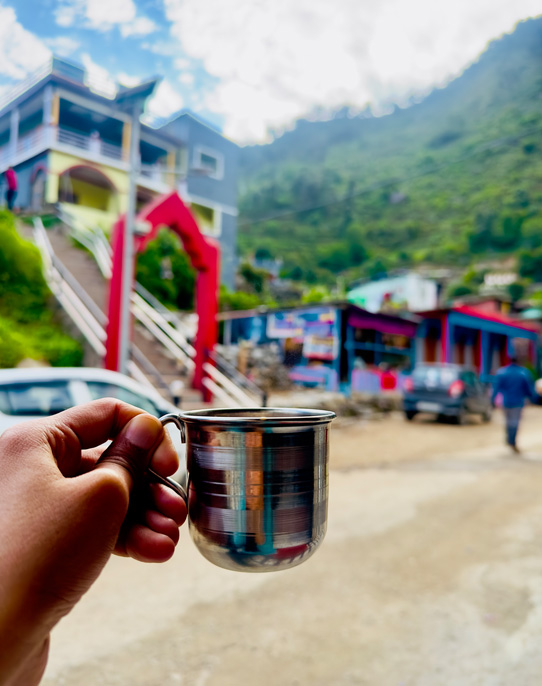
I met beautiful locals too — shared conversations, had chai in a steel glass (no plastic please), and learned so much just by observing them.
A Detour to Dhyan Badri
A few locals insisted I visit a nearby temple — Dhyan Badri, one of the Sapta Badris.
At first, I said no. It was getting dark. But their warmth convinced me.
I walked in the night — with only my headlamp — and reached this small temple.
The Shivling here faces the west, which is rare.
I reached just in time — Pujariji invited me for aarti. I got to perform aarti at this peaceful temple under the starlit sky.
I still can’t believe how blessed I felt.
One local even walked me back to ensure I don’t lose my way in the dark. Such kindness.
A Heartwarming Pahadi Dinner
Back at the homestay, I found kids watching TV — had a small chat, and then made my way to the kitchen.
The kitchen was a small mud house with a chulha (wood stove) burning warmly.
I asked permission to join, and aunty welcomed me with the kindest smile.
I asked about the scarf they wore — called Dhattu — and she happily tied it on me, taught me how to wear it (and didn’t stop until I learned).
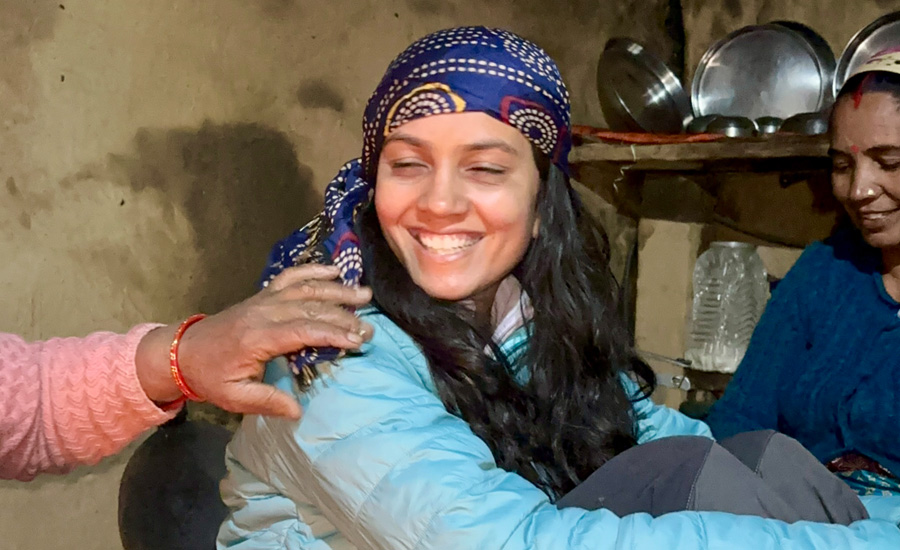
Then came dinner — sitting beside the chulha with hot rotis, sabzi, pahadi dal and rice.
It was so simple, so loving, so filling — it felt like eating at my nani’s home.
- This is why I travel.
- To meet people like this.
- To be reminded of how little we need to be deeply happy.
A Village That Stayed With Me
I left early next morning, so couldn’t say goodbye to them properly. But my heart stayed behind in Urgam.
I will return. Maybe for a week, maybe for longer.
Not as a tourist — but for a workation, to live among these beautiful souls again.
If You Visit Urgam...
Stay with Dinesh Uncle at Shree Ram Homestay – one of the most peaceful and welcoming places I’ve been.
📞 Contact available on request
(Or comment below, and I’ll happily share the details)
Rudranath Mahadev – The Roar of the Mountains and My Heartbeat in the Himalayas
After Kalpeshwar, my next stop in the Panch Kedar Yatra was Rudranath — a name that, even when whispered, carries weight, intensity, and depth.
The journey to Rudranath wasn’t just physically tough — it was emotionally transformative.
I started early from Urgam village by road and reached Sagar village, the base for Rudranath, by 8:30 AM. After a quick breakfast and prepping up, I began the trek around 9 AM.
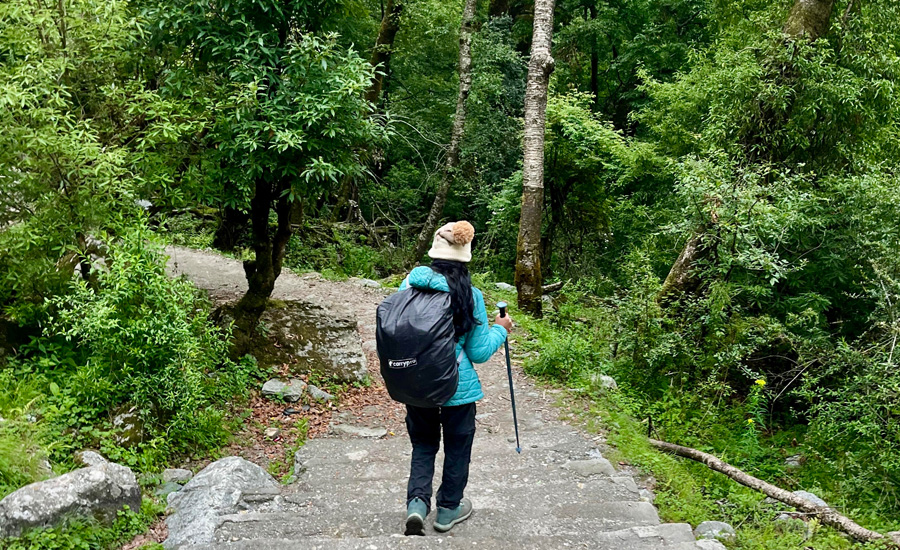
Even from the village, the trail was steep — it felt like Rudranath was testing me from the very first step.
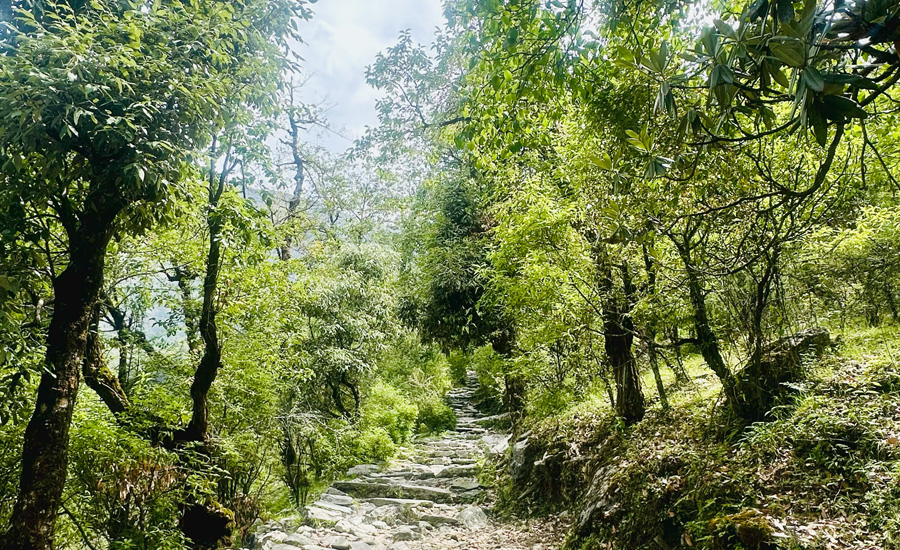
Shortly into the trek, I reached the forest department checkpoint for registration. The lady officer there was sweet — she smiled, asked where I was from, and told our guide to take good care of us. She even said, “Click lots of beautiful pictures of this girl,” which made me smile — a small moment, but it stayed with me.
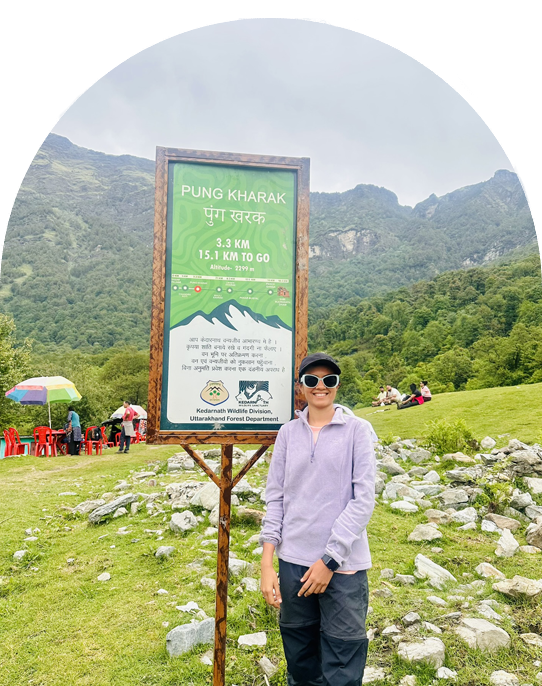
The climb was brutal. The boards said 3.3 km to Pung Kharak, Officially it said 3.3 km — but my legs and lungs told a different story. The trail was all stone, steep steps, and fatigue. But we kept going.
Break at Pung Kharak
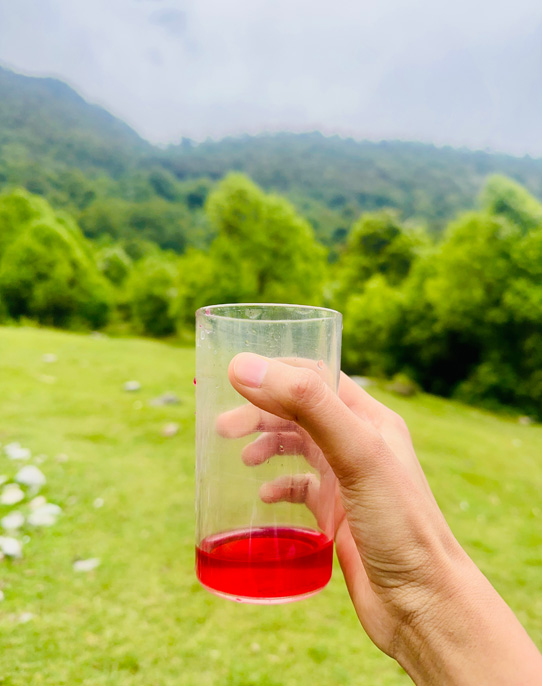
I finally reached Pung Kharak, where I took a much-needed break and sipped on cold Buransh (Rhododendron) juice.
When I looked up, I saw the mountain I still had to climb. I honestly thought people were joking — until the ascent began.
On the trail, I met so many inspiring souls.
There was one aunty from Pune — in her 60s — doing her fourth Kedar. Her spirit gave me strength.
And then came the rain.
Heavy, cold, and relentless. Despite the poncho, I was soaked, shivering, and tired.
I kept whispering Om Namah Shivaya like a prayer with every step — hoping Mahadev would hear and lend me some strength.
A fellow trekker joined me. A stranger, but his presence was comforting.
He had already done Madhyamaheshwar and kept encouraging me as we walked together.
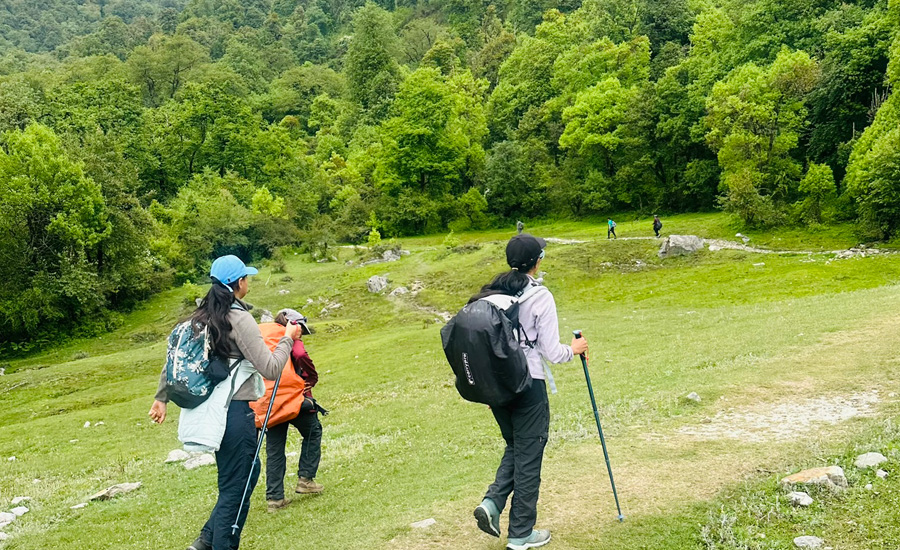
After nearly 5+ hours, I finally reached Lyuti Bugyal — a quiet meadow, tucked between mighty Himalayan giants.
Lyuti Bugyal Stay – The Unexpected Shelter
At Lyuti Bugyal, I stayed in a shared tent with 12 others. Honestly, I didn’t feel comfortable —
so guess what? I chose to stay in the kitchen tent with the staff.
Warm, humble, and surprisingly cozy — it felt like the universe offering protection.
Evening tea, sun rays piercing through after rain, a soft breeze — it was a quiet pause after a stormy day.
Dinner was wrapped up early, giving us time to rest.
But the night? Oh, it was rough.
Freezing winds, loose tent zippers, my blanket flying off mid-sleep, and at one point — someone literally stepped on my head.
I barely slept a wink.
Day 2: Reaching Rudranath – A Divine Ascent
I woke up around 5 AM, body sore but spirit buzzing.
Today was the big day — Rudranath awaited.
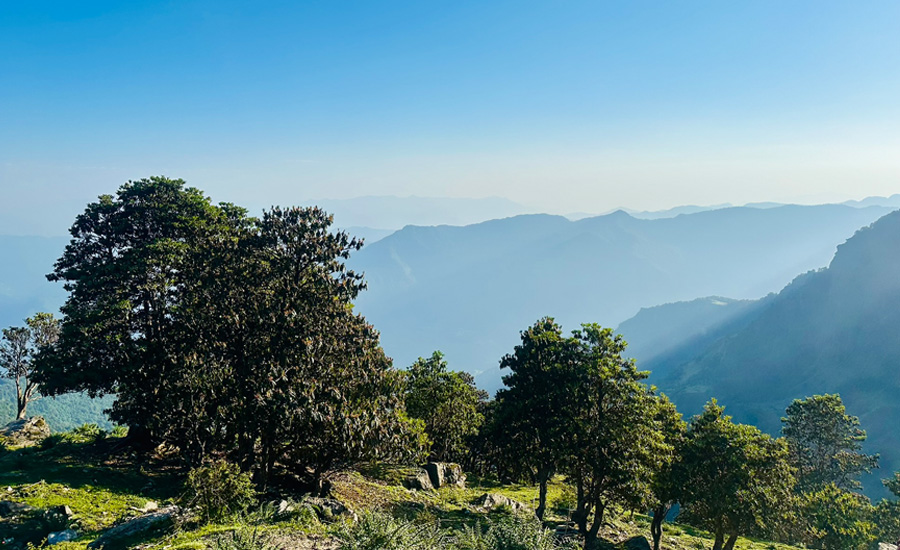
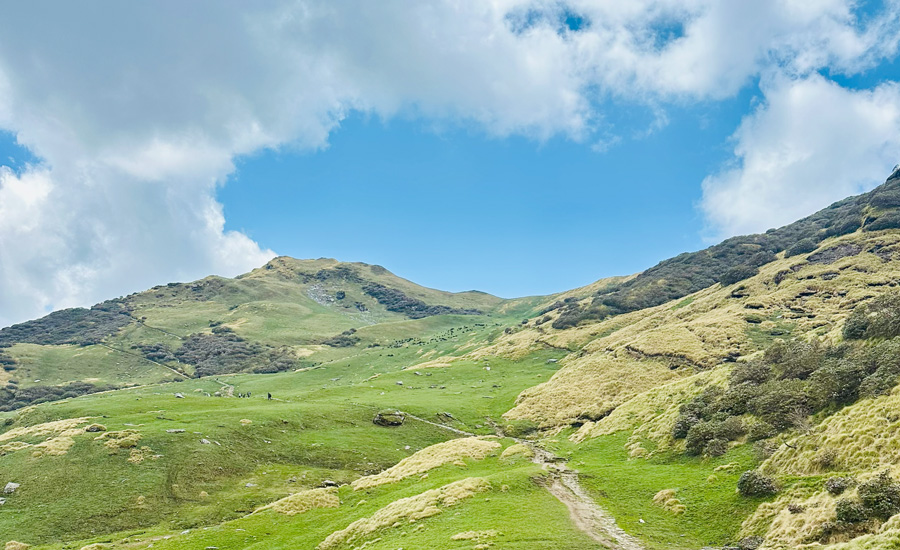
The trail began through meadows and forests, gradually climbing toward Panar Bugyal — a wide, wind-swept alpine grassland that looked nothing short of Switzerland draped in devotion.
Golden light spilled over the slopes. Clouds floated just above the grass.
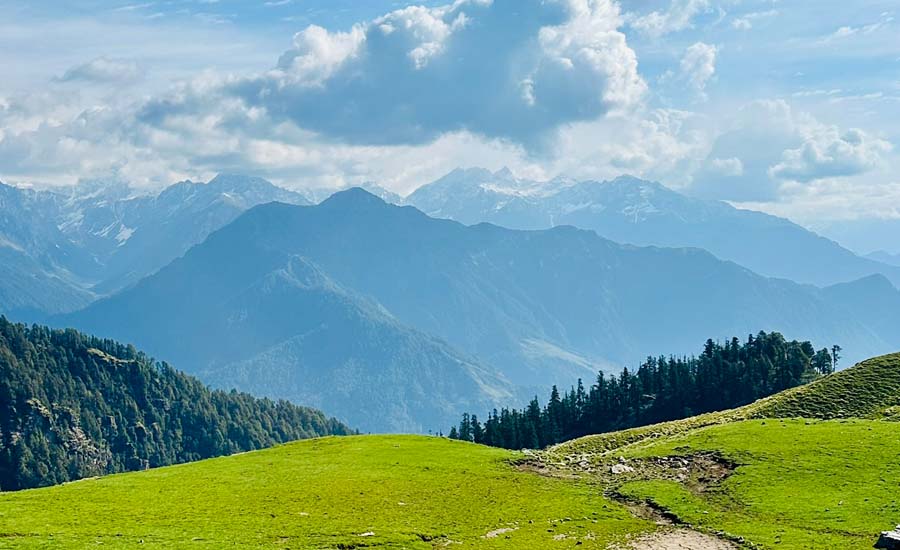
I paused often — sipping water, munching on trail snacks, pointing my phone at distant peaks using an app (yes, the inner geek was alive),
and exchanging warm nods with fellow pilgrims.
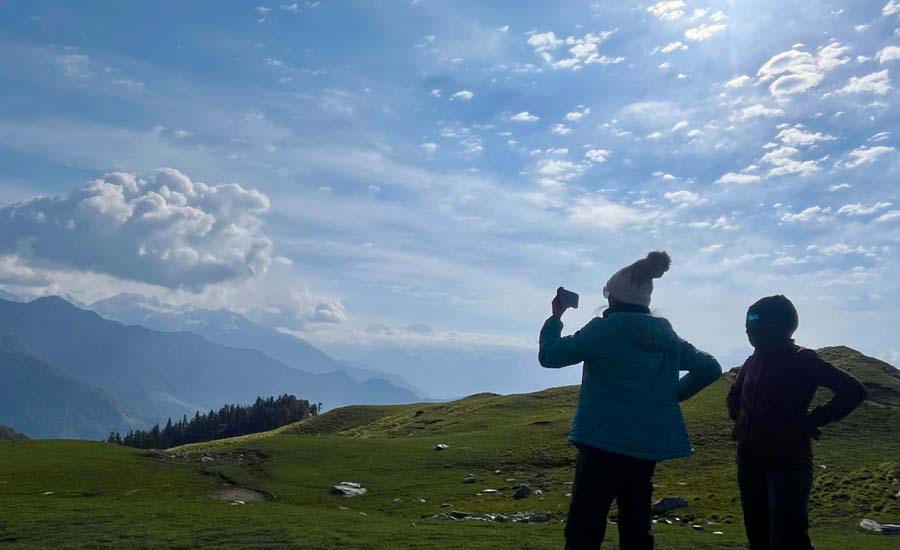
And then came the ascent toward Pitra Dhar — a place of deep ancestral energy.
“Pitra” means forefathers, and this is where many stop to offer silent prayers to their ancestors.
I felt the air shift here — colder, quieter, charged.
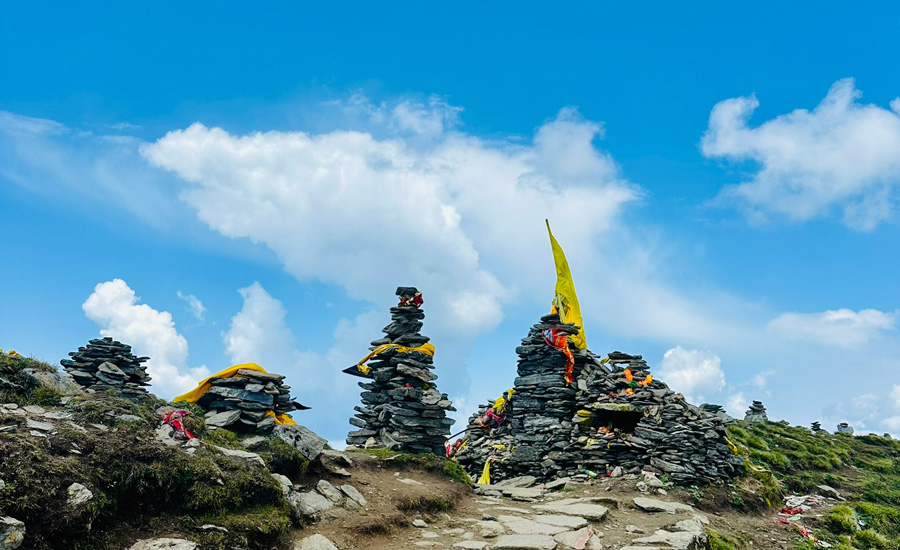
The First Glimpse of Rudranath
Exhausted, I kept chanting Om Namah Shivaya to keep myself going.
And then it happened — a small clearing, a distant view of the Rudranath Temple etched into the cliffs.
I stopped in my tracks. My chest tightened. My eyes welled up.
That first glimpse… I’ll never forget it.
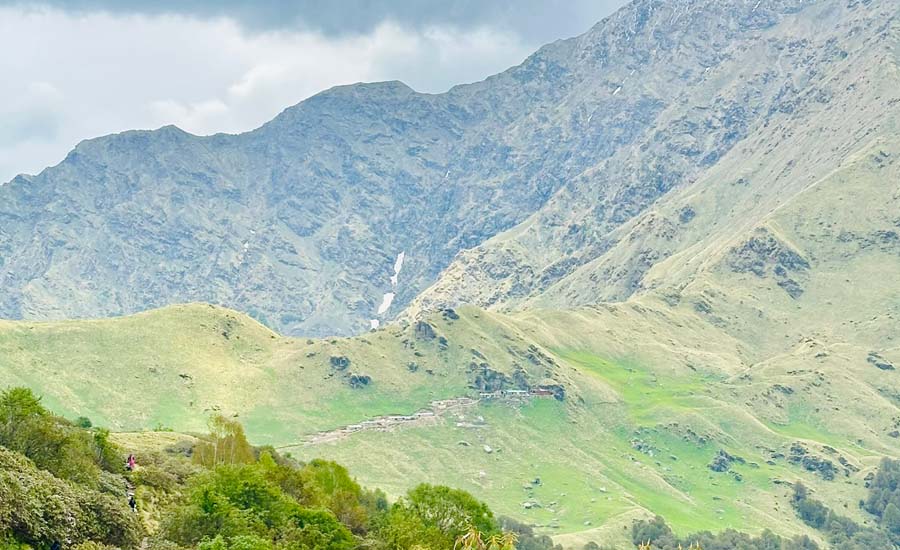
The temple looked close — but it still took hours of careful descent.
Every step tested my limits.
After nearly 7 hours of trekking, I finally reached Rudranath around 1 PM.
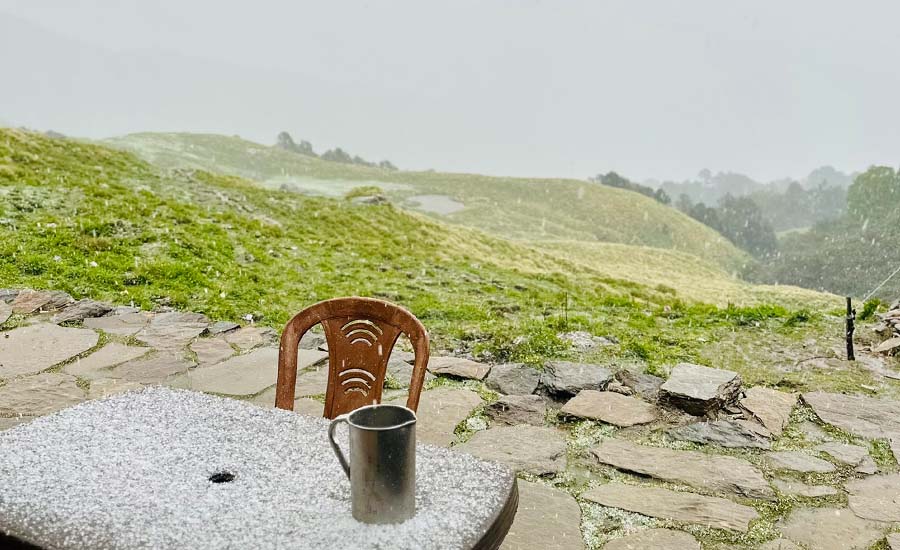
Just half an hour after I arrived, the skies opened up — hailstorm, violent rain, winds. I’ve never experienced anything like it. I was lucky to reach on time. I had booked a tent, but after the storm, I pleaded for a mud house stay(only couple of mud house options) — Luckily, I managed to convince the host to shift me to a mud house. Though shared by many and not very clean, it was warmer than the tent.
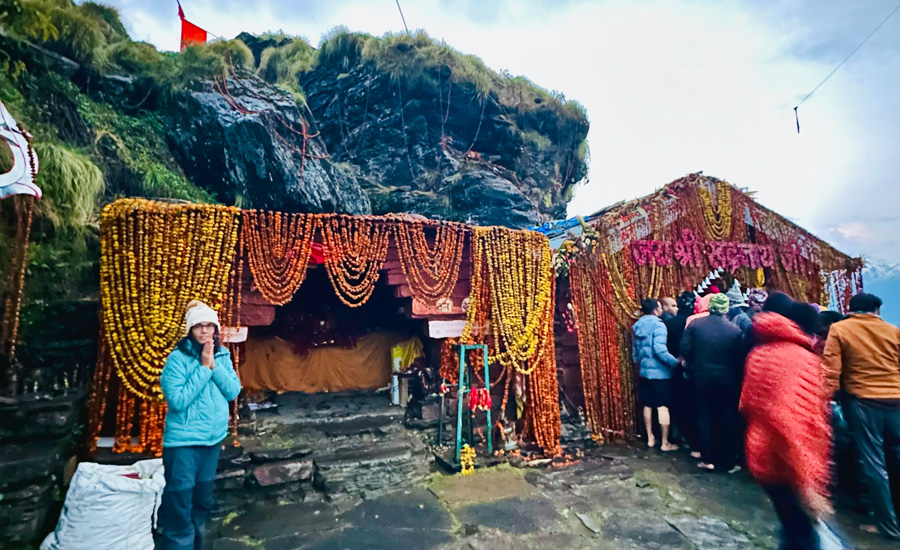
Evening came and I walked to the Rudranath Temple again. Heavy rain, again. But this time, I sat inside the temple for hours. No photos — just me and Mahadev.
Here at Rudranath, Lord Shiva is worshipped in the form of his face — “mukha roop”. And it’s not just a symbolic belief. The rock itself appears to have features — a broad face, deep eyes, a strong mustache.
I always imagined Mahadev as calm and kind. But here… I saw his raudra swaroop — fierce, unmoved, powerful. And just when I blinked, it felt like that expression melted into a soft smile. Kind eyes. Gentle glance. Bhole Baba.
Two forms, two expressions… I was frozen in devotion. Something inside me shifted. It was as if Mahadev showed me both — his wrath and his grace — and let me feel both, fully.
The Sandhya Aarti began as I stood just beneath the ghanta (temple bell). It rang with such intensity, the vibrations ran through my chest. I wasn’t just watching an aarti. I was inside it. The sound, the flame, the mountains — everything merged into one moment.
I stepped out and walked around the temple compound. Peaceful, mystical, Himalayan. There’s Saraswati Kund nearby — a sacred water body said to be blessed by the goddess herself — but due to rain and fading light, I couldn’t visit this time.
Still, I walked back slowly. My heart was full. My spirit was shaken — in the most divine way.
A Lesson from the Trail
This is not a trek everyone can do. You’re called here.
You don’t decide — Mahadev chooses who comes.
That thought… it gave me goosebumps.
- Courage I didn’t know I had
- Moments I’ll never forget
- Darshan I can never describe
- The belief that Mahadev truly calls — only when it’s time
Next day at 5:30 AM, I started the return.
Climbing what I had descended.
It was mentally tough, but I made it back to Lyuti, thanked and met the kind people where I stayed, and continued to Sagar village.
It took about 8–9 hours in rain, slippery terrain, and bird songs echoing through the forest.
I love birds — I was spotting and identifying them on the app even while climbing!
Finally reached, legs numb, and all I needed was a hot shower at the homestay.
Gopeshwar Town Visit
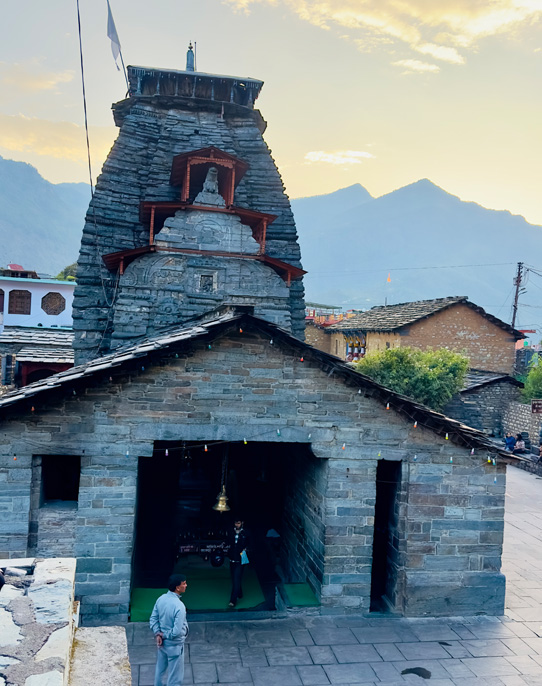
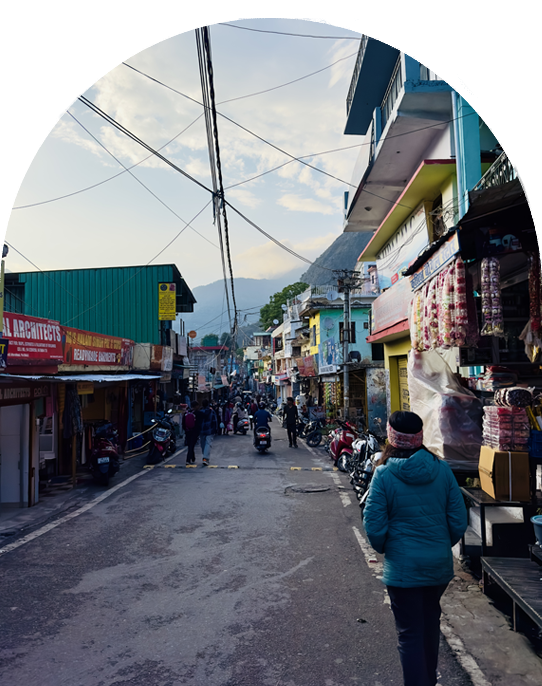
Later that day, I visited Gopeshwar Temple — from where Baba Rudranath’s doli begins its sacred journey.
Attended the aarti, bought some fruits for the next day, had dinner, and fell into deep sleep.
Final Thought for Rudranath
“He comes in roop of fire and fury, and then melts your soul with his smile. Mahadev, the one who chooses us.”
I didn’t just trek Rudranath.
Rudranath trekked through me.
Tungnath Mahadev: Where Mountains Whisper and Shiva Listens
I left from Sagar village around 5:45 AM, heading towards Chopta.
The morning air was crisp, and there was a silence in the mountains that felt sacred.
As soon as I reached Chopta, I had a steaming cup of milk tea — and yes, I made sure to ask for a steel cup, not plastic.
Little acts matter when you’re in the land of gods.
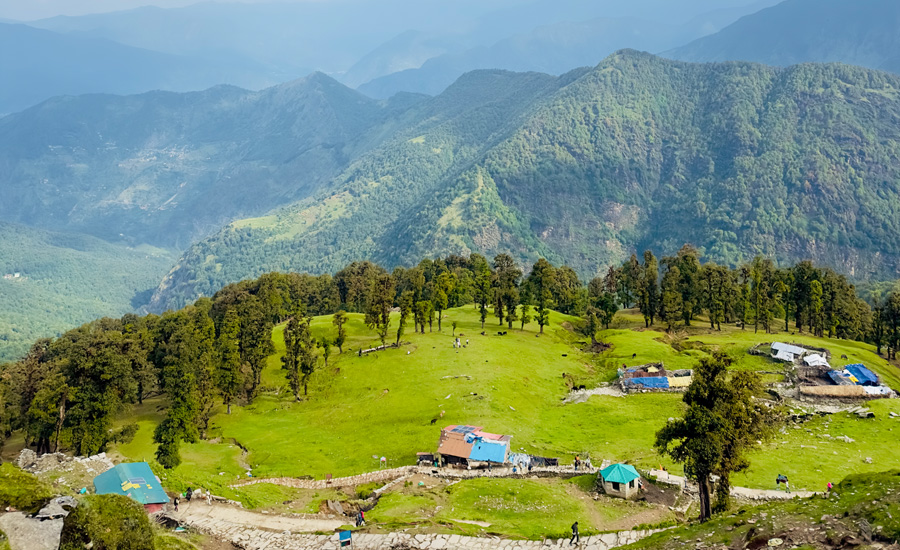
I began the Tungnath trek around 7:15 AM, walking through misty pine trails.
Along the way, I saw many young people riding mules up to the temple.
It felt strange. The path was short and scenic — couldn’t we choose to walk and let the animals rest?
But then again, maybe this is how the locals earn a living.
Trash on Trails & A Heavy Heart
I was heartbroken to see the amount of plastic litter along the trail. Despite the government placing dustbins on the route, wrappers and bottles were scattered everywhere. I kept thinking — this land belongs to Mahadev. How could we be so careless?
This wasn’t my first time here. I had trekked to Chandrashila a year ago in March 2024, but back then, the temple was closed. Coming here again, with the temple open, was a new feeling altogether. Same trail, different soul.
Darshan, Jalabhishek & A Blessing from Punditji
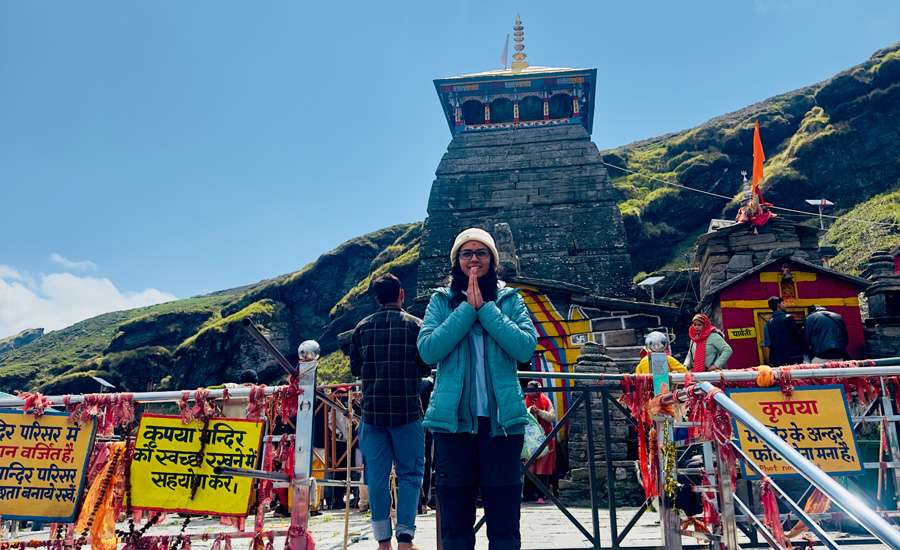
Tungnath, the third Kedar in the Panch Kedar Yatra, is known as the highest Shiva temple in the world, perched at an altitude of 3,680 meters. But height alone doesn’t define its power. This is where Lord Shiva’s arms (bahu) are believed to have emerged, symbolizing strength, protection, and embrace.
As I approached the ancient stone temple through the mist-covered trail from Chopta, there was a sacred stillness in the air. The path may have been short compared to the others, but its aura was no less divine. When I reached the sanctum, my heart held one wish — to perform Jalabhishek.
The Shivling at Tungnath felt like an open doorway to something far beyond sight. Surrounded by carvings of Parvati Mata, Nandi, and other deities, the energy was both grounding and transcendent.
I offered water with trembling hands — a quiet moment of surrender. The punditji shared stories about the temple’s significance, but honestly, the real story unfolded in silence, between me and Mahadev.
One Bag, Seven Trash-Filled Stories
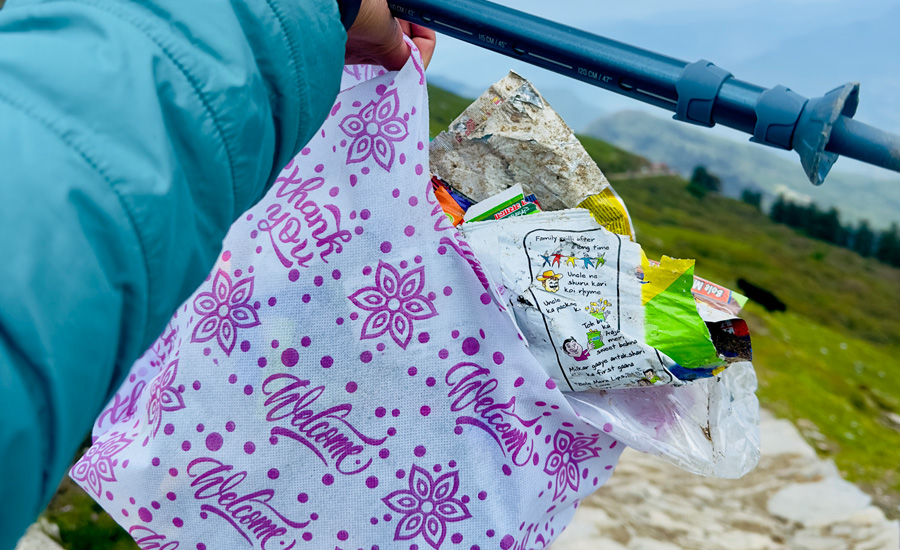
On the way down, I did what my heart told me to do — I asked a shopkeeper near the temple for a large bag to collect trash on the trail. He gave me one, not too big, but I took it anyway.
I started picking up plastic bottles, snack wrappers, biscuit packets, anything I could. A trail that should’ve taken half an hour downhill took me 2.5 hours. I didn’t care. I was walking slow, picking things up with every steps.
What happened next touched me beyond words:
- A cleaning staff member blessed me quietly.
- An aunty hugged me tightly and said, "You’re doing such a great job, beta."
- A man bent down to pick plastic, handed it to me, smiled, and said, "Thank you for starting this."
- A kid asked, "Didi, can I help you?" and that just melted me.
I had seven full bags of trash. Some shopkeepers denied adding them to their bins, which I understand — it’s their daily struggle. But I emptied each bag wherever I could responsibly.
Why I Did It
Not for praise. Not for attention. But because I genuinely felt — if Mahadev chose this place to live, who are we to dirty it?
If even one person changed after seeing me, that’s enough. If one kid decided to keep a wrapper in their pocket next time, that’s victory.
This was my Tungnath yatra. Emotional. Soulful. Stirring.
Madhyamaheshwar: The Kedar That Broke Me and Built Me Again
Madhyamaheshwar is the one place I want to come back to every year—my heart whispers this every time I think of Mahadev. This Kedar called me, tested me, broke me physically and emotionally, yet healed me in the most profound way. It gave me clarity, strength, and a peace I’ve never known elsewhere.
Arrival at Ransi – The Base Village with a Heart
I reached Ransi Village in the afternoon and instantly felt at home. The warmth of the people touched my heart. I stayed at Hilltop Heaven Homestay, where the lady running it asked, “Would you eat kheer made from Jhangora?” (a locally grown millet of Uttarakhand). I hadn’t eaten a sweet dish since the beginning of this journey, so I happily said yes—and that made my day!
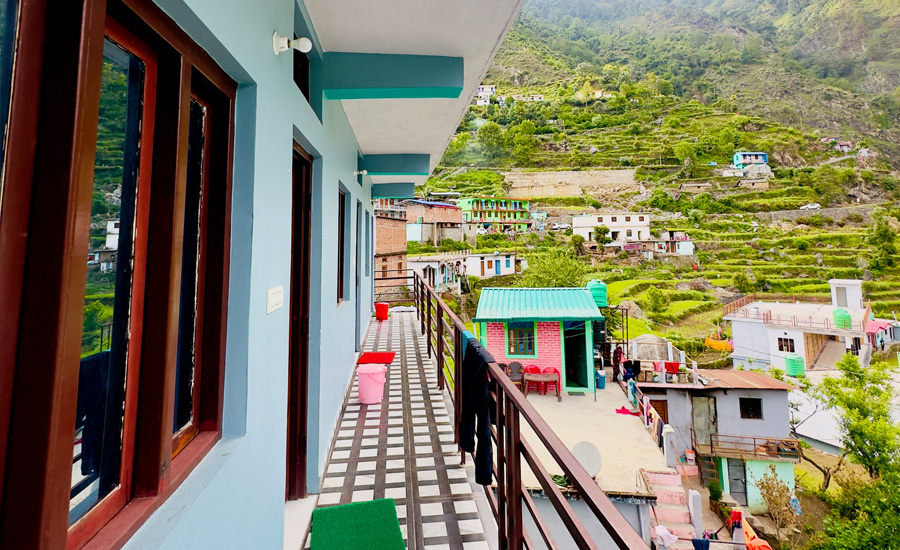
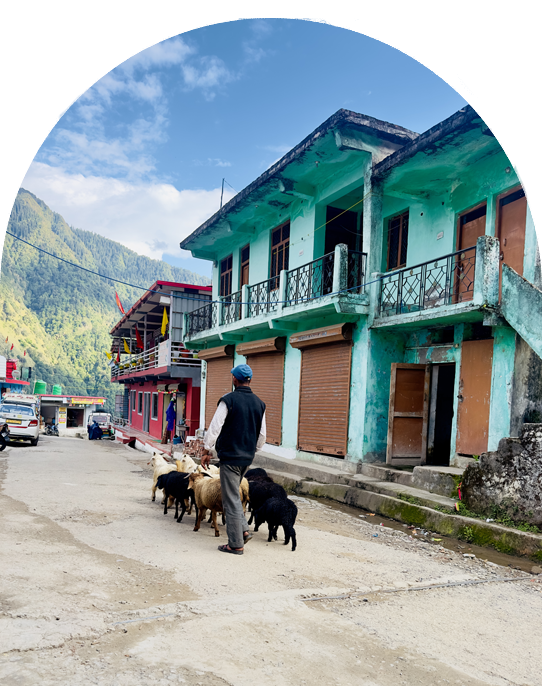
As I sat outside the homestay, sipping on milk tea, I found myself observing people on the main street. I love that about hill villages — life moves, but it slows down enough for you to truly see it. A shepherd passed by with a small herd of sheep, their bells softly ringing. A village woman walked steadily with a heavy load balanced on her shoulder — her pace strong, her expression calm. Nearby, a group of kids ran barefoot, laughing as they played with the dogs trotting beside them.
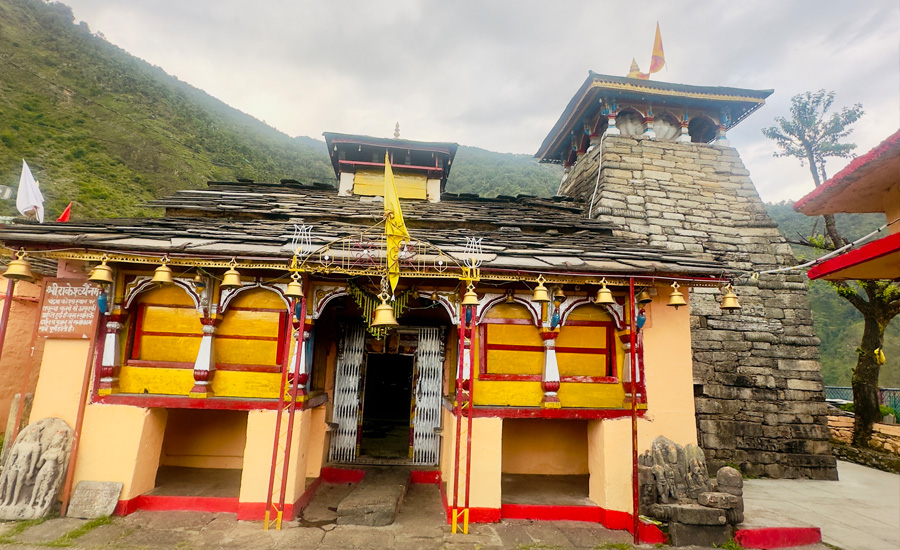
A few villagers suggested I visit the Maa Rakeshwari Temple, and that led me on a beautiful evening walk around the village.
From kids to elderly grandmothers who don’t even remember their age, to a local guide who had led countless treks—I met all kinds of beautiful souls. One lady I greeted at her door offered me tea and bananas and insisted I sit. She even gave me a cushion made from plastic and cloth—such a humble but heartwarming gesture. That is Pahadi love—unasked, unconditional.
Day of the Trek – A Tough Ascent Begins
Next morning, I began my trek from Ransi. The initial stretch to Gaundar Village was a descent. Along the trail, I noticed beautiful quotes painted on rocks and boards — gentle reminders to keep going. After reaching Bantoli Sangam — the confluence of the Madhuganga and Morkhanda rivers — I stopped for breakfast and rested for a while in a small flower garden nearby.
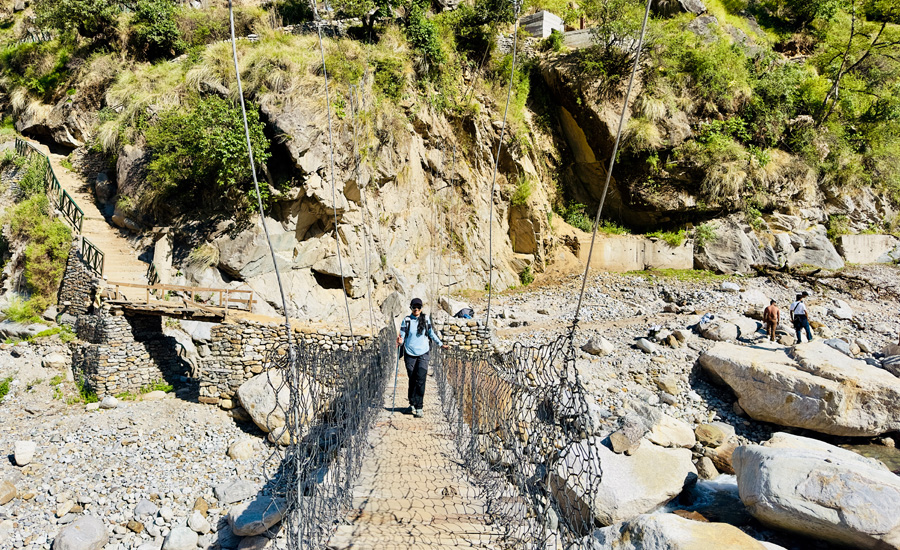
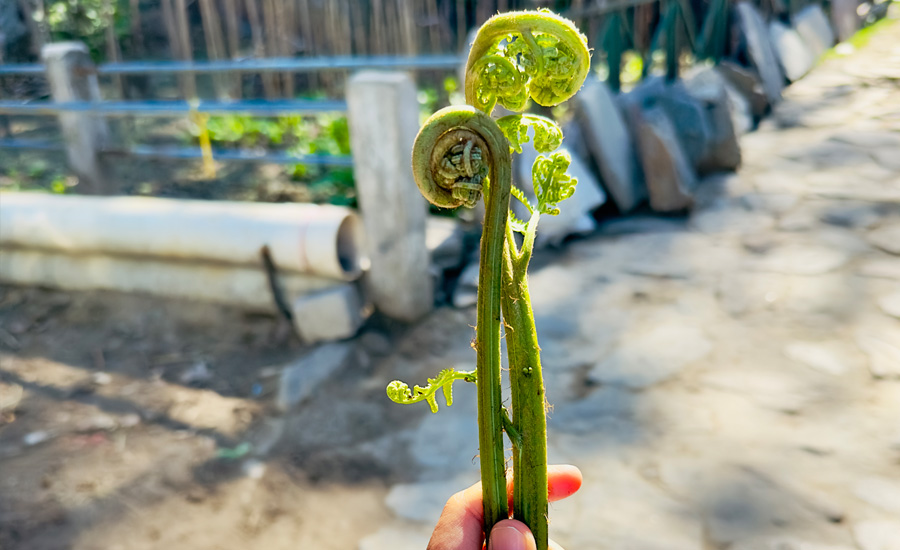
Here I tried Buransh juice, played with a cute girl, learned about the vegetable Lingoda, and tasted Bhang ki Chutney—absolutely delicious!
After Bantoli, the real ascent began. The sun was unforgiving, and the path felt endless. I stopped for trail snacks and water, encouraging myself to keep going.
Beautiful Strangers Who Became Support
The trail brought kind strangers—fellow Gujaratis who shared snacks and stories, a sweet Bengali aunty trekking at 65, and a cheerful young boy giving out toffees to every trekker. I exchanged one with him too! We Gujaratis do carry lots of snacks, and I shared mine with smiles and conversations.
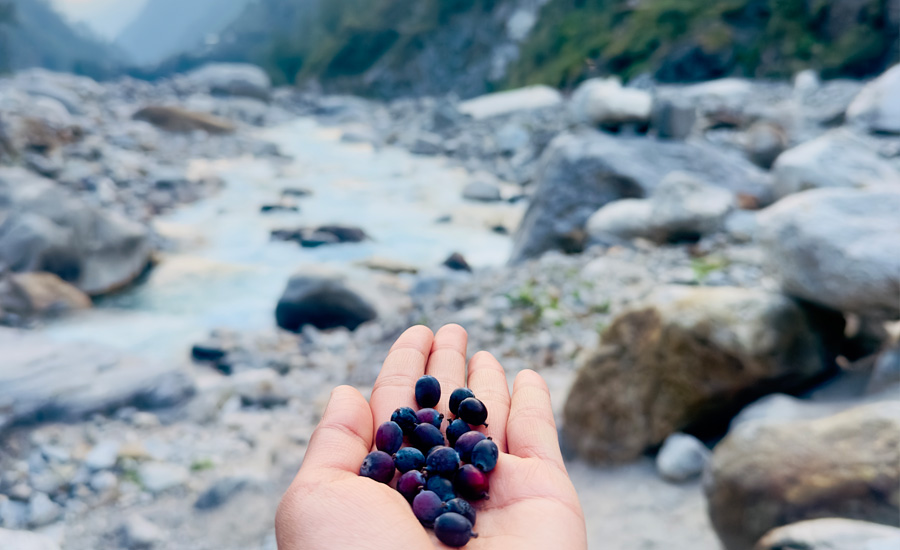
I came across another wild fruit growing along the trail. Curiosity won—as always—and I decided to taste it. There’s something special about finding food in the wild; it feels like a little gift from the mountains. Nature’s snack break, unexpected and delicious.
A Route Painted by Nature: Waterfalls and Wilderness on the Way to Madhyamaheshwar
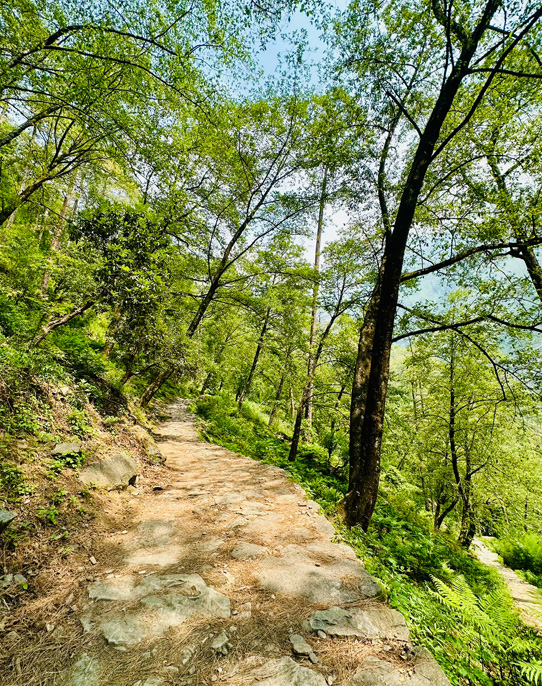
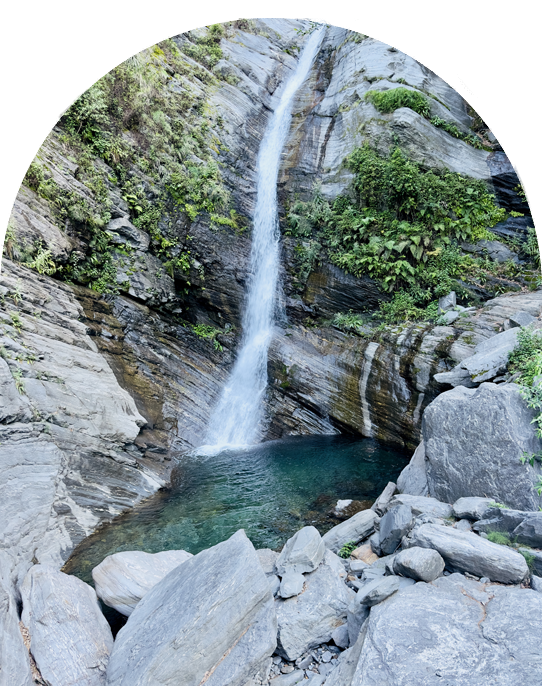
The route to Madhyamaheshwar isn’t just a spiritual trail—it’s a canvas painted by nature. As I trekked deeper into the mountains, I was welcomed by serene forests, wild blossoms swaying with the breeze, and the calming sound of rivers weaving through the valley. One of the most breathtaking moments was crossing a hidden waterfall cascading down moss-covered rocks—tucked away like a secret just for those who walk this path with patience and love. Its mist touched my face, washing away all fatigue, reminding me why this journey is so special. Every step felt like poetry written by the Himalayas.
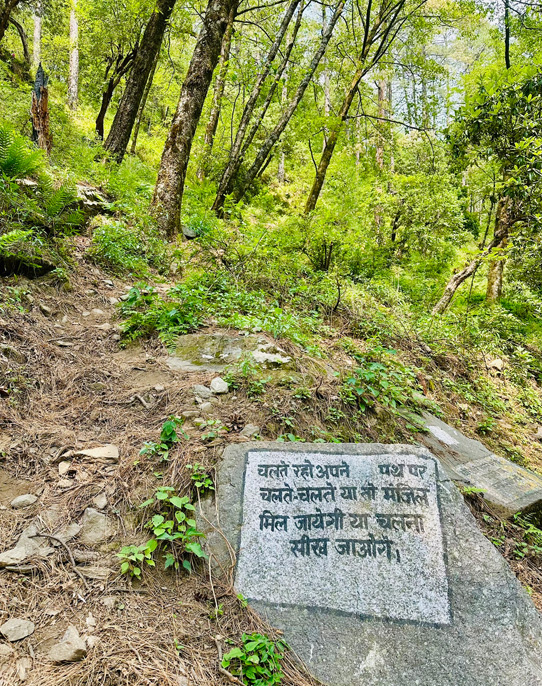
Hours passed, and I still couldn’t see the temple. Every person descending had a different answer about how far it was. My legs gave up. My heart broke. I cried while walking. I began doubting if I’d ever see Mahadev. My guide reminded me, “God tests his true Bhakt.” I wiped my tears and kept moving.
At 5 PM, I finally saw the Madhyamaheshwar Temple in the distance.
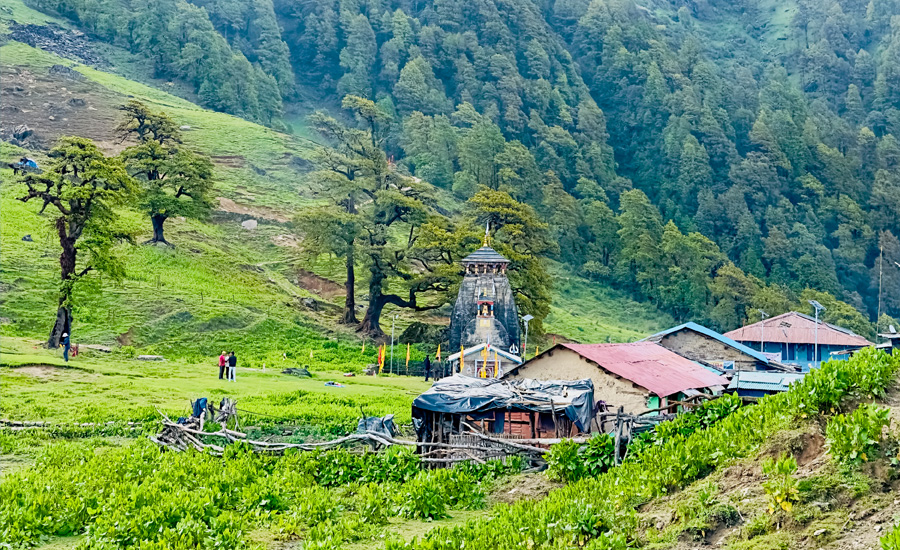
I collapsed and cried—cried like never before. It wasn’t just fatigue; it was every emotion spilling out. I had reached. Mahadev hadn’t turned me away. He was waiting.
Evening Darshan and Sandhya Aarti
I rested with a cup of hot tea, feeling the mountain’s peace seep into me. The temple doors were shut, but I roamed around the temple, discovering smaller shrines and seating in front of the main door.
At Madhyamaheshwar, Lord Shiva is worshipped in the form of his navel (nabhi). According to legend, after the Mahabharata war, the Pandavas sought to atone for their sins by finding Lord Shiva. Shiva eluded them and took the form of a bull. When the bull was torn apart, different parts of its body appeared in various locations — and at Madhyamaheshwar, it was his navel that emerged.
This sacred representation signifies life, creation, and the deep center of existence. The linga here is small, slightly above ground, and appears naturally moist, exuding an ethereal calm.
I sat there and soaked in the calm. When the door opened for Sandhya Aarti, I stood right at the front—goosebumps all over. I was the first to see the Shivling, and that moment will stay with me forever. The sound of bells echoed in my soul.
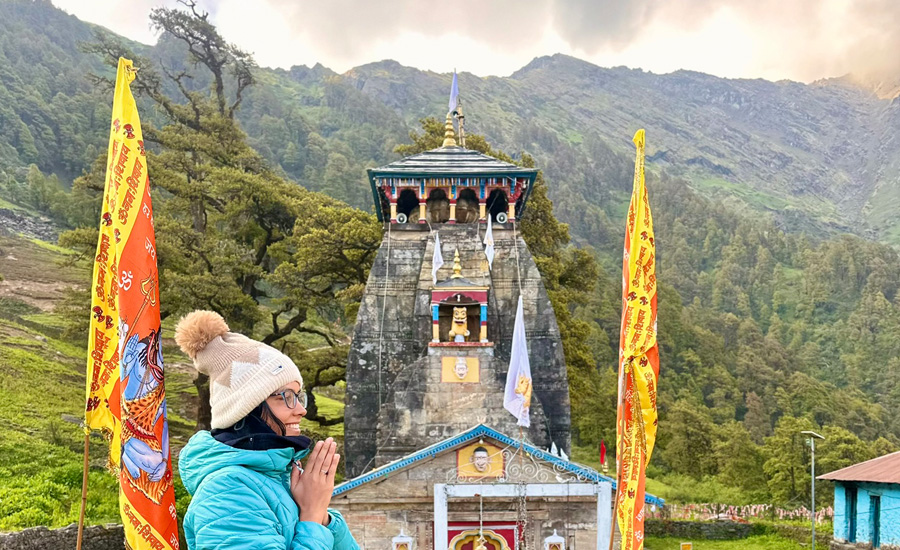
As I rang the bell during the aarti, the entire moment felt surreal—like I had entered another world, far away from everything. I stood there immersed in the powerful vibrations, completely lost in the divine rhythm. After the aarti, the PujariJi applied tilak on my forehead, and I stood quietly near the temple, soaking in the peace. There were barely 20 to 30 people around, and the silence of that moment was incredibly comforting. Amidst all this, I met someone unexpectedly—a brief yet deeply special connection. A meeting that stayed with me, leaving me with a feeling that I’d love to meet them again, and again.
Sunrise at Budha Madhyamaheshwar
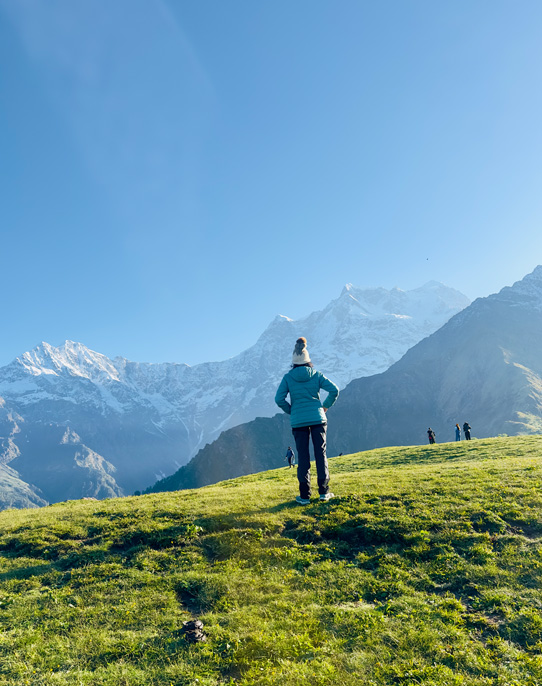
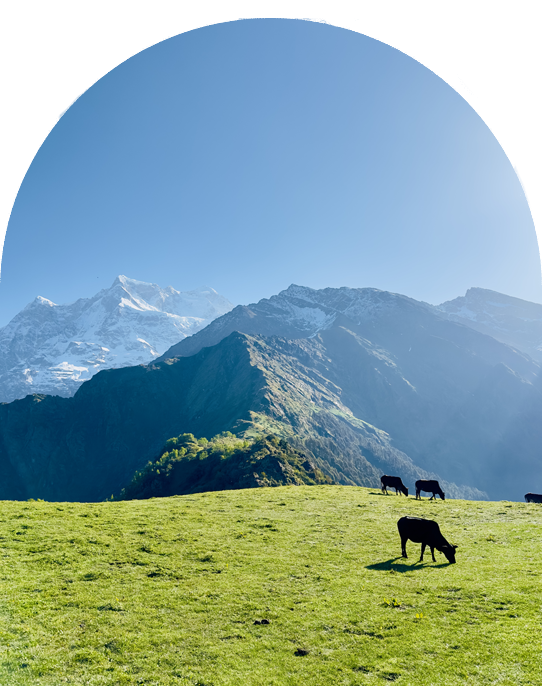
Next morning, I trekked 2km uphill to Budha Madhyamaheshwar. It was steep, but worth every step. As I sat with the temple behind me, Mt. Chaukhamba stood tall right in front.
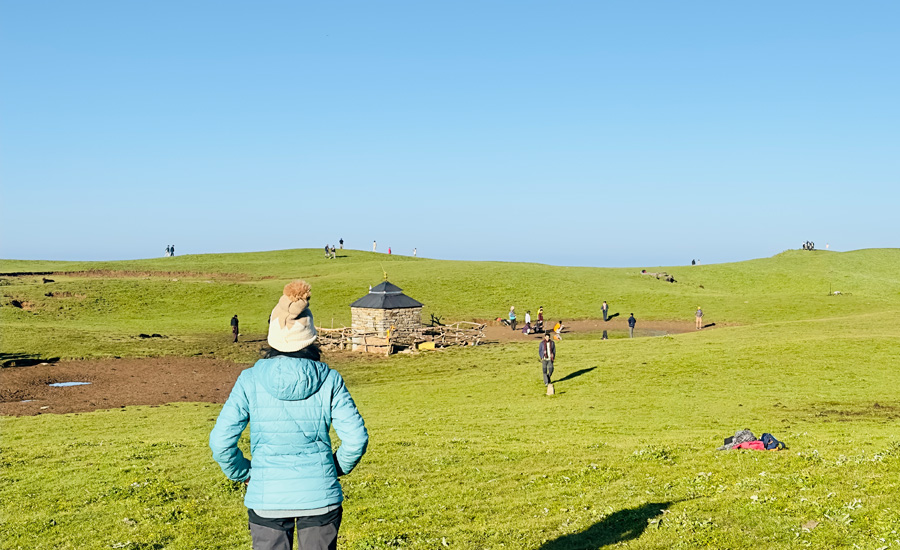
Cows grazed nearby. I had drawn this image as a kid—mountains, animals, peace. Now it was real.
Sunrise here was otherworldly. I sat for hours, breathing in the silence, the wind, the beauty.
Rudrabhishek
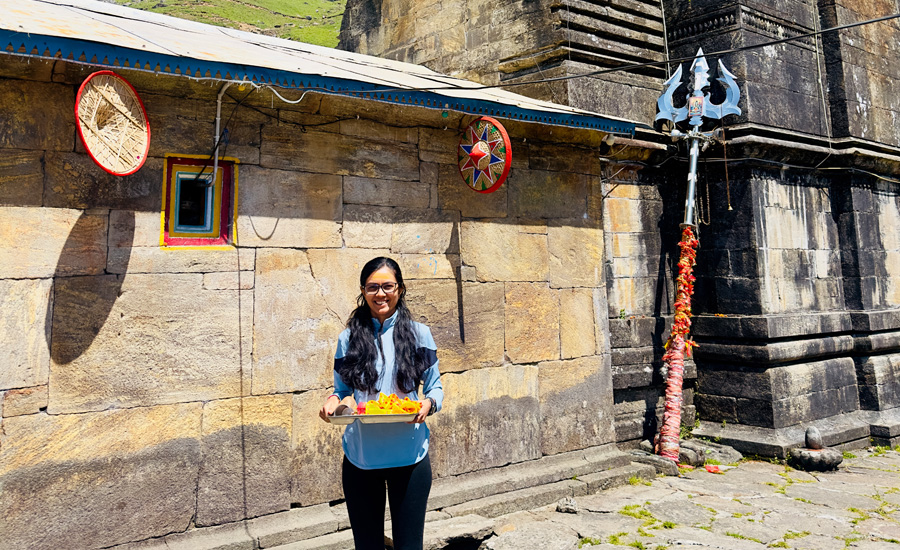
Back down, I bathed and returned to the temple for Rudrabhishek Puja. I met Dinesh Ji, who had helped earlier. He encouraged me to return for a month, saying he’d host and help me.
The Rudrabhishek lasted about 45 minutes. The PujariJi recited the shlokas, shared insights on the temple and the Panch Kedar significance. I felt powerful energy, immense gratitude.
The Goodbye with a Wish to Return
Before descending, I turned one last time to look at the temple and prayed, “Please Mahadev, allow me to return again and again.” This place isn’t just spiritual—it’s where my spirit becomes whole.
Overnight at Bantoli Sangam
I stayed that night at New Ashutosh Homestay near Bantoli Sangam.
It reminded me of home.
📞 Contact available on request
(Or comment below, and I’ll happily share the details)
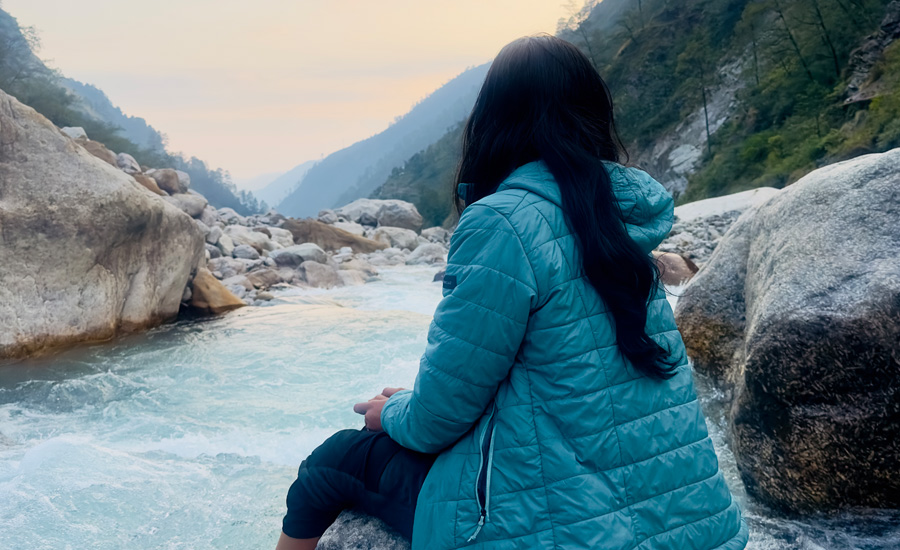
I went birdwatching, then sat by the river alone for hours—from sunlight to sunset.
The merging rivers flowed fiercely. Stones stacked like sculptures—I knew only nature could do that.
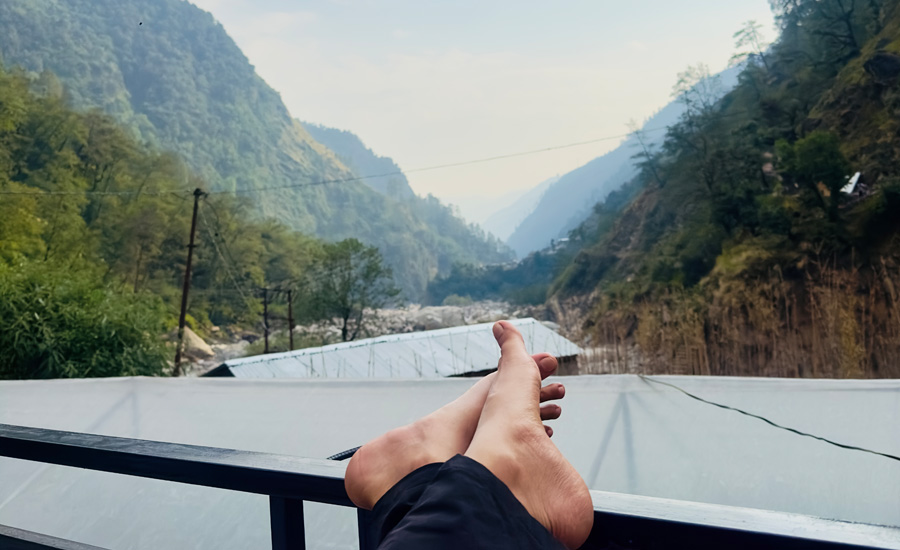
Dipping my feet in the icy water felt therapeutic—pain melted away. Madhyamaheshwar offered peace, while the river offered strength.
Stories Over Dinner
After sunset, I returned to the homestay, where I had already planned to sit down with Uncleji and learn about the story of Madhyamaheshwar in his own words. I sat with him for nearly three hours, listening intently as he narrated tales I had never heard before—stories that only someone deeply rooted in this land could know.
He spoke about the Tibetan King and his spiritual connection with Madhyamaheshwar and Mahadev, how the Shivling was established, and the divine history surrounding the temple. He told me about his past, when he had hundreds of cows and sheep and would roam freely through the Himalayas. As he shared his life, filled with simplicity and struggle, I was amazed by how genuinely happy he seemed.
In that moment, all my worries felt so small. His contentment taught me that peace doesn’t come from having everything, but from being connected—with nature, with faith, and with people.
And guess what? His name is Shiv—how beautifully fitting.
I’d love to meet him again someday, just to talk, check in on his health, and listen to more of his stories. He even served dinner with so much warmth, and that kindness will stay with me for a long time.
This is the one temple I will keep returning to — for Mahadev, for peace, and for a part of me I always find here.
Omkareshwar Temple, Ukhimath: The Winter Abode of Kedarnath and Madhyamaheshwar
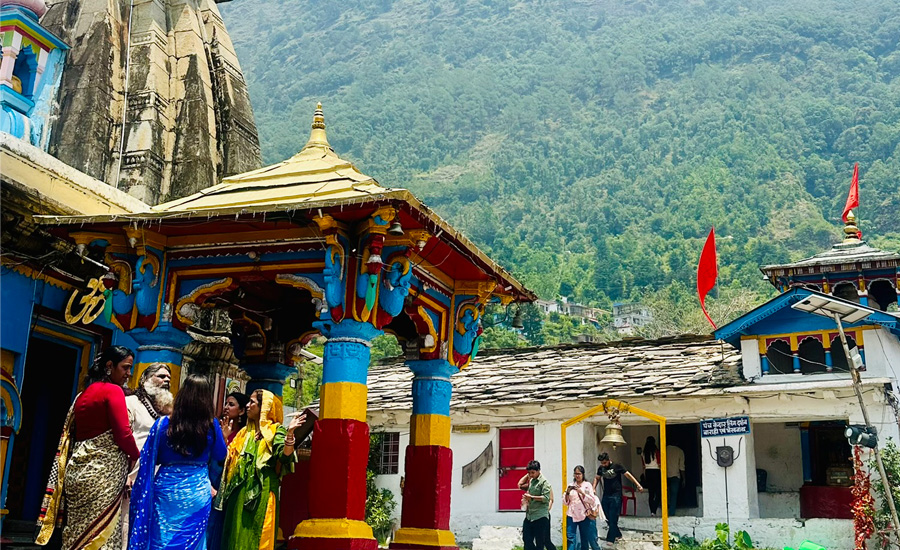
After descending from Madhyamaheshwar, I visited Omkareshwar Temple in Ukhimath, a spiritually significant stop on the Panch Kedar route.
This ancient temple serves as the winter seat of Lord Kedarnath and Lord Madhyamaheshwar. When snow blankets the Garhwal Himalayas and the original shrines become inaccessible, the idols are ceremoniously shifted here and worshipped with equal devotion. Omkareshwar Temple is also where Lord Shiva and Goddess Parvati’s marriage is believed to have taken place, making it a site of deep mythological reverence.
The temple architecture reflects traditional Himalayan stone craftsmanship and holds great historical importance—it is said to be over a thousand years old. Even though it is less crowded than Kedarnath, the spiritual weight of this place is unmistakable.
I visited the temple and had a peaceful darshan.
Kedarnath: In the Lap of the Himalayas, At Mahadev's Feet
The final stretch of my Panch Kedar Yatra brought me to the most renowned and perhaps most chaotic Kedar of them all – Baba Kedarnath, the Jyotirlinga seated in the raw, trembling silence of the Himalayas.
But my journey here wasn’t just about darshan. It was about discomfort, divine patience, and deep realization.
A Divine Stop Before the Climb: Triyuginarayan Temple
I left early in the morning for Sonprayag, the base for Kedarnath. As expected, I got caught in traffic for hours. Once I finally reached, I dropped my bag at a temporary stay and left immediately to visit Triyuginarayan Temple — a place steeped in celestial history.
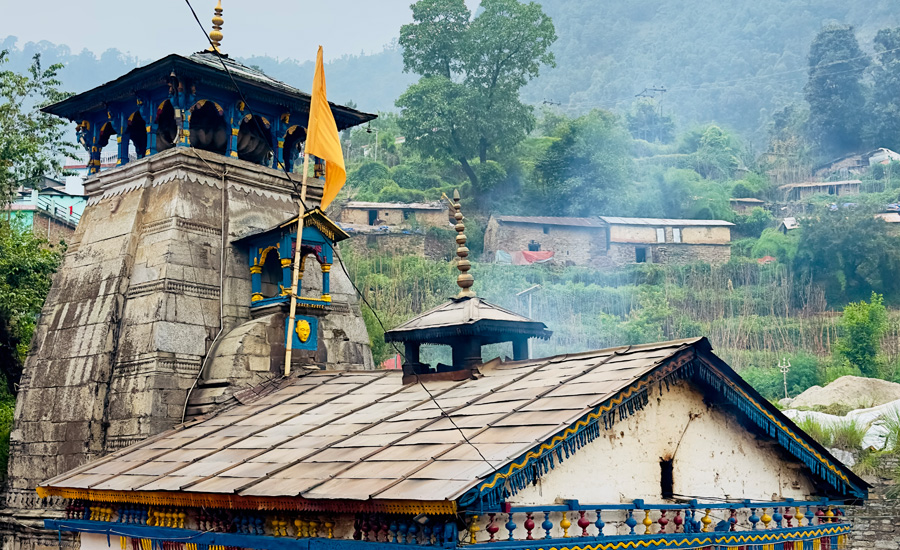
This is the sacred site where Lord Shiva and Goddess Parvati were married. The eternal flame burning here is said to have witnessed their union. I saw several elderly couples performing symbolic marriages here again, hand in hand, eyes full of love. The temple is simple, quiet, powerful. I asked the pujari for some stories, but he wasn’t keen to share. Still, I had done my homework before coming and knew I was standing on ground made holy by divine love.
After darshan, we returned to Sonprayag to complete our registration process. Since the next day would be crowded, we planned to leave at 2 AM, hoping to escape the rush.
2 AM: Starting the Kedarnath Trek from Gaurikund
I had a light dinner and packed some fruits for the trail (my usual energy snack throughout all the Kedars). After a few hours of rest, I began my journey at 2 AM sharp. It was dark and chilly, but I was hopeful the night trek would be more peaceful.
I was wrong.
The trail from Gaurikund was filled with mules, pitthus, and dolis all rushing upward. The number of pilgrims walking was shockingly low. What shook me was the condition of the path — narrow, slippery, filled with mule dung and urine, leaving a nauseating trail and barely any clean space to walk. The mule handlers were often rude, shouting even when I was already on the edge.
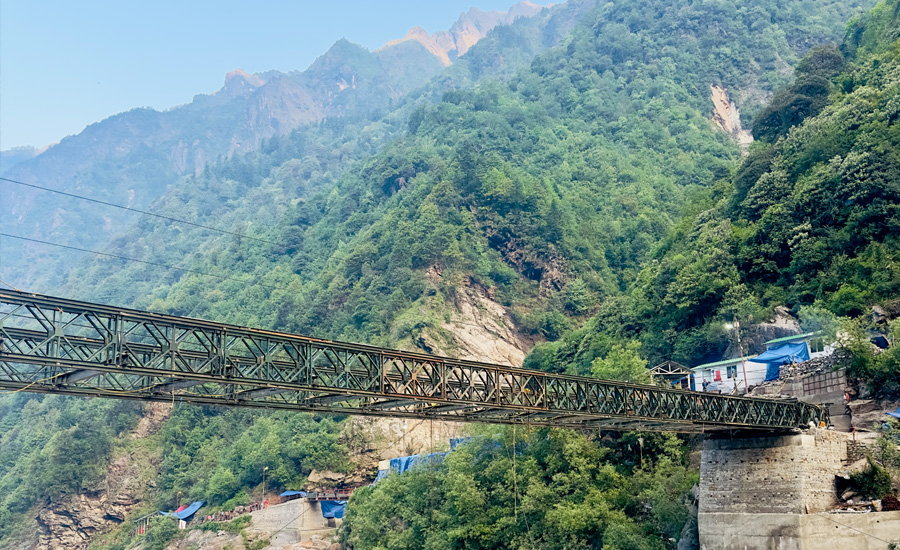
More than physical exhaustion, Kedarnath tested my mental strength. Despite the obstacles, breathtaking views of glaciers, waterfalls, and towering peaks kept pushing me forward.
But the final kilometers broke me. Signboards saying “8km” or “6km left” felt eternal. At 9 AM, the board said 5 km was left, and I was thrilled. Little did I know, those 5 km would feel longer than the entire trail so far.
The Young Man, the Fruits, and a Shared Love for Mountains
I stopped midway at a fruit stall run by a young man. As I munched on papaya, he spoke about Vasuki Tal, Brahma Kamal, and the significance of Kedarnath in local beliefs. Finally, someone not obsessed with selfies and reels! That short break gave me the strength to keep going.
At around 11 AM, I got my first glimpse of Kedarnath Temple.
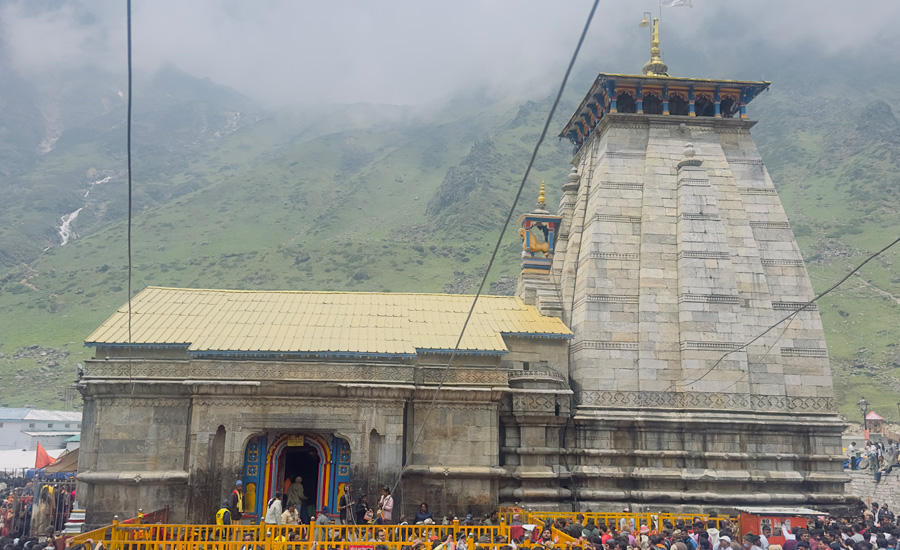
The temple stood tall, calm, immovable — like a guardian of the mountains. I whispered to myself: How could any flood ever move this? This is Mahadev’s home.
But the crowd was intense. Unlike the other Kedars, there were thousands here.
Staying Close to the Temple: And Climbing Higher to Bhairavnath
I checked into my pre-booked tent, and that was booked from Kedarvasi. It was just 150 meters from the temple. After a short rest, I hiked again to Bhairavnath Temple.
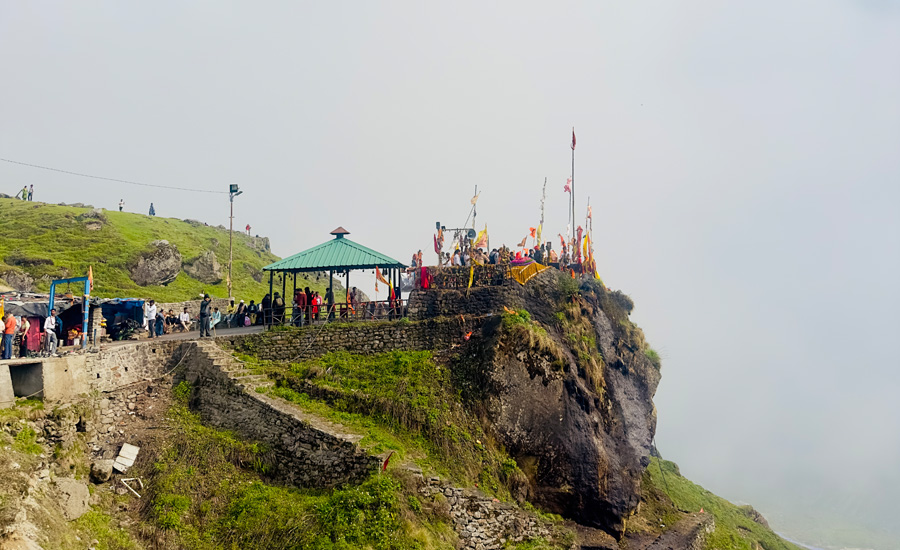
From here, I could see both the new and old routes to Kedarnath. Construction noise, piles of plastic, and scattered trash overwhelmed me. This is not what mountains were meant to be. I fear one day Kedarnath will lose the quiet hardship that makes reaching it so sacred.
Bheem Shila and Shankaracharya Samadhi: Layers of Spiritual History
Back near the main temple, I visited:
- Bheem Shila – the legendary rock said to have saved the temple during the 2013 floods.
- Adi Shankaracharya's Samadhi – marking the saint's contributions to uniting Hinduism and reviving the Kedars.
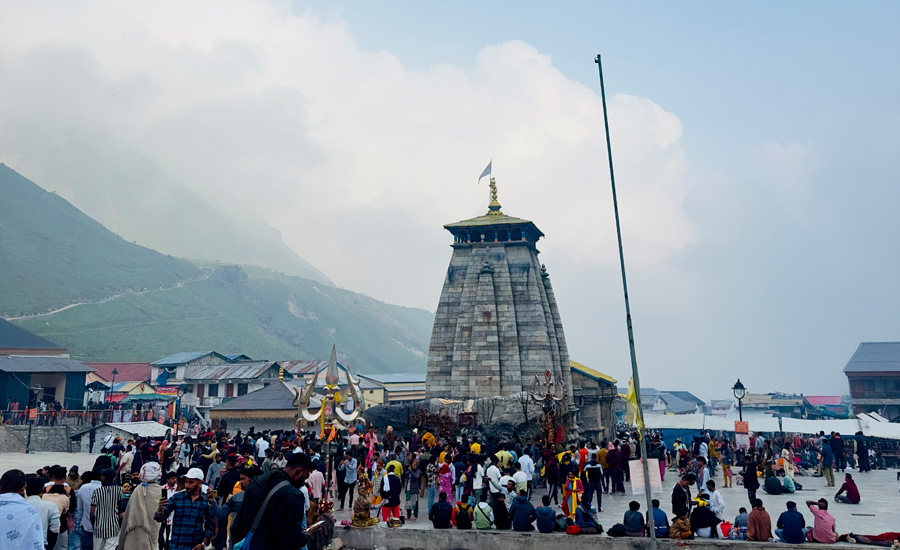
Evening Aarti at the Jyotirlinga
Attending Sandhya Aarti at Kedarnath was surreal. The bells, chants, clouds rolling in like celestial beings, and Mahadev seated in stillness — nothing can match this feeling.
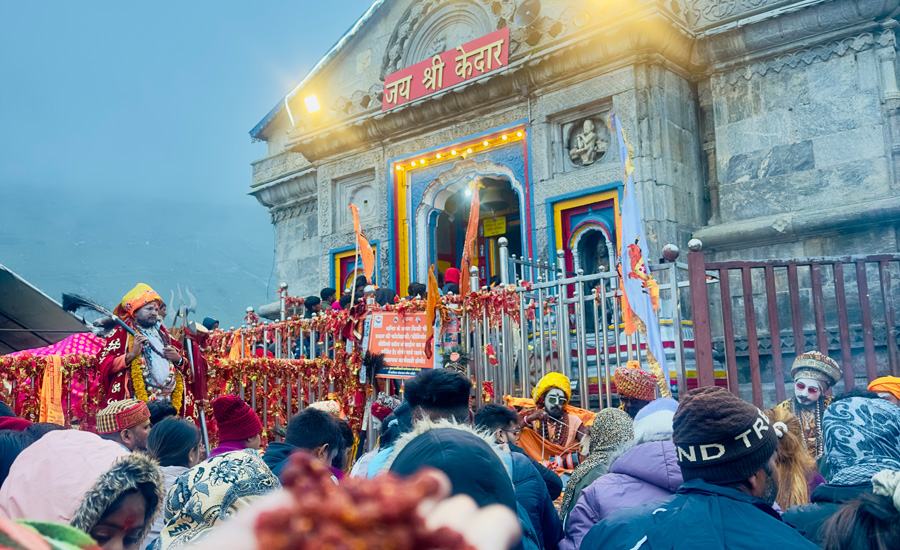
After a quick dinner, I queued up at 2:30 AM for Puja. Around 3:30 AM, I entered the sanctum. Even as I write this, I can still see the Jyotirlinga in front of my eyes—raw, powerful, and divine.
Inside the Garbhagriha: Touching Mahadev with My Own Hands
The Shivling at Kedarnath represents the hump of Lord Shiva’s bull form, as per the Panch Kedar legend, where Mahadev took the form of a bull to avoid the Pandavas and disappeared into the earth, leaving behind his body parts in different places—his hump is worshipped here at Kedarnath. This is one of the twelve Jyotirlingas, the holiest Shiva shrines in India.
Inside the Garbhagriha (inner sanctum), it was silent and soaked in divine energy. The moment I stepped in, I bowed down and touched my forehead to the Shivling—a sacred practice here symbolizing surrender and seeking blessings directly from Mahadev. I got a rare chance to perform Abhishek with ghee from my own hands, pouring it over the Shivling slowly, with gratitude and tears I couldn’t hold back.
You barely get five minutes inside, despite waiting in line for hours and going through a long process to get a receipt for this early morning Puja. And yet, those few minutes felt timeless.
I don’t have words that can do justice to what I felt. All I can say is—seeing Mahadev right in front of you, touching the Shivling with your own hands, feeling that powerful energy in your soul—it’s unlike anything else in life. All the fatigue, the chaos, the cold, the long trek—it vanishes in a moment. You’re just there, still, in front of your god.
I prayed for everyone who comes with faith and hardship to receive such a peaceful darshan. This was not just a blessing—it was a moment of divine connection that will live in my heart forever.
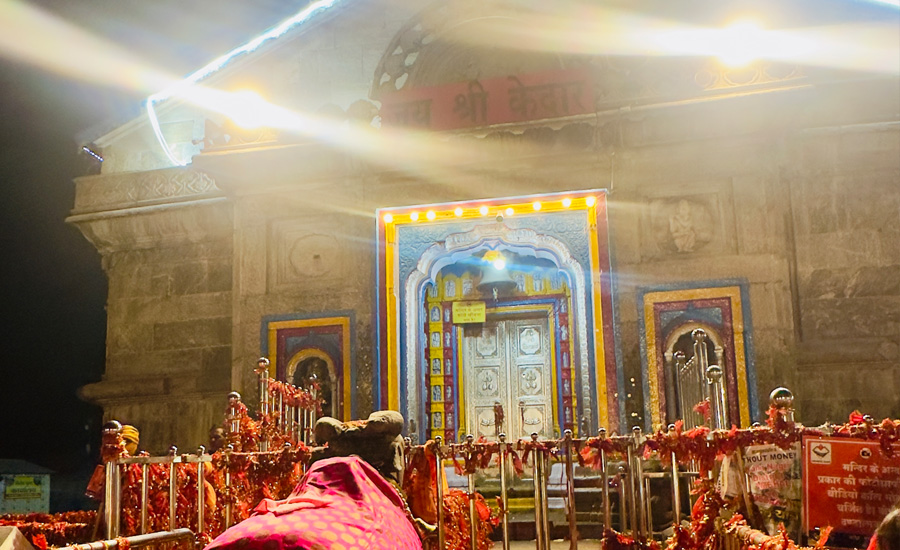
So many emotions — tears, silence, peace.
A Running Descent, a Wise Dadaji & Chaos at Gaurikund
After the Puja and Darshan, I stood once more before the temple, soaking in the divine energy of that sacred place, knowing this might be my last glance of Kedarnath on this trip. Then, around 5:00 AM, we began our descent.
While making my way down—almost running on the trail—I noticed an elderly Dadaji, probably around 85 years old, quietly matching my pace. For nearly 15 minutes, we were walking side by side without a word. Finally, I looked at him with amazement and said, “Dadaji, are you seriously giving me competition at this age?”
He smiled warmly and replied, “My wife’s cooking and my habit of never sitting idle keeps me strong.”
I was speechless. In a world where so many youngsters choose to ride mules for comfort, this man—at 85—was walking down with grace, strength, and pure devotion. I felt deep respect rising in my heart. This is what Bhakti looks like—not in words or Instagram stories, but in quiet determination and humility.
Salute to devotees like him, who remind us what it truly means to walk the path of faith—with strength, simplicity, and soul.
By 9:00 AM, I reached Gaurikund, and what I saw truly stunned me. There was an overwhelming rush of people—so crowded that it was hard to find space to even place a foot down. What surprised me most was that very few were actually walking. Most were arriving on mules or in dolis. While I absolutely understand and respect this for elders and those with physical limitations, I couldn’t help but wonder—why are so many young people choosing not to walk? The journey to Mahadev is as much about the effort as it is about the destination.
I wondered — is this how we honor the Himalayas and Mahadev?
I managed to get a taxi and reached Sonprayag, only to be met with yet another long line stretching all the way to the exit of the parking lot. A sea of devotees, all likely carrying their own versions of faith, fatigue, and longing. I just prayed silently—may each one of them get a peaceful darshan, may Mahadev bless every heart that came with hope.
Ending the Journey: One Prayer, One Hope
From Sonprayag, I headed to Rishikesh. As the vehicle rolled downhill, my mind was quiet.
This was the final Kedar of my Panch Kedar journey.
Each Kedar taught me something, but Kedarnath was the one that made me question:
Are we truly coming for devotion, or just tourism?
May Mahadev call me again. And again. And again.
But this time,
I want to return to Kedarnath not in the rush, not in the chaos—
but on a quiet morning,
when the crowd is gone,
and the only sound is the wind whispering through the Himalayas.
I want to sit for hours in front of the temple,
with my eyes closed,
feeling the power,
the stillness,
the unshakable presence of Mahadev all around me.
That’s the Kedarnath I long to return to—
not for photos, but for peace.
Guided by the Best: Soul on Summit
This unforgettable Panch Kedar journey was made possible with the amazing guidance and support of Soul On Summit.
A special thanks to our wonderful guide, whose deep respect for the mountains, and calm leadership made every step meaningful. He made this pilgrimage truly personal.
If you’re planning to trek in Uttarakhand and want someone experienced, mindful — I’d be happy to share his contact.
Closing Note: A Journey to the Soul
The journey to Panch Kedar is not just a trek through the Himalayas—it’s a journey inward. Every step on these sacred trails carves a deeper connection with Mahadev, with nature, and with your truest self. Each Kedar temple has its own rhythm, its own test, and its own gift. And through it all—mud, pain, tears, laughter, divinity—what remains is you, transformed.
- May you too hear the call of the mountains.
- May Mahadev guide your path.
- And may your soul always find peace where the rivers meet the sky.
Join Me On This Sacred Journey
My 10-Day Panch Kedar Trek Itinerary
Day 1:
🚗 Drive to Urgam Valley → Darshan at Kalpeshwar Mahadev, the first Kedar in the Panch Kedar circuit.
🌙 Night stay in Urgam
Day 2:
🚗 Drive from Urgam to Sagar
🥾 Start trek from Sagar to Lyuti campsite
🌙 Overnight stay at Lyuti
Day 3:
🥾 Trek from Lyuti to Rudranath via alpine meadows
🙏 Darshan at Rudranath Mahadev
🌙 Night stay at Rudranath
Day 4:
🥾 Trek back from Rudranath to Sagar
🚗 Drive to Chopta (if time allows or next morning)
Day 5:
🥾 Trek to Tungnath Mahadev (world’s highest Shiva temple)
🙏 Darshan at Tungnath Mahadev
🚗 Drive to Ransi village
🌙 Night stay at Ransi
Day 6:
🥾 Trek to Madhyamaheshwar Mahadev
🔁 (Optional break points at Gaundar or Bantoli depending on individual)
🌙 Night stay at Madhyamaheshwar
Day 7:
🌄 Early morning trek to Budha Madhyamaheshwar for sunrise and Chaukhamba views
🙏 Darshan at Madhyamaheshwar temple
🥾 Descend to Bantoli
🌙 Night stay at Bantoli near the river confluence
Day 8:
🥾 Trek back to Ransi
🚗 Drive to Sonprayag
🌙 Night stay at Sonprayag
Day 9:
🚕 Early morning taxi to Gaurikund
🥾 Trek to Kedarnath Mahadev
🌙 Night stay at Kedarnath
Day 10:
🙏 Darshan at Kedarnath (Jyotirlinga)
🥾 Trek back to Gaurikund → 🚕 Taxi to Sonprayag
🚗 Return to Rishikesh – Journey ends here, but the memories stay forever.
Need Help Planning This Journey?
just drop a comment or DM me on Instagram @wanderwithrinkal.
I’ll be happy to share what I’ve learned, straight from the heart.

Rinkal
Rinkal is a passionate traveler from Ahmedabad who loves exploring hidden gems, savoring local foods, and sharing adventures with fellow wanderers. Rinkal’s goal is to inspire others to travel on a budget while truly experiencing the essence of each place.

Vaibhav Ghorpade
July 7, 2025
Loved reading your experience Very nicely written 🙌